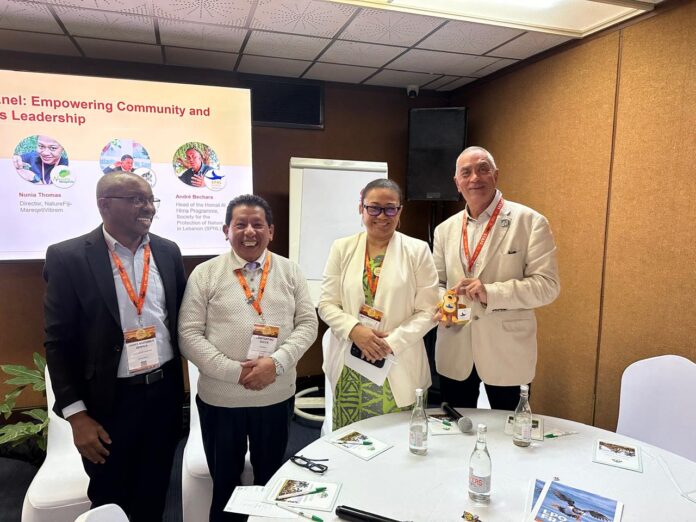


The second day of the 71st Meeting of the Council of the Global Environment Facility (GEF) continued high-level discussions on the future of global environmental governance, financing, evaluation, and institutional cooperation, with delegates focusing on strengthening partnerships with international environmental conventions, improving accountability and learning mechanisms, supporting marginalized communities, and advancing implementation of the forthcoming GEF-9 replenishment cycle.
The discussions reflected a growing recognition that addressing the interconnected crises of climate change, biodiversity loss, land degradation, pollution, and environmental injustice requires not only increased financial resources but also stronger coordination among institutions, more inclusive decision-making processes, and greater attention to implementation effectiveness.
Environmental Conventions Call for Greater Integration and Impact
A major highlight of the day was a high-level dialogue between the GEF Council and representatives of key multilateral environmental agreements (MEAs), who outlined their expectations for the ninth replenishment of the GEF Trust Fund (GEF-9) and discussed how the Facility can better support implementation of international environmental commitments.
Opening the session, GEF Chair and Interim CEO Claude Gascon emphasized the critical role that the GEF plays as the financial mechanism for several environmental conventions and as a bridge connecting environmental policy commitments with practical action on the ground.
Representatives from the Basel, Rotterdam and Stockholm Conventions, the Minamata Convention on Mercury, the United Nations Framework Convention on Climate Change (UNFCCC), the Convention on Biological Diversity (CBD), and the United Nations Convention to Combat Desertification (UNCCD) all stressed the need for greater integration of environmental priorities and more efficient use of resources.
Rolph Payet, Executive Secretary of the Basel, Rotterdam and Stockholm Conventions, urged governments and institutions to stop treating pollution and waste as secondary environmental concerns.
He emphasized that GEF-9 should become a turning point where pollution prevention receives the same level of attention as climate change and biodiversity conservation, calling for increased mobilization of private capital and innovative financing mechanisms capable of closing major environmental funding gaps.
Similarly, Monika Stankiewicz, Executive Secretary of the Minamata Convention, highlighted the importance of integrating mercury reduction efforts into broader biodiversity and climate strategies, arguing that reducing pollution creates significant co-benefits for ecosystems, public health, and climate resilience.
Representatives from the UNFCCC and CBD stressed the need to accelerate implementation, strengthen support to developing countries, and improve access to funding while simplifying administrative procedures and reporting requirements.
Participants repeatedly emphasized that future success will depend on breaking down institutional silos and promoting integrated approaches capable of delivering multiple environmental benefits simultaneously.
Strong Support for Enhanced Cooperation Among Global Environmental Funds
Throughout the discussions, Council members welcomed the increasing cooperation between the GEF and other international environmental financing mechanisms.
Delegates highlighted the importance of harmonizing reporting requirements, reducing administrative burdens on countries, and improving coordination among multilateral climate funds and environmental conventions. Several participants stressed that rather than creating new institutions, the international community should focus on strengthening existing mechanisms and ensuring that resources are used more efficiently.
Particular attention was given to cooperation with the newly adopted Agreement on the Conservation and Sustainable Use of Marine Biological Diversity of Areas Beyond National Jurisdiction (BBNJ Agreement), often referred to as the High Seas Treaty.
Council members welcomed the growing role of the GEF within the emerging architecture supporting marine biodiversity conservation beyond national jurisdictions and recognized the potential importance of the BBNJ Agreement in protecting marine ecosystems that account for nearly half of the planet’s surface.
Independent Evaluation Office Receives Strong Endorsement
Another major agenda item focused on the work of the GEF Independent Evaluation Office (IEO), which presented its proposed work programme and budget for 2027.
Geeta Batra, Director of the IEO, outlined a broad programme of evaluations designed to strengthen accountability, learning, and evidence-based decision-making across the GEF partnership. The proposed budget for 2027 amounts to approximately USD 8.23 million and covers institutional, thematic, regional, and country-level evaluations, alongside expanded knowledge management and outreach activities.
Council members strongly endorsed the work of the IEO, describing it as essential to maintaining the credibility, effectiveness, and transparency of the GEF.
Delegates emphasized that as environmental challenges become increasingly complex, robust evaluation systems will play an even greater role in identifying successful approaches, measuring impact, and ensuring that scarce resources are allocated effectively.
Discussions also touched on the growing use of artificial intelligence and machine learning in evaluation processes. While many members welcomed technological innovation, they stressed the importance of maintaining safeguards related to confidentiality, data protection, transparency, and human oversight.
The Council subsequently approved the IEO’s 2027 Work Program and budget.
New Evaluation Policy Strengthens Accountability and Learning
The Council also adopted the new GEF Evaluation Policy 2026, which updates the framework governing evaluation activities throughout the GEF partnership.
According to the Independent Evaluation Office, the revised policy reflects both the evolution of the GEF and broader developments in international evaluation practice. It places stronger emphasis on accountability, mutual learning, evidence-based decision-making, and the responsible use of innovative analytical tools, including artificial intelligence.
Many Council members welcomed the updated policy, noting that it successfully balances continuity with innovation while providing a stronger governance framework for future evaluations.
Delegates particularly welcomed the introduction of policy coherence as an explicit evaluation criterion, reflecting the increasing importance of integrated approaches across sectors and institutions.
Lessons from Sustainable Cities and System Transformation
The Council reviewed a major evaluation of the GEF Sustainable Cities Program, which examined the effectiveness of investments aimed at transforming urban development pathways.
The evaluation concluded that the programme has generated significant environmental and social benefits but recommended stronger efforts to mobilize investments, improve coordination between global and local project components, and develop better methods for measuring long-term systems transformation.
Council members welcomed the findings and emphasized the need to strengthen links between planning, implementation, and investment mobilization.
Several participants highlighted the importance of ensuring that environmental investments generate social and economic co-benefits while reducing vulnerability and enhancing urban resilience.
Civil society organizations also raised concerns regarding potential risks of “green gentrification,” warning that environmental investments should not inadvertently contribute to the displacement of low-income communities.
The GEF Secretariat agreed with all recommendations and committed to incorporating lessons learned into future programming.
Greater Attention to Marginalized Communities
One of the most socially significant discussions of the day focused on the evaluation of GEF support to marginalized groups.
The evaluation examined how GEF projects engage with women, Indigenous Peoples, persons with disabilities, and other communities that often face barriers to participation in environmental decision-making.
The report recommended updating guidance on stakeholder engagement, strengthening review processes to ensure meaningful participation throughout project lifecycles, and investing more heavily in learning and knowledge-sharing regarding effective inclusion strategies.
Council members strongly supported these recommendations and emphasized the importance of ensuring that environmental action is both equitable and inclusive.
Many delegates stressed that engagement must move beyond consultation during project design and continue throughout implementation and evaluation phases. Others highlighted the need to tailor participation strategies to national realities and specific community contexts.
The Secretariat confirmed that work is already underway to update the Principles and Guidelines for Engagement with Indigenous Peoples, originally adopted in 2012, and to strengthen accountability mechanisms related to stakeholder participation.
Promoting Policy Coherence Across Environmental Sectors
The Council also reviewed lessons learned from GEF support for policy coherence, an increasingly important issue as governments seek to align environmental, economic, social, and development policies.
The evaluation found that policy coherence interventions are most effective when grounded in national realities and supported by strong institutional capacities.
Recommendations included clarifying the GEF’s strategic role in supporting policy coherence, strengthening governance assessments during project design, and improving monitoring systems capable of tracking long-term policy outcomes.
Council members broadly welcomed the findings and emphasized the importance of country-driven approaches that remain flexible while supporting transformational environmental change.
Several participants also highlighted the potential value of national steering committees as mechanisms for improving coordination among stakeholders, institutions, and sectors.
Progress Toward a New Marine Biodiversity Financing Framework
Significant attention was devoted to negotiations surrounding a Memorandum of Understanding between the GEF and the BBNJ Agreement.
The proposed agreement would formalize the GEF’s role within the financial mechanism supporting implementation of the landmark High Seas Treaty.
Many Council members welcomed the draft text and noted that it reflects extensive negotiations conducted through the Preparatory Commission established to support implementation of the Agreement.
Delegates stressed the importance of ensuring equitable access to resources and effective coordination among the various funding streams associated with the BBNJ financial architecture.
Discussions remain ongoing, with final consideration expected following additional consultations.
Looking Forward
As the second day of deliberations concluded, the Council continued to demonstrate a strong commitment to improving the effectiveness, inclusiveness, and accountability of international environmental financing.
The discussions highlighted a growing consensus that addressing today’s environmental challenges requires not only increased financial resources but also stronger partnerships, better science, more effective institutions, and greater participation by communities most affected by environmental degradation.
With GEF-9 set to become the principal framework guiding environmental investments over the coming years, the decisions and debates taking place in Samarkand are expected to shape global environmental action well beyond the current replenishment cycle.