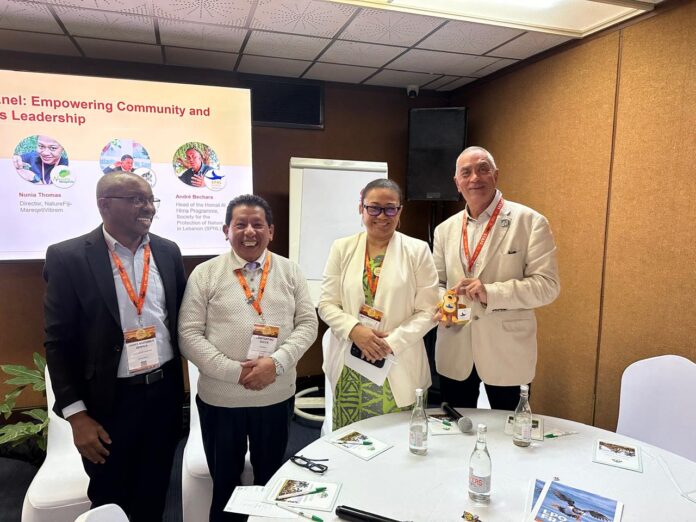



The Society for the Protection of Nature in Lebanon (SPNL) participated in the Regional Workshop on Promoting Positive Community Behaviour to Reduce Demand for Wildlife and Birds in the Middle East, held in Amman, Jordan, on 3–4 June 2026.
The regional gathering brought together representatives of governments, conservation organizations, BirdLife partners, communication specialists, and wildlife experts from across the Middle East to discuss innovative approaches for reducing threats to wildlife and migratory birds through positive behavioural change and community engagement.
Organized by BirdLife International Middle East in partnership with the International Fund for Animal Welfare (IFAW), the Royal Society for the Conservation of Nature (RSCN), and the Princess Alia Foundation, the workshop was held under the patronage of Her Royal Highness Princess Alia bint Al Hussein of Jordan.
SPNL was represented by Mr. Rami Kadro, Mount Lebanon Hima Center Manager, who delivered a presentation entitled “Stitching Nature One Hima at a Time.” The presentation highlighted SPNL’s pioneering role in advancing the Hima approach as a community-based conservation model that integrates traditional stewardship practices with modern biodiversity conservation principles.
During his intervention, Kadro presented SPNL’s journey since its establishment in 1983, emphasizing its status as Lebanon’s BirdLife International partner and one of the country’s leading environmental organizations. He showcased the expansion of the Hima network across Lebanon and its contribution to safeguarding biodiversity, protecting migratory bird flyways, and empowering local communities to become active custodians of their natural heritage.
The presentation also highlighted the importance of partnerships and collaborative conservation efforts, including SPNL’s cooperation with organizations such as the Association for the Protection of Wildlife (APU) and the Committee Against Bird Slaughter (CABS), aimed at combating illegal bird killing and promoting responsible environmental practices.
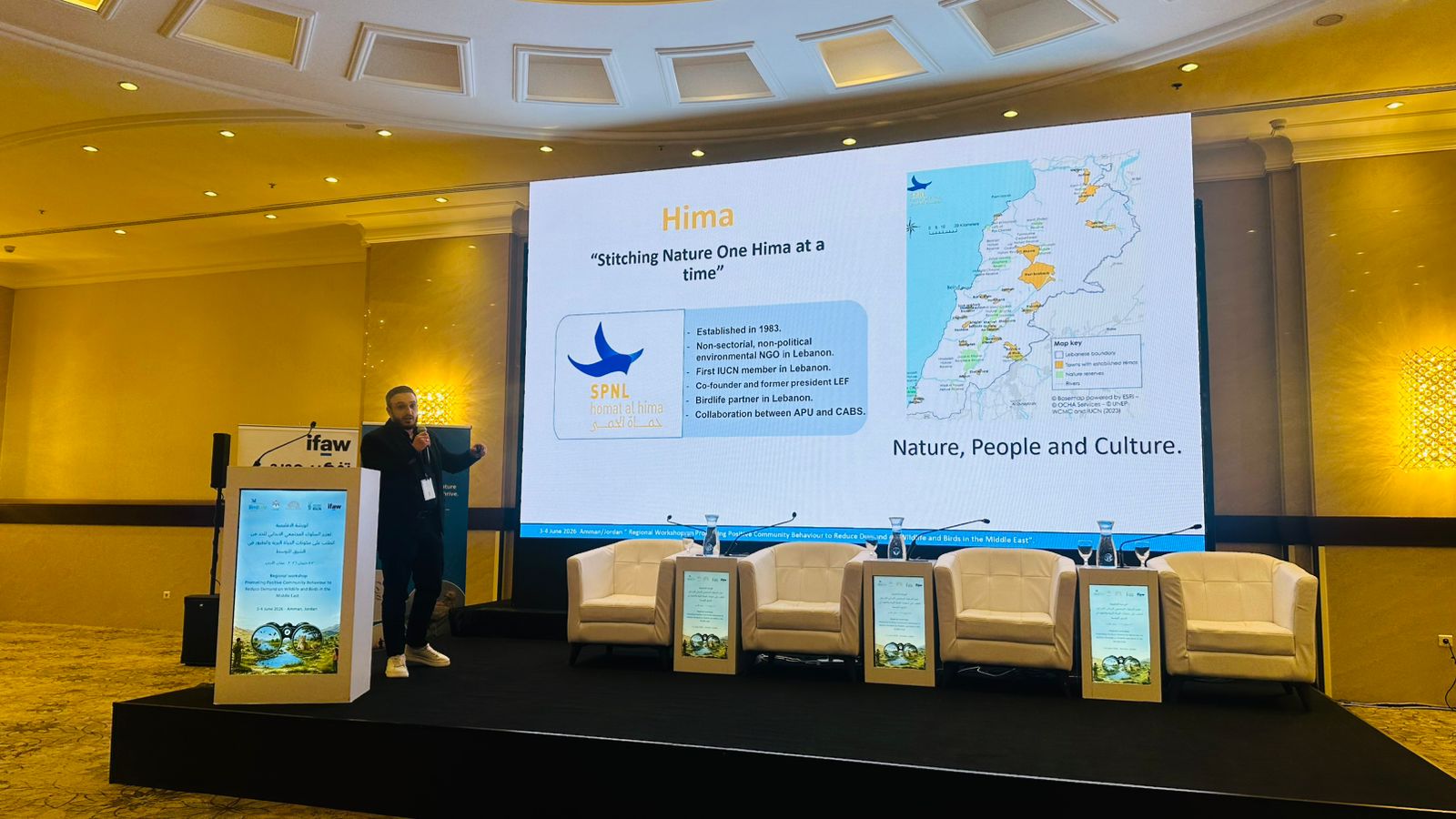
“The Hima model demonstrates that conservation is most effective when local communities are placed at the heart of decision-making and environmental stewardship,” Kadro noted. “Through community ownership, awareness, and participation, we can create lasting positive behavioural change that benefits both people and nature.”
The workshop focused on addressing one of the key drivers of biodiversity loss in the region, namely the demand for wildlife and wild birds. Participants exchanged experiences and best practices on behavioural change campaigns, community engagement strategies, environmental education, and public awareness initiatives designed to reduce illegal hunting, trapping, and wildlife trade.
The event also formed part of broader regional efforts to protect migratory birds along one of the world’s most important flyways, which passes through the Middle East and Eastern Mediterranean. Millions of birds depend on these routes annually during their seasonal migrations, making regional cooperation essential for their conservation.
SPNL’s participation reaffirmed Lebanon’s leadership in promoting community-led conservation through the Hima model and underscored the organization’s commitment to strengthening regional partnerships that advance biodiversity conservation, sustainable development, and the protection of migratory birds.
As environmental challenges continue to grow across the region, SPNL remains committed to working with local communities, national authorities, and international partners to build a future where people and nature thrive together.