


High in the mountains of Batroun, where the peaks seem to touch the sky, Hardine stands like an open book recounting thousands of years of history. Here, nature and faith are inseparable. The rocks are not merely geological formations, but pages inscribed with the footsteps of early humans, the prayers of monks, and the paths of saints who transformed this small village into one of Lebanon’s most significant spiritual destinations.
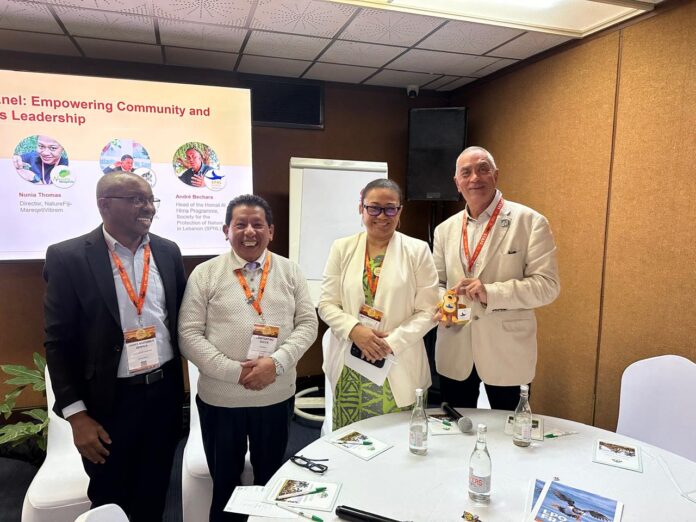
When the Society for the Protection of Nature in Lebanon (SPNL), in partnership with the Municipality of Hardine–Beit Kassab and the local community, announced the establishment of the Hima of Hardine, the occasion represented far more than the designation of another protected area within Lebanon’s growing Hima network. It marked the launch of a new vision for conservation, one that sees the forest as inseparable from the monastery, biodiversity protection as intertwined with the preservation of collective memory, and sustainable development as beginning when a community recognizes that its land is more than a geographical space: it is identity, heritage, and a shared future.
More Than a Village: Layers of History
Hardine cannot simply be defined as the birthplace of Saint Nehmeh (Nimatullah) Al-Hardini, although his legacy has made the village known throughout the Christian world. Hardine’s history stretches back much further. Historical sources indicate that its name appeared in ancient Hittite records, while researchers suggest that over the centuries it became associated with piety, justice, and faith, earning titles such as the “Rock of Faith” and the “Village of Thirty Churches and Monasteries.”
Rather than being an isolated mountain settlement, Hardine emerged as a religious and cultural center where successive civilizations left their mark on its mountains, valleys, and rock formations, traces that remain visible to this day.
When the Romans Chose the Summit
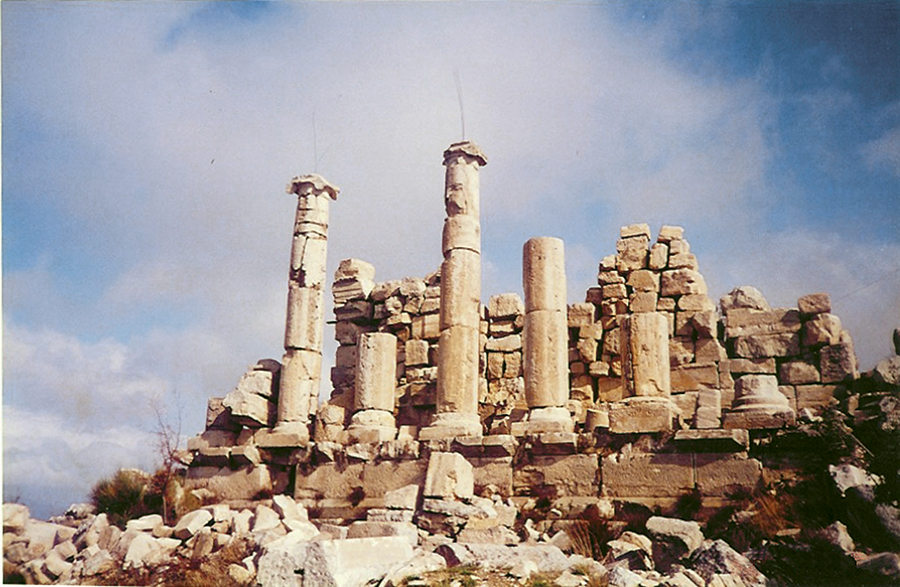
Nearly two thousand years ago, the Romans recognized the strategic importance of Hardine’s highest peak. They selected it as the site for a military fortress and a grand temple dedicated to the god Mercury (Mercurius). Historians describe the sanctuary as one of the region’s most impressive Roman temples, distinguished by its towering Ionic columns and commanding panoramic views stretching across northern Lebanon, from the Cedars and Bsharri plateau to Batroun, Koura, and Tripoli.
Yet the same landscape that bestowed greatness upon the site also transformed its destiny. Powerful earthquakes that struck the region during the sixth century caused the temple’s collapse. Later, Christian monks repurposed the site to build the Monastery of Mar Risha, symbolizing the historic transition from pagan temples to Christian monasteries.
Traces of the First Human Inhabitants
While Hardine’s religious history begins with Christianity, its human story extends much deeper into prehistory.
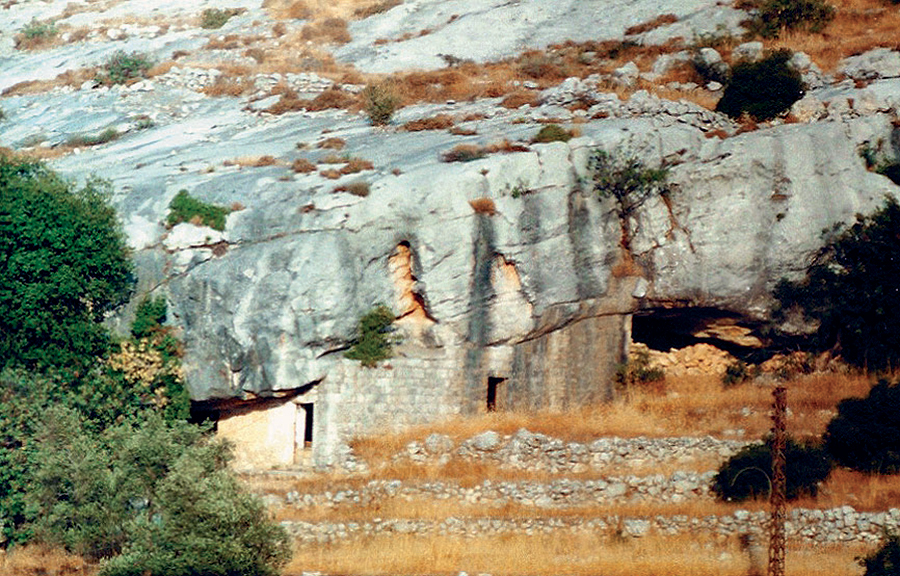
In the Kfarshir Valley, overlooking Kfarhalda and Beit Shallala, archaeologists have identified caves and shelters inhabited by prehistoric communities. Across the surrounding landscape lie Phoenician sarcophagi, rock-cut altars, carved reservoirs, water channels, stairways, and stone benches, evidence of remarkably sophisticated human organization thousands of years ago.
These remains are more than archaeological sites; together they form an exceptional historical continuum extending from prehistoric humanity through the Phoenician and Roman civilizations to the Christian era.
Thirty Churches: A Village That Shaped Holiness
Few Lebanese villages of comparable size contain such an extraordinary concentration of churches, monasteries, and hermitages.
Hardine is home to the churches of Mar Georges (St. George), Mar Challita, Mar Nohra, Mar Tadros, and Mar Sarkis and Bacchus, alongside the Monastery of Mar Toma and numerous other religious sites spanning successive historical periods. Their walls preserve symbols of early Christianity, ancient inscriptions, and rare manuscripts documenting religious life in Mount Lebanon across the centuries.
Among them, the Church of Mar Sarkis and Bacchus occupies a special place. It was here that the child Youssef Kassab, later known as Saint Nehmeh Al-Hardini, one of the Maronite Church’s most revered saints, received baptism.
The village’s spiritual heritage extends beyond its churches to the rock hermitages scattered across the surrounding hillsides, where monks and hermits embraced lives of solitude and contemplation. Among them was Sarah Al-Hardini, regarded by historians as Lebanon’s first known female hermit. Several Maronite patriarchs also resided at the Monastery of Mar Sarkis, which became known as the Monastery of the Patriarchate.
A Personal Story That Redefined the Place
During the official announcement of the Hima of Hardine, it was not only the formal speeches that moved those in attendance.
In one of the event’s most emotional moments, Pierre Moawad shared the story of his 97-year-old father, who had relied on a walking frame because of his advanced age.
Moawad recounted that his father insisted on visiting the shrine of Saint Nehmeh Al-Hardini. Following the visit, he was able to walk without the assistance of the device, which the family regarded as a blessing granted through the saint’s intercession.
Whatever interpretation one may give to this experience, the testimony reflected the profound spiritual significance that Hardine holds for its visitors and reinforced the idea that the village is not merely a religious destination, but a place where faith, nature, and history converge.
From Sacred Heritage to the Hima
This rich historical and spiritual legacy was one of the principal reasons behind SPNL’s decision to establish the Hima of Hardine.
For the organization, protecting forests cannot be separated from protecting churches, just as conserving biodiversity cannot be divorced from preserving cultural identity. The Hima model embodies this philosophy by promoting community-based stewardship that reconnects people with their land, empowers local residents as the primary custodians of natural resources, and enables them to benefit from those resources through sustainable management.
A Blessed Hima: Where Nature Becomes a Driver of Sustainable Development
SPNL Director General Assad Serhal described Hardine as a “blessed Hima,” saying it represents a rare place where environmental and spiritual heritage converge. He stressed that the initiative marks another step toward building a connected national network of Himas that links natural, religious, and cultural sites under a unified vision for nature conservation in Lebanon.
When Nature Becomes a Catalyst for Development
If Hardine’s history stretches back thousands of years, the question today is how this extraordinary natural and spiritual heritage can become a force for development without compromising its integrity.
This challenge is no longer confined to historians or conservationists. It lies at the heart of the vision shared by the Municipality of Hardine–Beit Kassab and the Society for the Protection of Nature in Lebanon (SPNL), which are working together to develop a model that combines environmental conservation with improved livelihoods for local communities.
The Hima: More Than a Protected Area
For many people, declaring a Hima may simply mean restricting construction or limiting land use. However, the Hima concept, revived by SPNL, extends far beyond the conventional notion of a protected area.
A Hima is not a closed reserve but a community-based system for managing natural resources. It empowers local residents to participate in decision-making and transforms nature from a resource requiring protection into an engine for sustainable development, supporting education, tourism, employment, and local enterprise.
In Hardine, the concept takes on an additional dimension because the resources it seeks to protect extend beyond forests and biodiversity. They include historic churches, rock hermitages, archaeological sites, and ancient pathways that collectively preserve the village’s cultural memory.
Why SPNL Chose Hardine
Selecting Hardine as Lebanon’s newest Hima was far from arbitrary.
The village possesses a unique combination of assets rarely found in one location: natural forests, rich biodiversity, archaeological remains from the Phoenician and Roman periods, historic churches and monasteries, and profound spiritual significance as the birthplace of Saint Nehmeh (Nimatullah) Al-Hardini.
Together, these elements make Hardine an ideal example of SPNL’s vision of conserving cultural landscapes, places where nature, heritage, and local identity are inseparably connected.
According to SPNL Director General Assad Serhal, Hardine demonstrates that sacred sites can also serve as leading models for biodiversity conservation.
He added that establishing the Hima is not merely about protecting a single location. It forms part of a broader national strategy to connect Himas through ecological corridors that enable wildlife movement, strengthen ecosystem resilience, and create new opportunities for eco-tourism and cultural tourism.
Hardine and Diman: An Ecological and Spiritual Corridor
A central element of this vision is the connection between the Hima of Hardine and the Hima of the Patriarchs’ Garden in Diman.
The two sites are linked not only geographically but also through centuries of monastic tradition and ecclesiastical heritage. Together, they offer the potential to create an integrated network of environmental and pilgrimage trails connecting monasteries, forests, and valleys, providing visitors with a holistic experience that combines hiking, contemplation, and immersion in nature.
Ecotourism specialists increasingly recognize such routes as among the world’s fastest-growing tourism products because they offer authentic experiences rooted in meaningful interaction with local communities and natural landscapes rather than conventional sightseeing.
A Municipal Vision Beyond Basic Services
For a village with only a few hundred permanent residents but tens of thousands of descendants living abroad, development presents a unique challenge.
Mayor Joseph Assaf views the Hima not as an isolated environmental initiative but as the cornerstone of a broader development strategy aimed at revitalizing Hardine both economically and socially.
He explained that the municipal council is investing in infrastructure improvements, road rehabilitation, water networks, and the preservation of the village’s architectural heritage, while simultaneously preparing development projects eligible for funding through government institutions and international partners.
According to Assaf, the success of any project should not be measured by its size but by its ability to improve people’s lives and create sustainable opportunities for local residents.
Tourism as an Investment in Identity
For the municipality, tourism is not simply a seasonal activity but a strategic economic sector capable of driving long-term development.
To achieve this, Hardine is working to preserve its religious and archaeological landmarks, improve the public landscape, strengthen tourism infrastructure, and organize cultural and religious events in partnership with the Church, civil society organizations, and Lebanon’s Ministry of Tourism.
The expected benefits extend well beyond increasing visitor numbers. They include supporting guesthouses, restaurants, traditional crafts, and local products, creating employment opportunities while encouraging young people to remain in, or return to, the village.
Clean Energy: Extending the Hima Philosophy
The municipality’s vision also embraces renewable energy.
As part of its commitment to sustainable development, Hardine is developing a solar energy project designed to supply electricity to public facilities, reduce operational costs, and decrease dependence on conventional energy sources.
The initiative reflects the core philosophy of the Hima: the responsible use of natural resources while strengthening communities’ capacity to shape their own environmental and economic future.
The Diaspora: A Resource Waiting to Be Mobilized
Hardine’s history is also a history of migration.
For more than a century, generations of its residents have settled across the Americas, Australia, and Europe, with the diaspora now vastly outnumbering those who remain in the village.
Today, the municipality hopes to transform this global presence into a driving force for local development by encouraging expatriates to invest in environmental, cultural, and economic initiatives and to play an active role in preserving Hardine’s unique natural and spiritual heritage for future generations.
A Future Built by the Community
The experience of the Hima of Hardine demonstrates that development does not begin solely with large-scale projects. It begins when people see themselves as stewards of their own land.
This lies at the heart of the Hima model that the Society for the Protection of Nature in Lebanon (SPNL) is promoting across the country, a model that places local communities at the center of conservation while giving nature economic, cultural, and social value without compromising its authenticity.
In Hardine, forests are no longer simply forests. Churches are no longer merely historical monuments. Ancient paths are no longer just mountain trails.
Together, they have become part of a single vision that recognizes environmental conservation, cultural heritage preservation, and local economic development not as competing priorities, but as complementary pillars of a more sustainable future.
Trails Linking Mountains to Memory, and the Future of Lebanon’s Himas
In Hardine, every walk begins not with a trailhead, but with a story.
Every bend reveals a new landmark, every valley conceals a chapter of history, and every rock bears the imprint of an ancient civilization, a hermit’s prayer, or the footsteps of people who crossed this landscape thousands of years ago. Hardine is therefore far more than a destination for hikers; it is an open-air museum where geography and history, nature and identity, merge in a way rarely found elsewhere in Lebanon.
It is precisely this landscape that inspired SPNL’s vision when announcing the Hima of Hardine, a vision based on the belief that conservation is achieved not by closing places to people, but by encouraging them to rediscover these landscapes, understand their significance, and become active partners in protecting them.
Trails That Preserve Collective Memory
At first glance, mountain trails may appear to be little more than walking paths. For centuries, however, they served as lifelines connecting villages, guiding monks to hermitages, farmers to their fields, and travelers to the coast.
Today, these same routes are taking on a new role through SPNL’s expanding Hima Trail Network, which is being developed across Lebanon as a platform for environmental education, sustainable tourism, and the interpretation of the country’s natural and cultural heritage.
In Hardine, these trails are especially significant because they pass through landscapes where history and nature are inseparable. Mediterranean forests give way to monasteries, rock hermitages, and ancient churches that have witnessed centuries of monastic life.
Biodiversity with a Story to Tell
When biodiversity is discussed, the conversation often revolves around species counts and scientific data.
In Hardine, biodiversity is understood differently.
It is reflected in forests of oak and pine, in the seasonal wildflowers carpeting the hillsides, and in the migratory birds that cross the region along the Eastern Flyway connecting Europe and Africa.
These habitats form part of a much broader ecological network extending across northern Lebanon’s mountains. As a result, the Hima of Hardine is significant not only within its municipal boundaries but also as a vital link in maintaining the continuity of regional ecosystems.
For this reason, the Hima project extends well beyond protecting trees or preventing encroachment. It includes biodiversity monitoring, community participation in conservation efforts, and educating visitors about the rich plant and animal life that defines the landscape.
Ecotourism: An Experience Rather Than a Visit
For decades, tourism was associated primarily with hotels, beaches, and restaurants.
Today, travelers increasingly seek experiences rather than destinations.
Hardine offers precisely that.
Visitors can begin their day hiking through forests before exploring the remains of the Roman temple, whose ruins still testify to a civilization that flourished for centuries. They can then continue to historic churches and rock hermitages before concluding their journey at the birthplace of Saint Nehmeh Al-Hardini or in one of the monasteries that still preserve their ancient spiritual character.
The experience is not merely a combination of nature and heritage; it offers visitors an opportunity to understand the relationship that people have cultivated with this landscape over thousands of years.
SPNL therefore views ecotourism not simply as an economic activity but as a means of fostering respect for nature, encouraging local communities to protect their resources, and transforming natural and cultural heritage into productive assets rather than allowing them to fall into neglect.
When Nature Becomes an Economic Asset
One of the central messages of the Hima of Hardine is that environmental conservation and economic development are not mutually exclusive. On the contrary, conservation can become a powerful engine for local prosperity.
Every visitor who walks Hardine’s trails contributes to the village’s economy by supporting guesthouses, restaurants, locally produced goods, traditional handicrafts, and nature-guiding services.
This model has already demonstrated its effectiveness in several Himas established by SPNL across Lebanon, where conservation has generated new sources of income and local communities themselves have become the primary guardians of the natural resources upon which their livelihoods depend.
A Message Beyond Hardine
Hardine may be a small village on Lebanon’s map, but it carries a message of national significance.
At a time when ecosystems are under increasing pressure and rural communities face mounting economic and social challenges, Hardine demonstrates that development does not begin with concrete, it begins by protecting what makes a place unique.
The experience also illustrates that religious heritage cannot be separated from natural heritage, and that forests are far more than green spaces; they are integral to the cultural and spiritual identity of local communities.
The declaration of the Hima of Hardine therefore does more than add another protected landscape to Lebanon’s Hima network. It expands the very concept of the Hima to embrace places where nature and faith, history and development, and people and landscape exist as one.
Towards a National Network of Himas
SPNL continues to develop an interconnected national network of Himas and hiking trails that links local communities with Lebanon’s natural and cultural landscapes while reviving the Hima as an authentic Lebanese model for community-based natural resource management.
Within this vision, Hardine occupies a strategic place, not only because of its exceptional environmental and historical richness, but because it demonstrates that communities equipped with a shared vision and strong partnerships are capable of leading conservation efforts and shaping their own future.
The project does not end with the declaration of the Hima.
Rather, that declaration marks the beginning of a long-term process that includes restoring trails, documenting biodiversity, installing interpretive signage, training local guides, engaging young people, promoting investment in ecotourism, and strengthening partnerships with municipalities, churches, academic institutions, and the private sector.
Hardine: More Than a Destination
By the end of the journey, visitors discover that Hardine’s greatest treasure is not its Roman temple, its cliffside hermitage, its ancient churches, or even its oak forests, remarkable though each of these may be.
Its true distinction lies in the enduring relationship it has forged between people and nature over thousands of years.
Hardine is a village that has preserved its memory in its rocks, its faith in its monasteries, and its biodiversity in its forests, while transforming all of these into the foundation of a vision for the future.
This is the true significance of the Hima of Hardine.
It is not simply a protected landscape but an integrated model demonstrating that nature conservation cannot rely on legislation alone. It depends on communities that understand the land they inherited is not theirs to exploit, but a trust to be passed on, richer, healthier, and more beautiful, to future generations.
In Hardine, where mountains meet prayer, forests meet history, and nature meets faith, that vision feels less like an aspiration than a living reality.