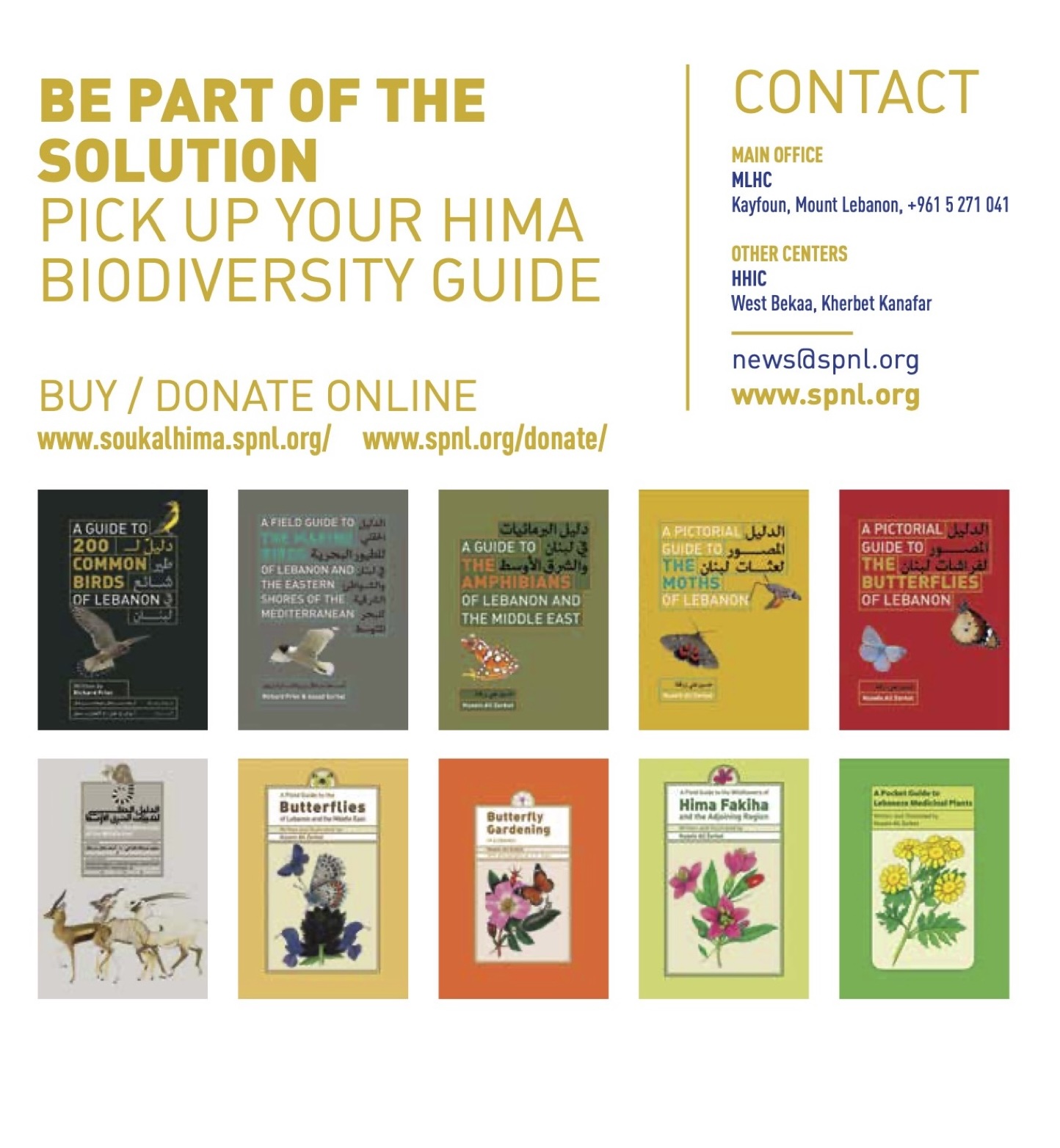


The regional workshop on the “Hybrid HIMA approach to community based resource management” took place in Istanbul, Turkey from the 14th to the 16th April 2011. The Hybrid Hima is a community-based approach to managing the natural and human resources that utilizes traditional knowledge and modern-day innovation. Hima is a traditional system of land management and customary practices that can be established for any purpose pertaining to the common good. In Arabic “Hima” means protected area and is in fact the Islamic traditional system of community-based natural and human resource management practiced in West Asia and North Africa for more than 1500 years, and links to food, energy and water security. The Society for the Protection of Nature in Lebanon (SPNL) has been actively promoting the Hima revival whose overall goal is to mesh traditional practices with recent conservation science as a way to reach sustainable development. Since 2004, SPNL has re-established five Himas, in key biodiversity areas; namely Ebel es-Saqi, in South Lebanon, Kfar Zabad, Anjar in the Bekaa region and Qoleileh, Mansouri in South Lebanon. For more information on the Hima system click here
The focus of the regional workshop was to create an enabling environment for sharing of experiences and building capacity among stakeholders in the West Asian – North African regions, in the field of natural resource governance. It also aimed to endorse the principles of the Hybrid Hima approach as an innovative governance system for effective management of protected areas, and set a regional legal framework for the development of Hybrid Himas in the WANA region. The Workshop was organized by the West Asia – North Africa (WANA) Forum, the United Nations University-Institute for Water, Environment and Health (UNU-INWEH), the Society for the Protection of Nature in Lebanon (SPNL) and the World Justice Project (WJP), in partnership with the Research Center for Islamic History, Art and Culture (IRCICA).
The MedWet Initiative was represented by its coordinator, Nejib Benessaiah, who developed the potential support areas provided by the Ramsar Resolutions on Participatory Environmental Management and presented an analysis about the spiritual roots of the Hima approach as part of the Islamic perception of nature. Since its collaboration with SPNL during the TwinMed project, MedWet is interested by the Hybrid Hima approach which effectively combines culture, tradition and environmental protection, and willing to disseminate this concept of alternative wetland management tool.
The participants of the workshop came from various countries of the Middle East and North Africa and mainly represented national and international organisations, NGOs and research centers. They presented several cases and experiences that show the value of cultural traditions of the WANA region such as hima and other community-based conservation and natural resource management models. The participants also stated that state-established protected areas, being an important tool for conservation, need to evolve towards more inclusive models and practices that support the wellbeing of peoples and communities and respect their rights.
The workshop also noted that current processes of political change in countries of the region create opportunities for strengthening the role of civil society, including rural communities, in conservation and natural resource management, as well as for reforming state institutions in charge of the environment in order to make them more accountable, effective, and closer to the people and local realities
Beside the exchange of experiences and networking, the workshop was successful in focusing on the most important principles of the Hima approach and the practical steps to develop a regional and comprehensive policy brief. It has been decided to establish a working group with the task of designing a strategy for including Hybrid Hima in the protected area management in the region, on the basis of clearer policies and legislation relating to natural resource governance and local communities involvement.