


Lebanon has officially welcomed Hima Aaitat as its 43rd Hima, marking a significant milestone in the national revival of the Hima system as a community-based approach to environmental protection rooted in Lebanon’s cultural, historical, and ecological heritage. The declaration reinforces a growing national movement that places local stewardship, municipal leadership, and collective responsibility at the heart of conservation efforts.
The decision was formally adopted by the Municipal Council of Aaitat under Decision No. 26/2026, dated 8 January 2026, during a duly convened session held in accordance with the amended Municipal Law and relevant public accounting legislation. Guided by considerations of public interest and supported by environmental and scientific studies highlighting the importance of protecting natural resources and ensuring ecosystem sustainability, the council approved the establishment of a natural Hima within the municipal boundaries of Aaitat in cooperation with the Society for the Protection of Nature in Lebanon (SPNL).
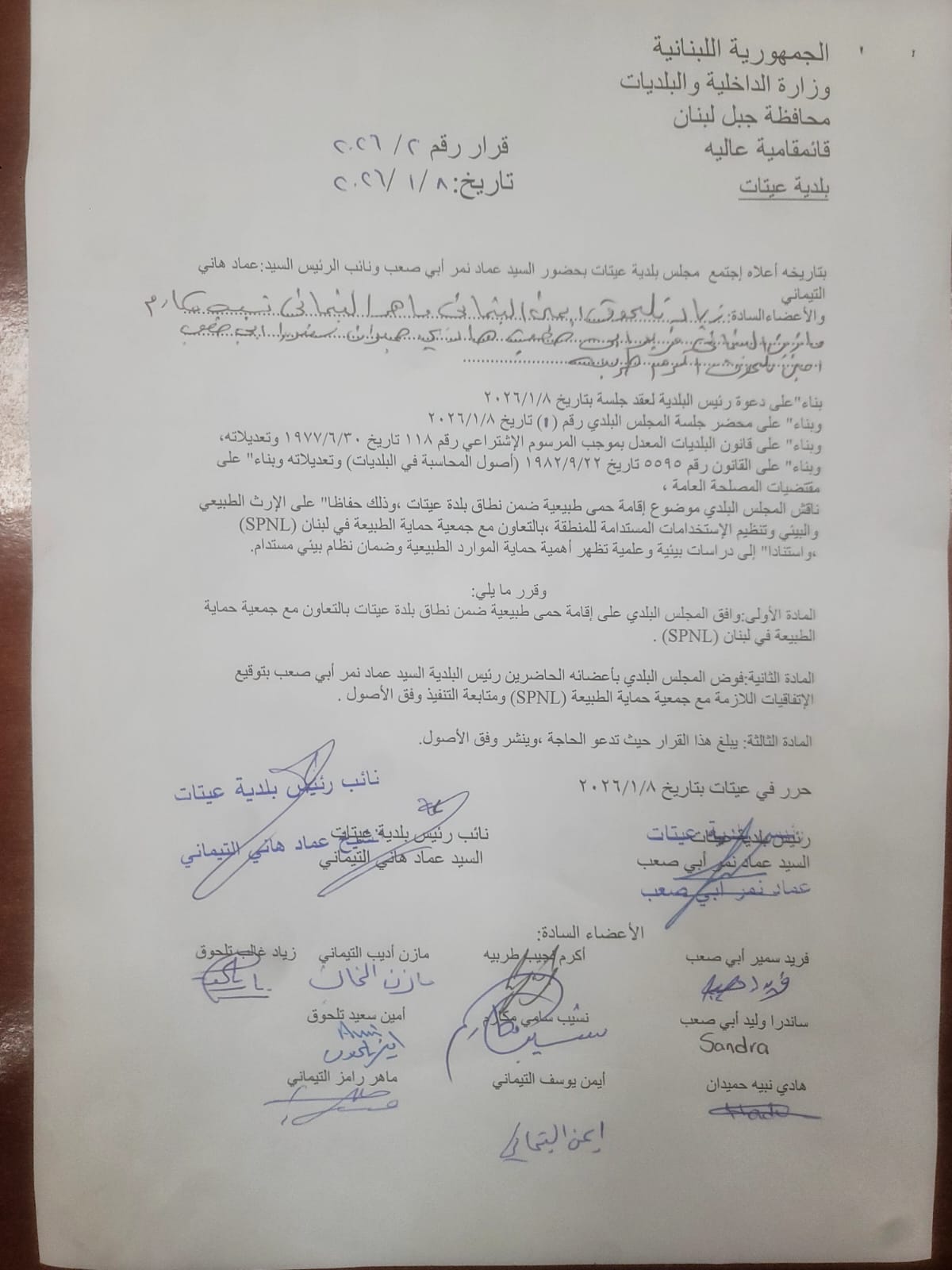
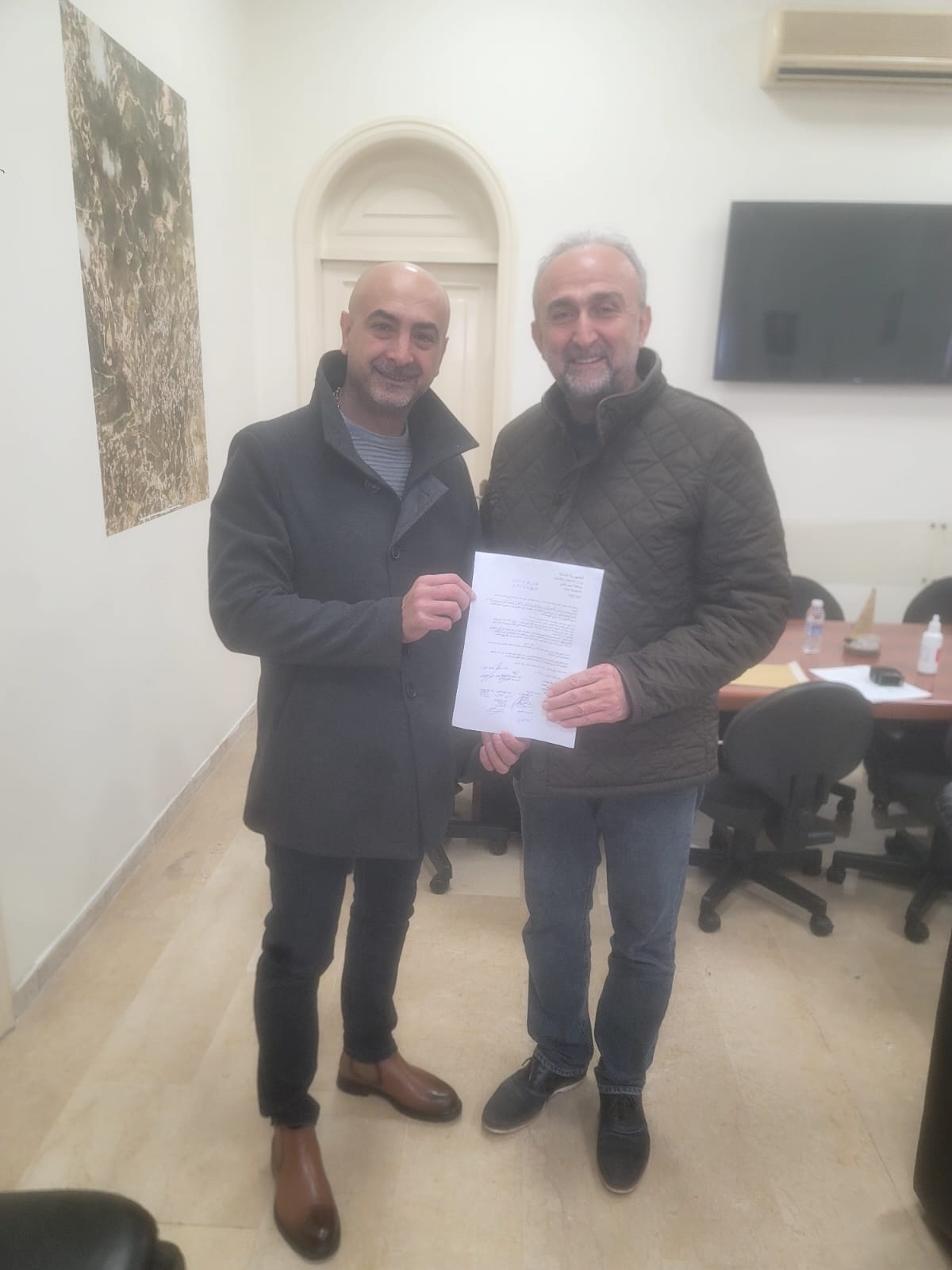
The decision authorizes the Mayor of Aaitat, Mr. Imad Nimer Abi Saab, to sign the necessary agreements with SPNL and to oversee implementation according to legal procedures. Through this step, the municipality formally commits to safeguarding its natural heritage, regulating land use sustainably, and strengthening community participation in environmental governance.
With the addition of Hima Aaitat, SPNL’s national Hima network now comprises 43 sites across Lebanon, reflecting a living model of collaboration between municipalities, local communities, civil society, and national and international partners. This growing network positions Lebanon as a regional pioneer in community-based conservation and aligns with global biodiversity commitments, including the Kunming–Montreal Global Biodiversity Framework and its 30×30 target.
Located approximately five kilometres west of Aley, within the Aley District of Mount Lebanon, Aaitat overlooks the Lebanese capital, Beirut, and has long held strategic, cultural, and symbolic importance. The town is historically referenced as early as 1838 and played a notable role during the Lebanese Civil War due to its geographic position.
Aaitat is also home to one of Mount Lebanon’s hidden cultural landmarks, the Sami Makarem Cultural Center, a 350-year-old Ottoman mansion restored by the late scholar, writer, poet, and artist Dr. Sami Makarem. Originally built in the 17th century by the influential Talhouk family, feudal lords of West Mount Lebanon during the Ottoman period, the mansion once functioned as a multifunctional complex housing residential quarters, military barracks, a bakery, judicial spaces, and detention rooms, reflecting its central role in local governance and social life.
Despite years of neglect and severe damage during the Israeli invasion of Mount Lebanon in the early 1980s, the restoration of the mansion continued as an act of resilience and cultural preservation. Dr. Makarem’s vision was later carried forward by his son and family, transforming the site into a living cultural center that today stands as a testament to memory, continuity, and renewal. This legacy of stewardship over land, people, and heritage closely mirrors the traditional principles of the Hima system.
The declaration of Hima Aaitat builds on this deep-rooted historical and cultural fabric. Together with its neighbouring town of Souk El-Gharb, Aaitat forms part of West Mount Lebanon’s landscape where the Hima concept has historically been associated with coexistence, shared resource management, and local peace charters. By integrating biodiversity conservation with cultural heritage and community identity, Hima Aaitat embodies SPNL’s vision of Himas as living landscapes that protect nature while reinforcing social cohesion and sustainable local development.