

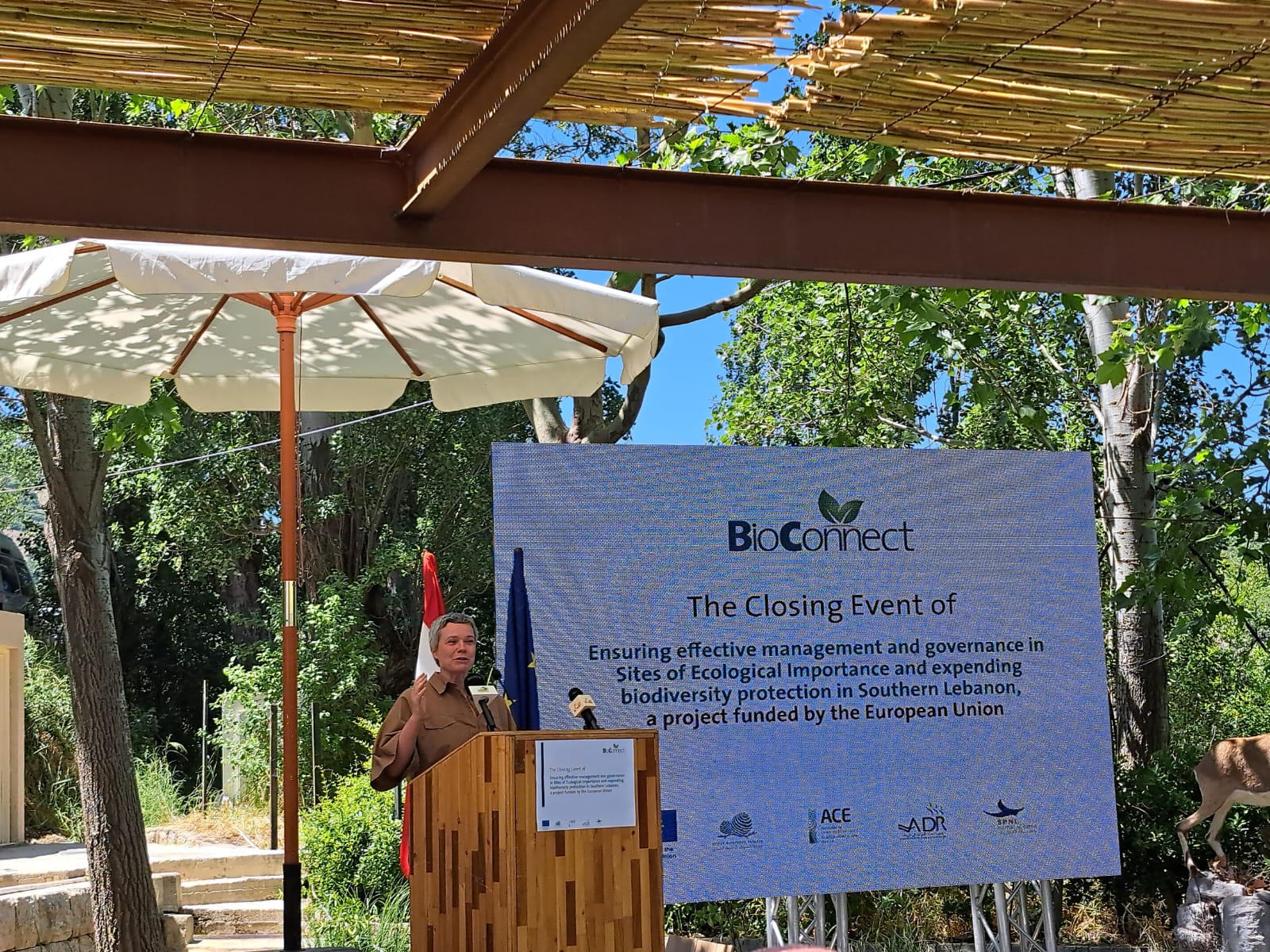
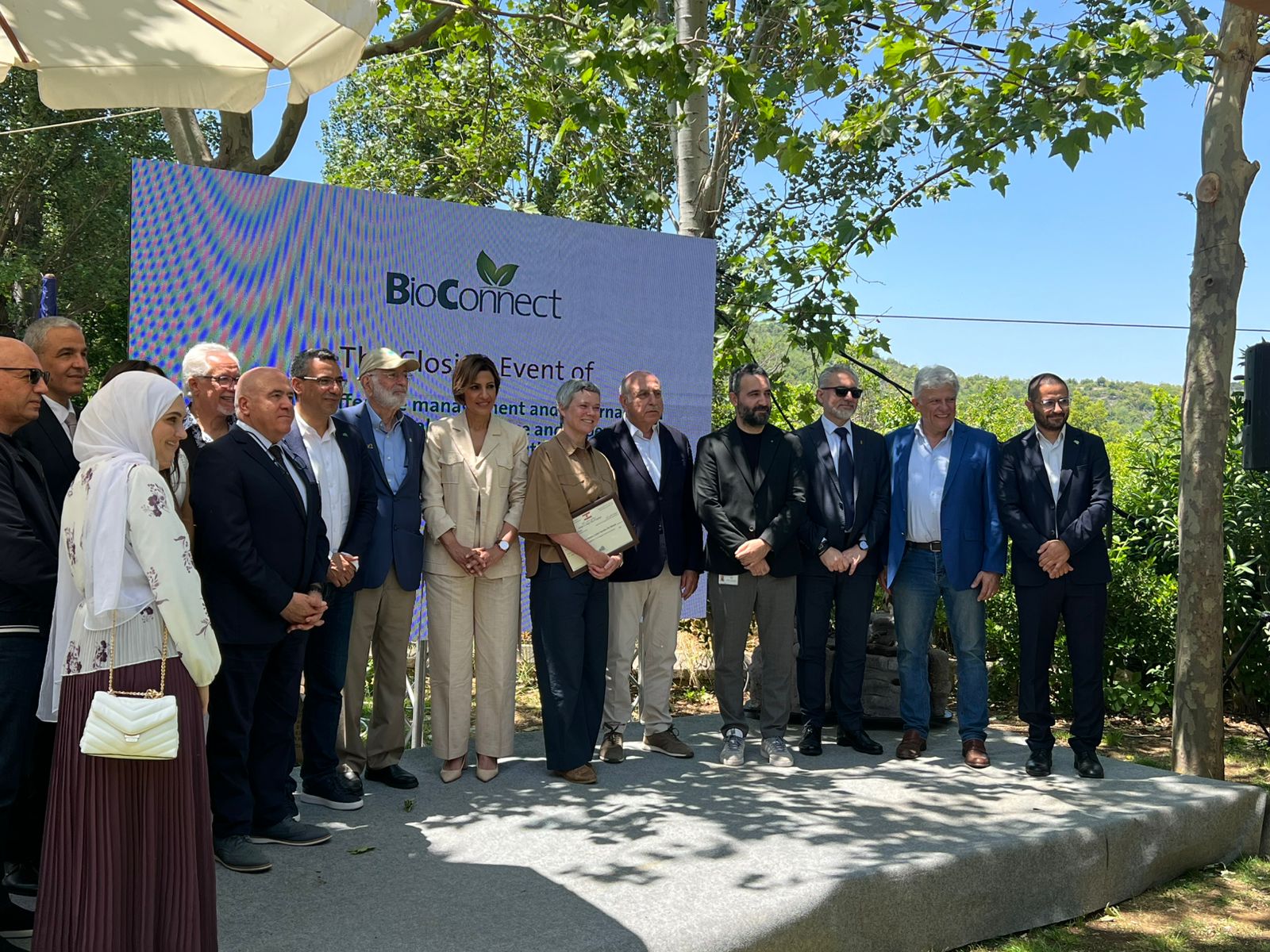
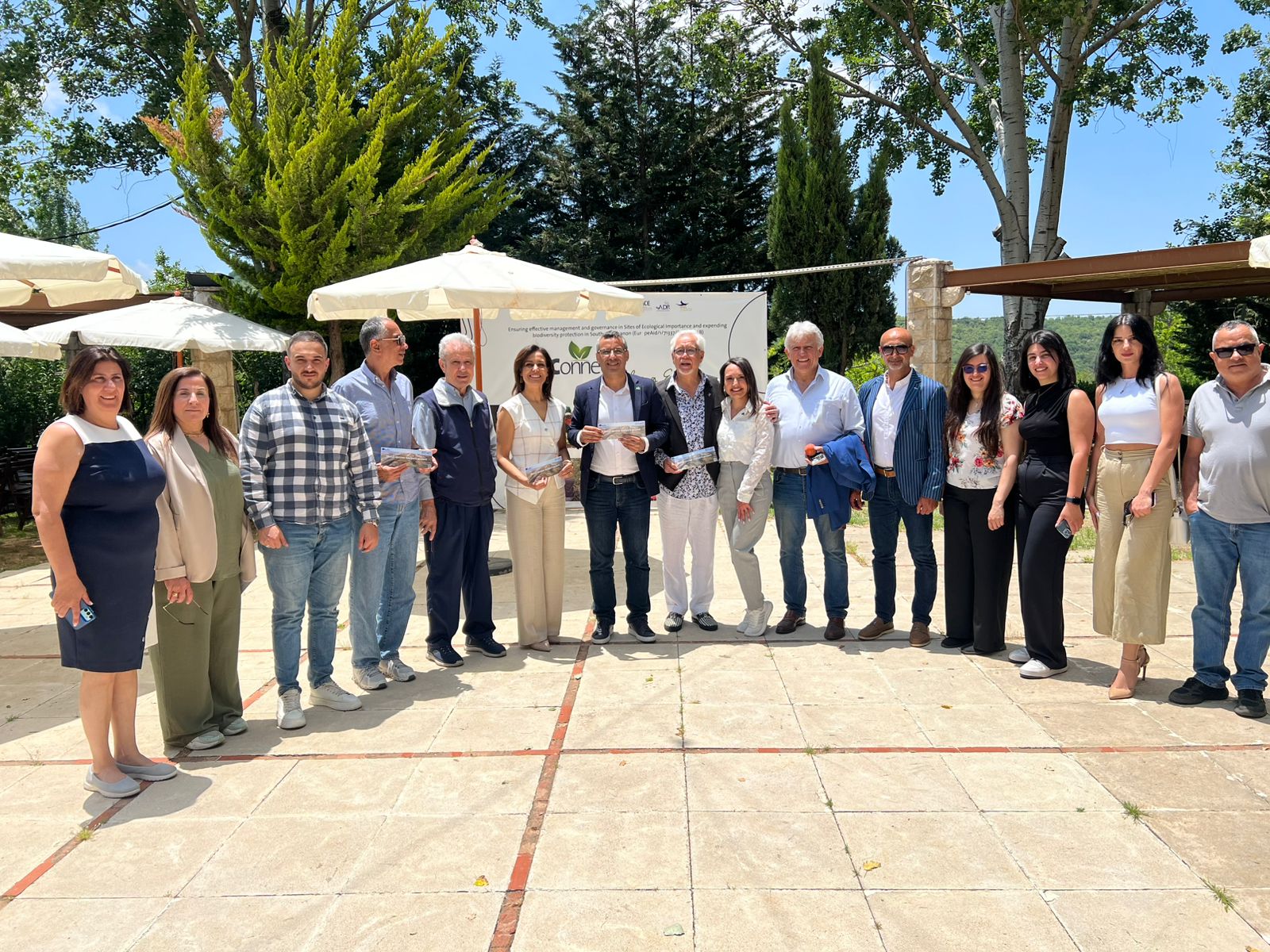
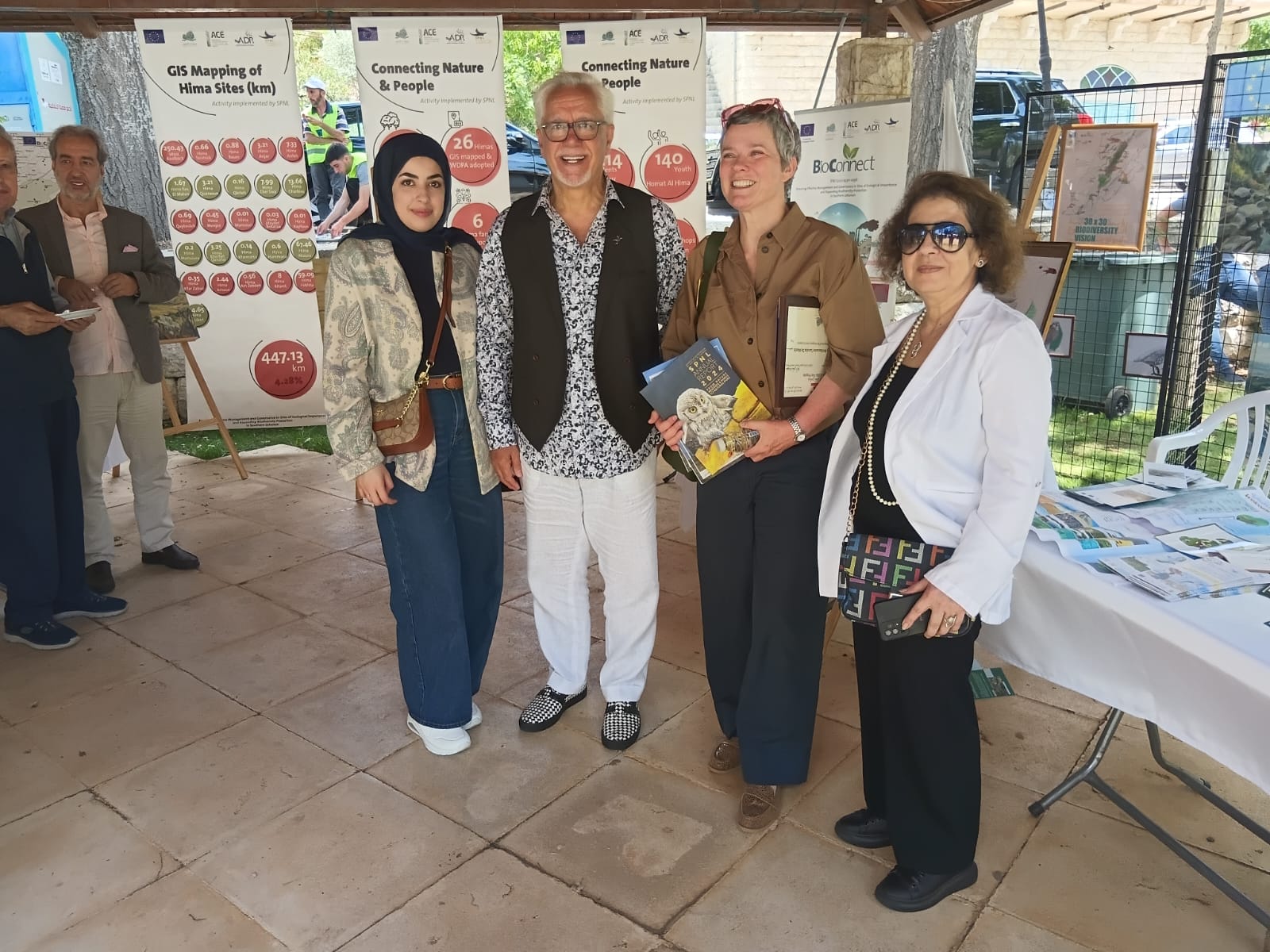
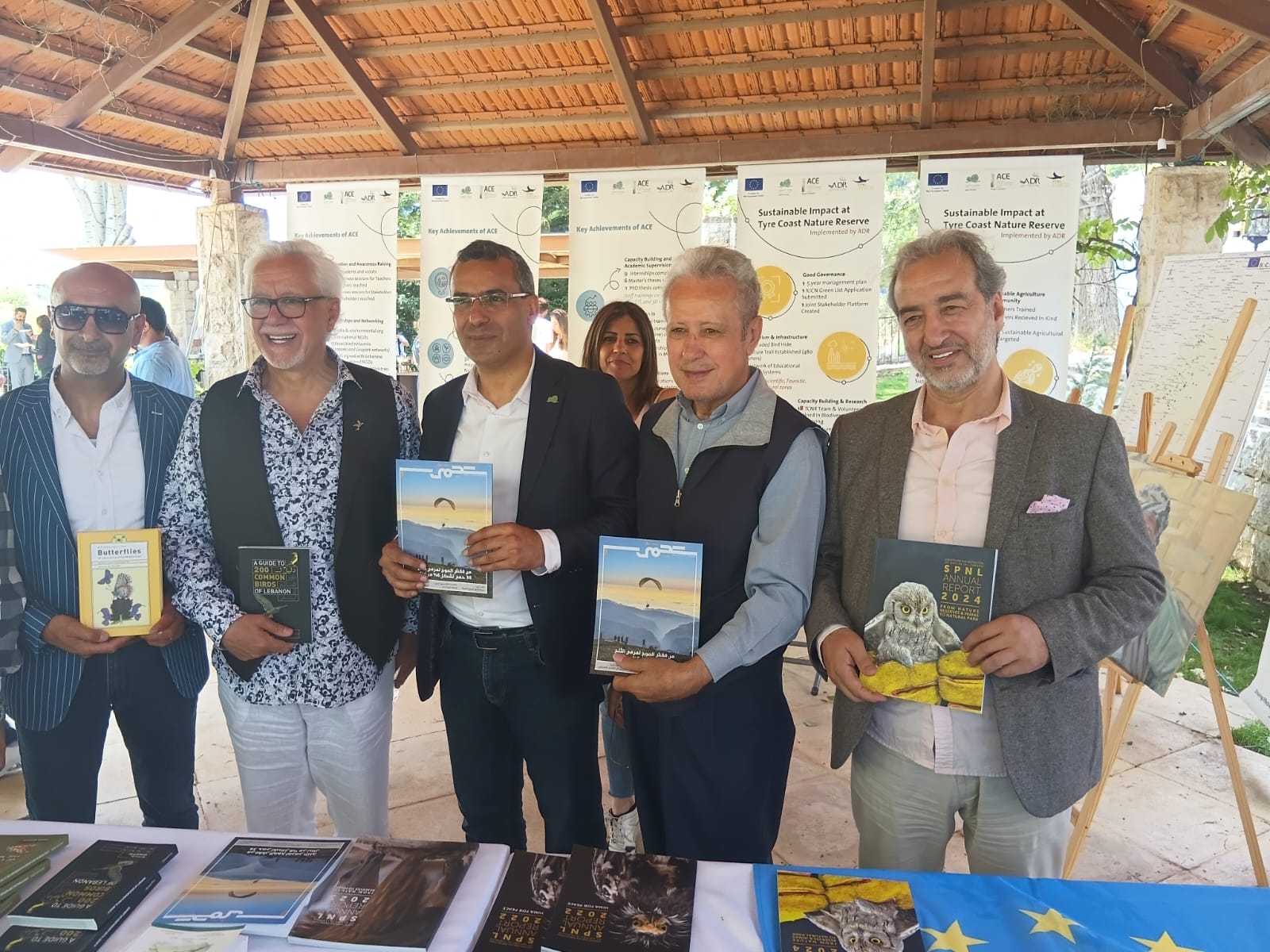
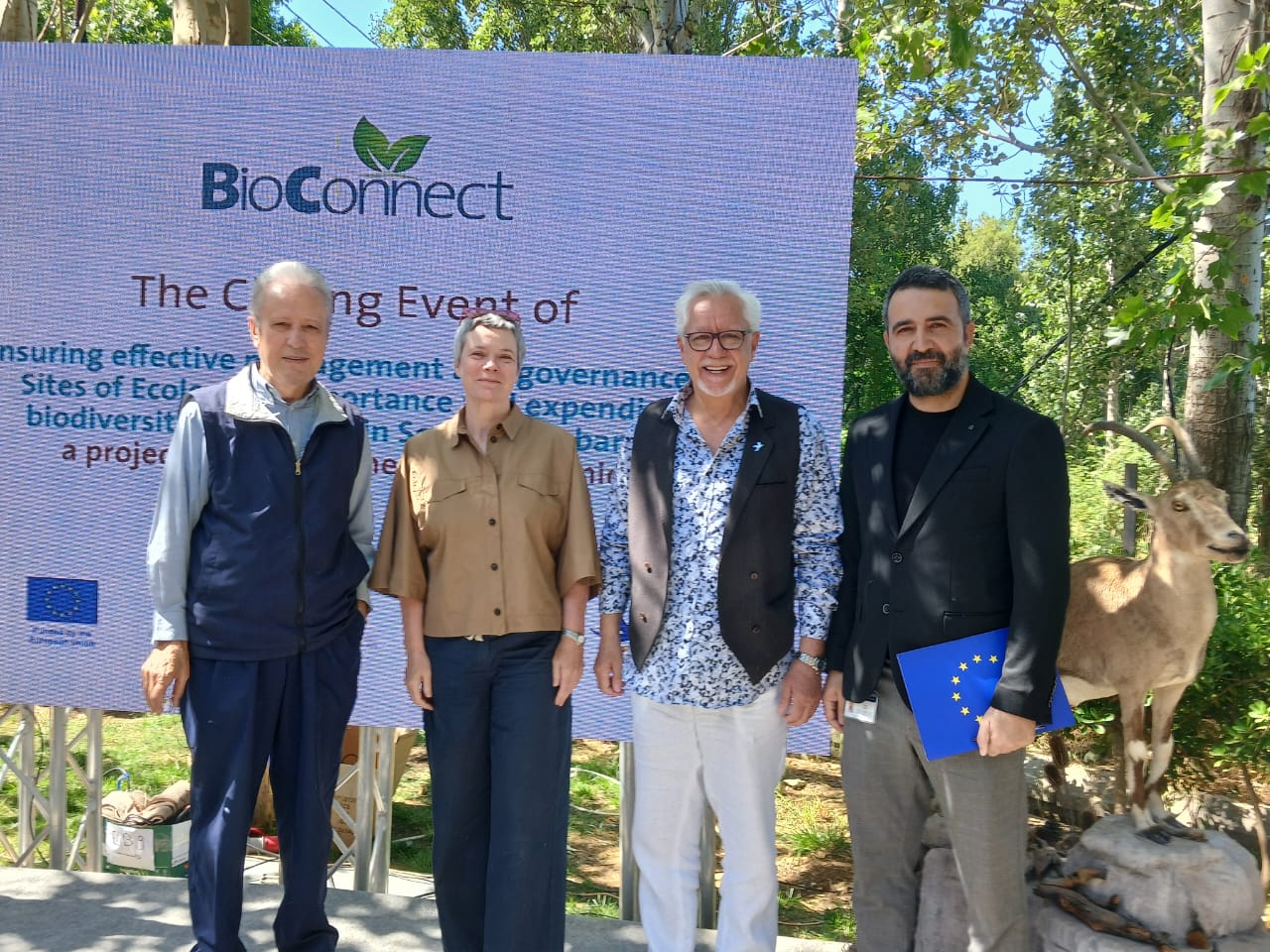
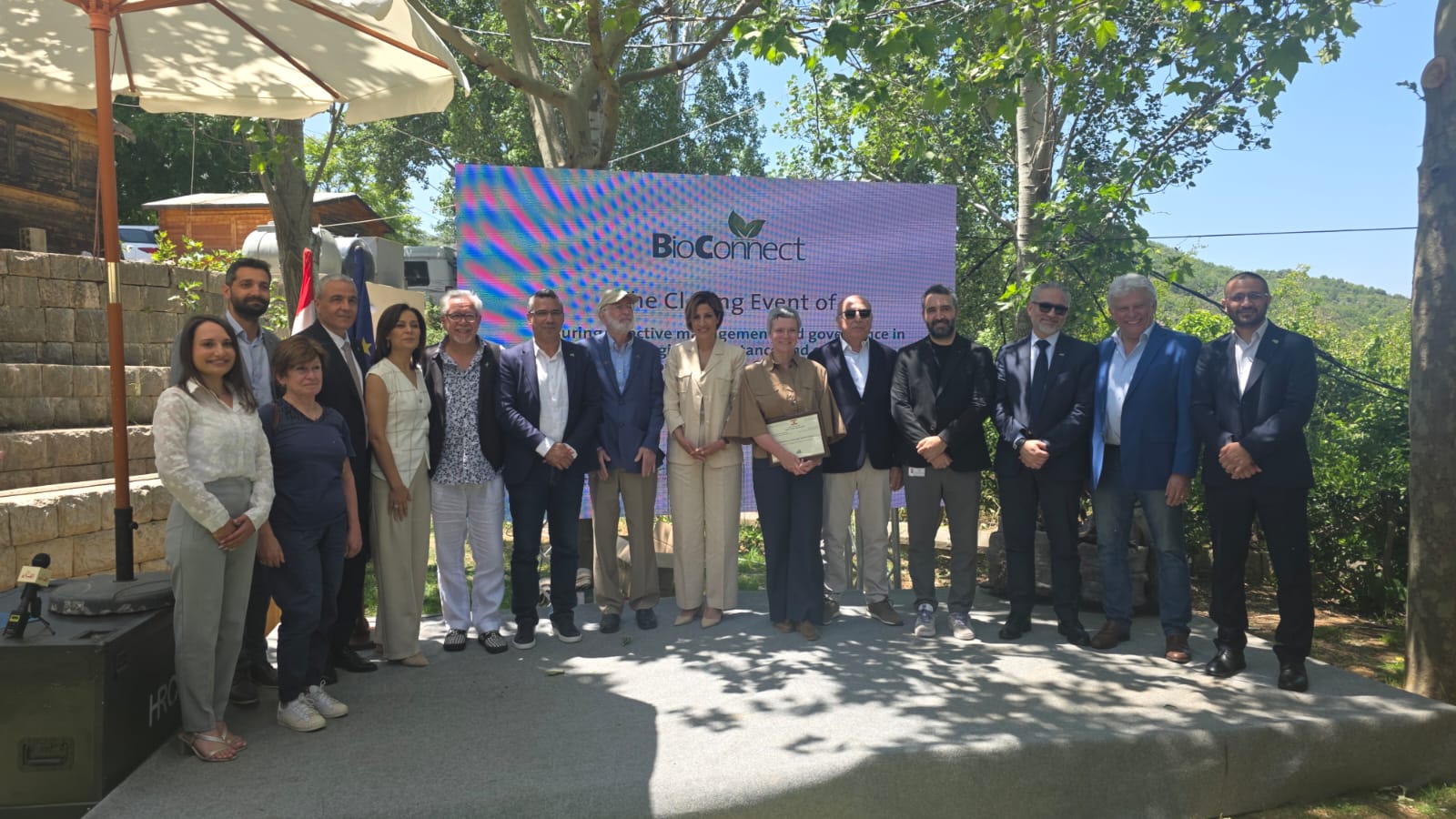
The Society for the Protection of Nature in Lebanon (SPNL), together with its consortium partners and the European Union, celebrated the successful completion of the BioConnect Programme, a landmark initiative that has strengthened biodiversity conservation, ecological connectivity, and community-based environmental governance across Lebanon.
More than a project-closing event, the gathering became a celebration of a growing national conservation movement built around the revival of the ancient Hima approach, which has emerged as one of Lebanon’s most successful models for connecting people and nature while safeguarding biodiversity, cultural heritage, and sustainable livelihoods.
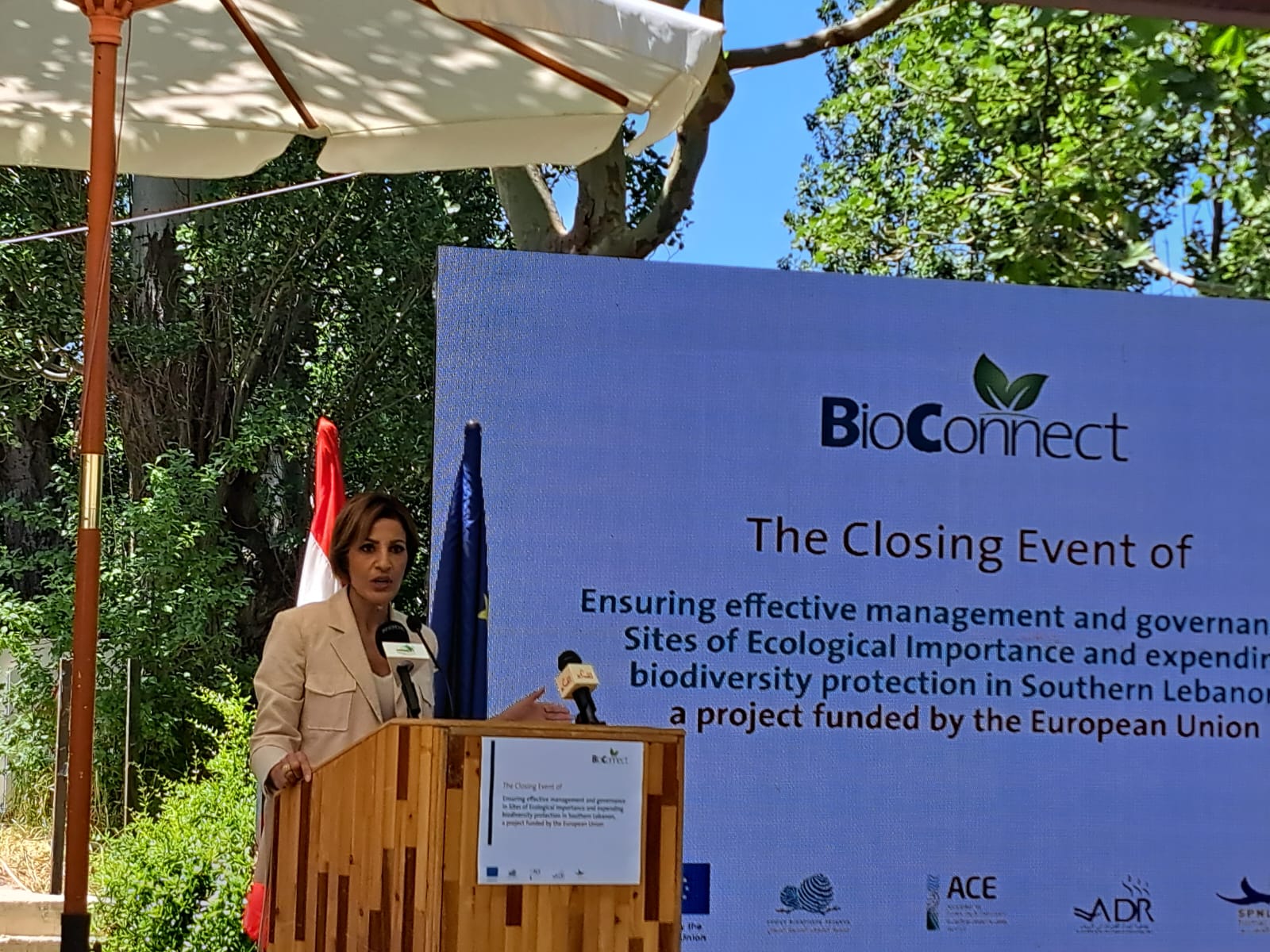
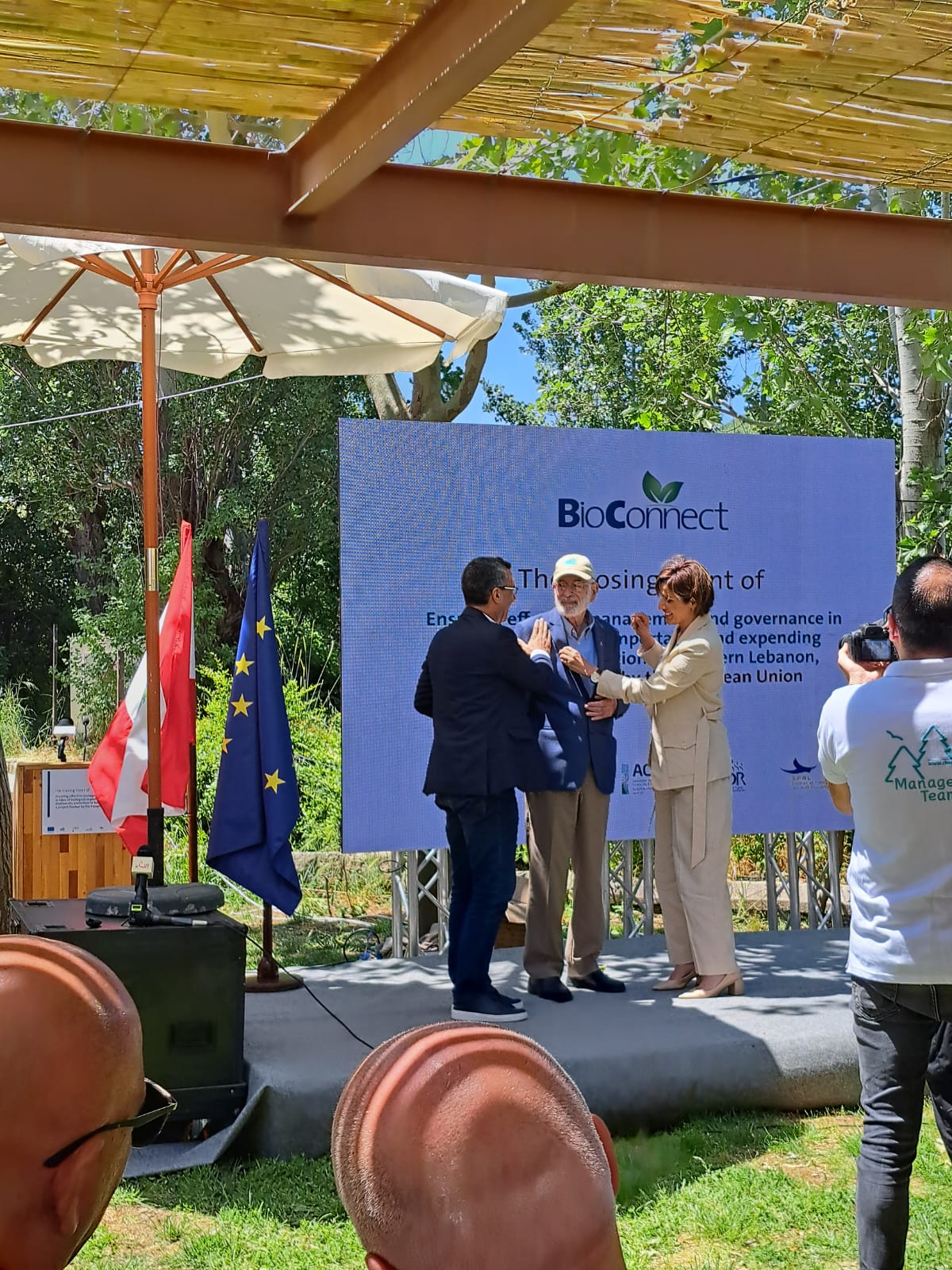
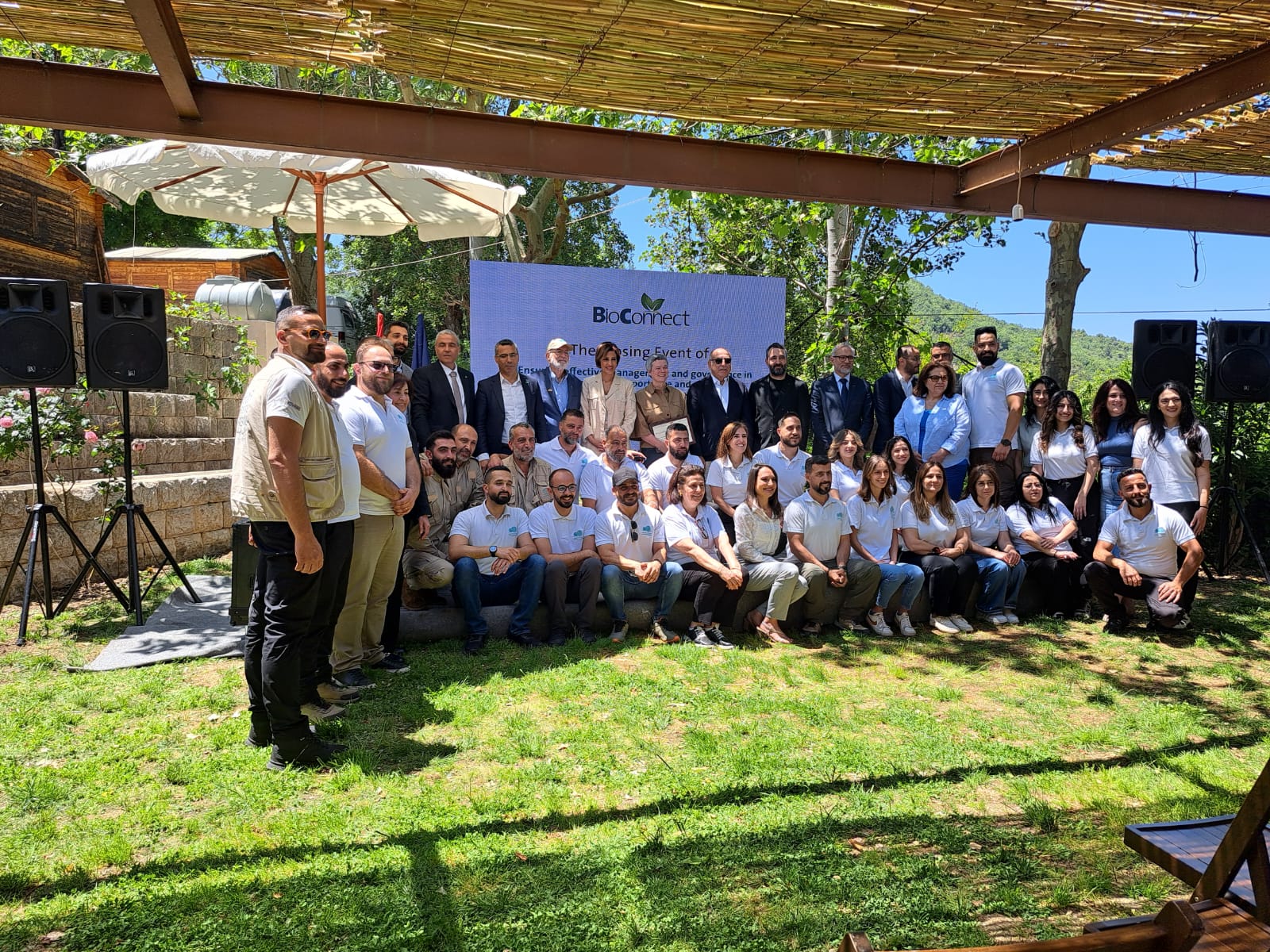
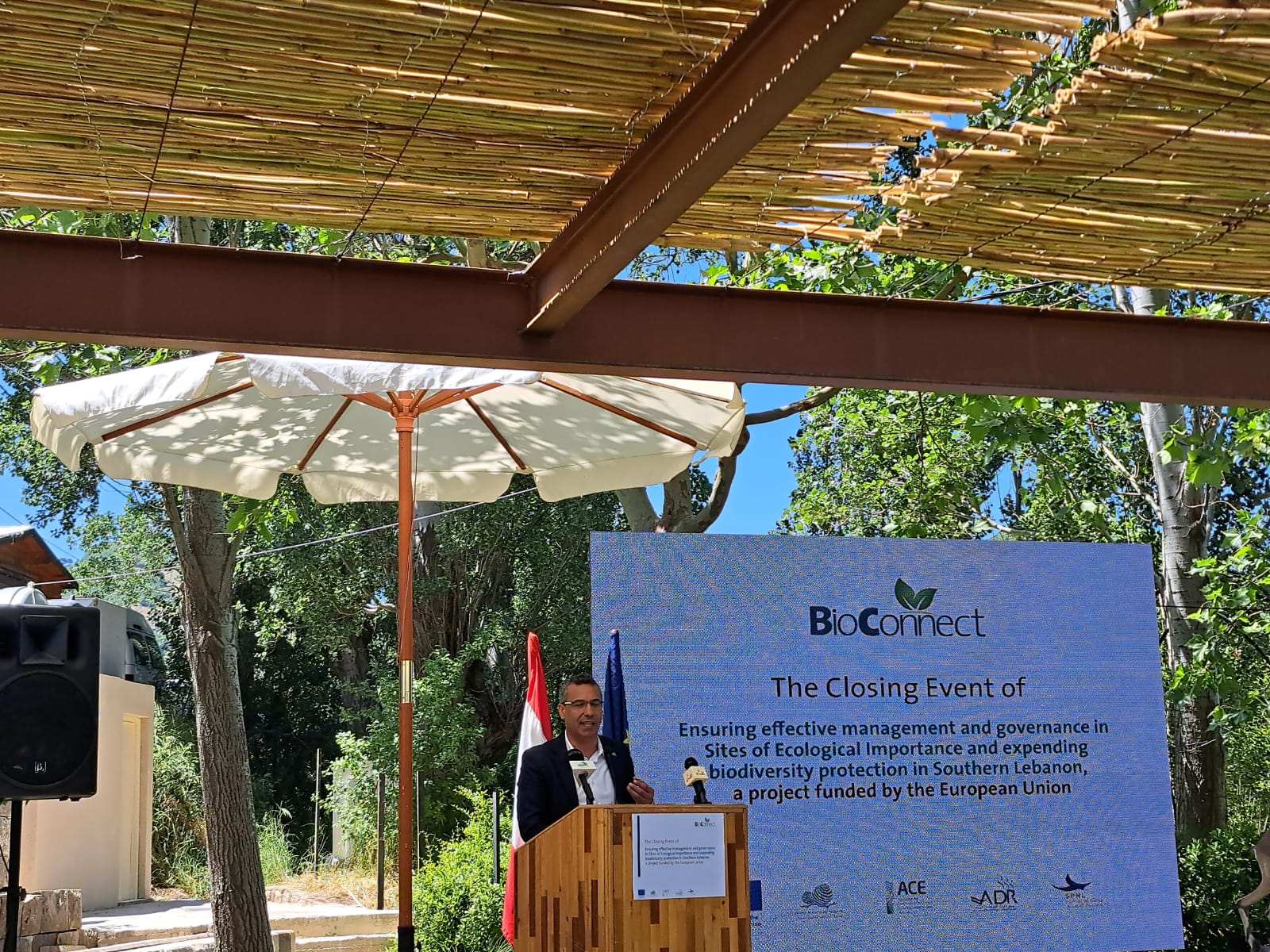
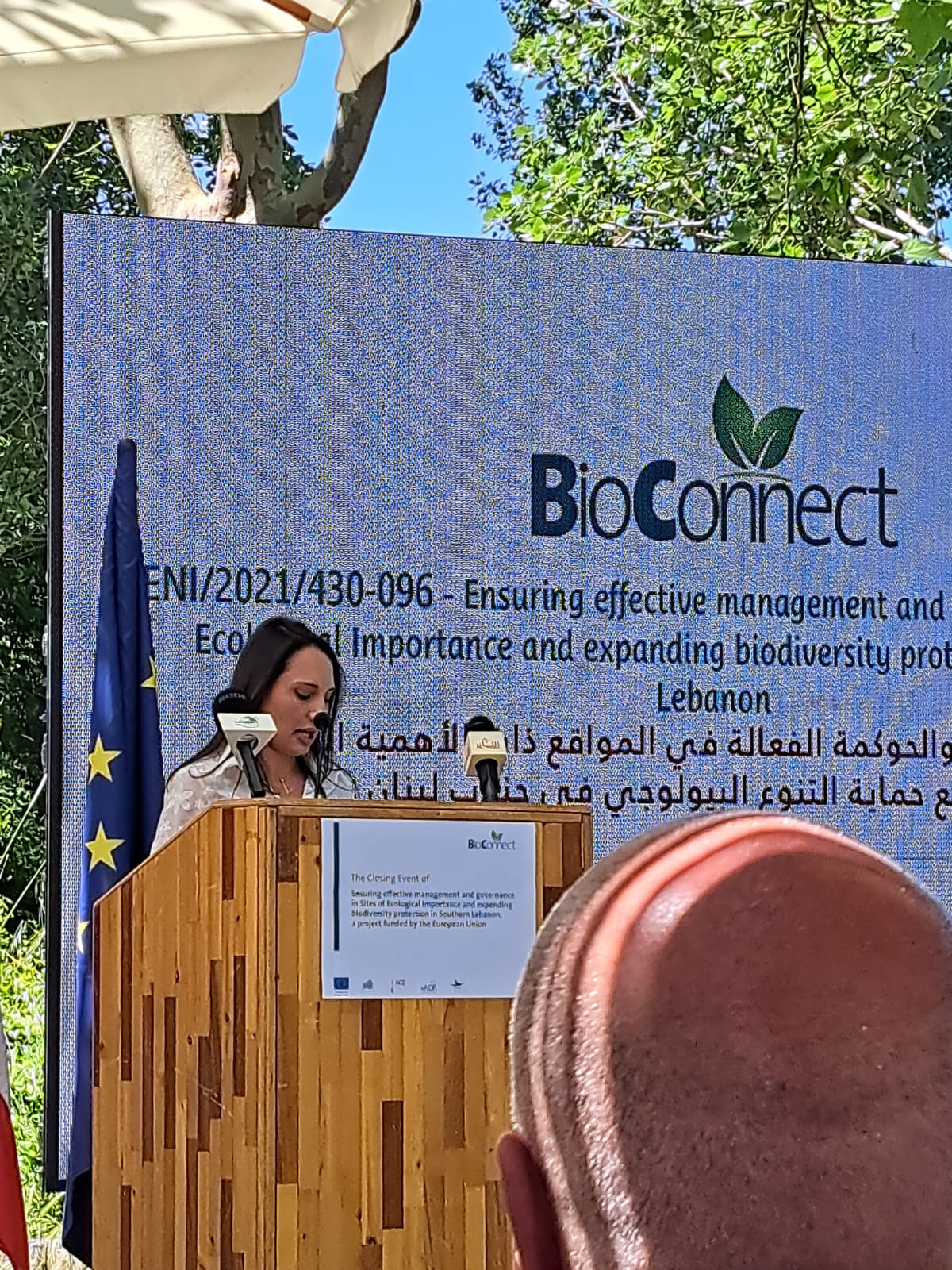
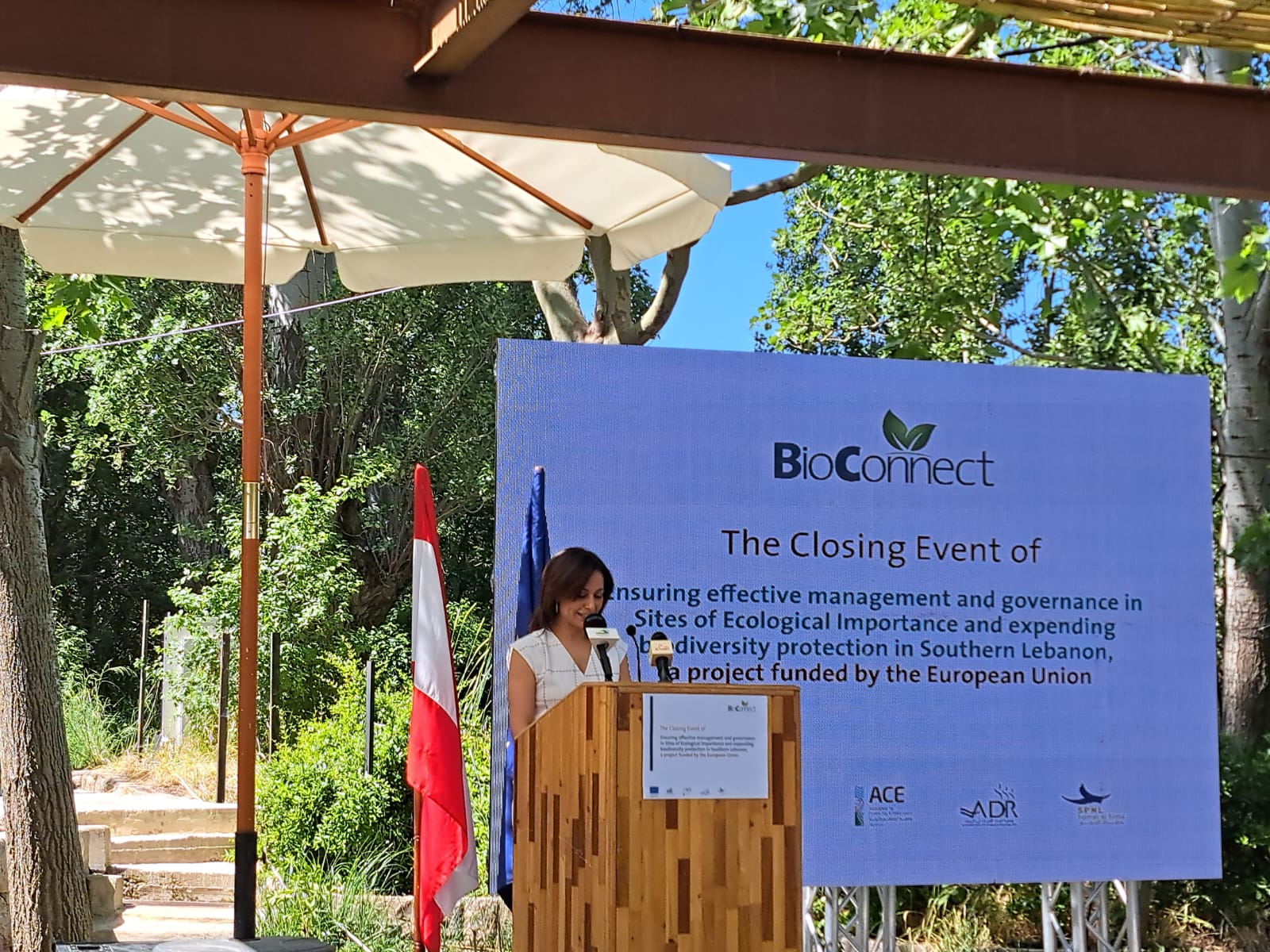
The event brought together H.E. Dr. Tamara El-Zein, Minister of Environment, H.E. Dr. Nizar Hani, Minister of Agriculture, Sandra De Waele, Ambassador of the European Union to Lebanon, Member of Parliament Akram Chehayeb, Mr. Fadi Ghanem, Assad Serhal, Director General of SPNL, President of Ghadi Association and Coordinator of the IUCN Members’ Network in Lebanon, Eng. Malek Ghandour, President of the Lebanese Environment Forum and member of the Economic, Social and Environmental Council, Dr Saleem Hamadeh, director of Environment for Life, alongside representatives of municipalities, universities, civil society organizations, protected areas, development agencies, and environmental experts from across the country.
Among the participants were representatives of ACS, ADR, ACE, CNRS-L, EFL, LEF, UNDP, the Lebanese University, AUB, Horsh Ehden Nature Reserve, Animal Encounter, ADIR, SDML, ArchiMed, and numerous municipalities and local conservation initiatives, including the Municipality of Rachaya, which has become a key partner in advancing the Hima model in the Beqaa region.
A Legacy Beyond BioConnect
Funded by the European Union and implemented by a consortium consisting of SPNL, the Al Shouf Cedar Society (ACS), the Association for the Development of Rural Capacities (ADR), and the Association for Community and Environment (ACE), the 45-month BioConnect Programme worked to strengthen protected areas and Other Effective Area-Based Conservation Measures (OECMs), improve ecological connectivity, support sustainable livelihoods, and empower local communities to become stewards of their natural heritage.
The programme contributed to biodiversity monitoring, habitat restoration, sustainable agriculture, ecotourism development, environmental education, citizen science, and climate resilience initiatives across multiple regions of Lebanon.
Through BioConnect, SPNL expanded and strengthened its Hima network, supporting biodiversity conservation initiatives from South Lebanon to the Beqaa, Mount Lebanon, and beyond. The programme helped demonstrate that conservation is most successful when local communities are empowered to lead it.
Ministers Praise the Hima Revival
A highlight of the event was the strong recognition given to SPNL’s Hima movement by both the Minister of Environment and the Minister of Agriculture.
In her remarks, Minister Dr. Tamara El-Zein praised SPNL’s achievements in reviving the Hima system across Lebanon, noting that the organization has successfully established nearly sixty Himas representing diverse communities, habitats, and ecosystems throughout the country.
She remarked that with the momentum SPNL has created, she would not be surprised to see the organization reach one hundred Himas before the end of 2026, recognizing the Hima model as one of Lebanon’s most promising approaches to conservation and community engagement.
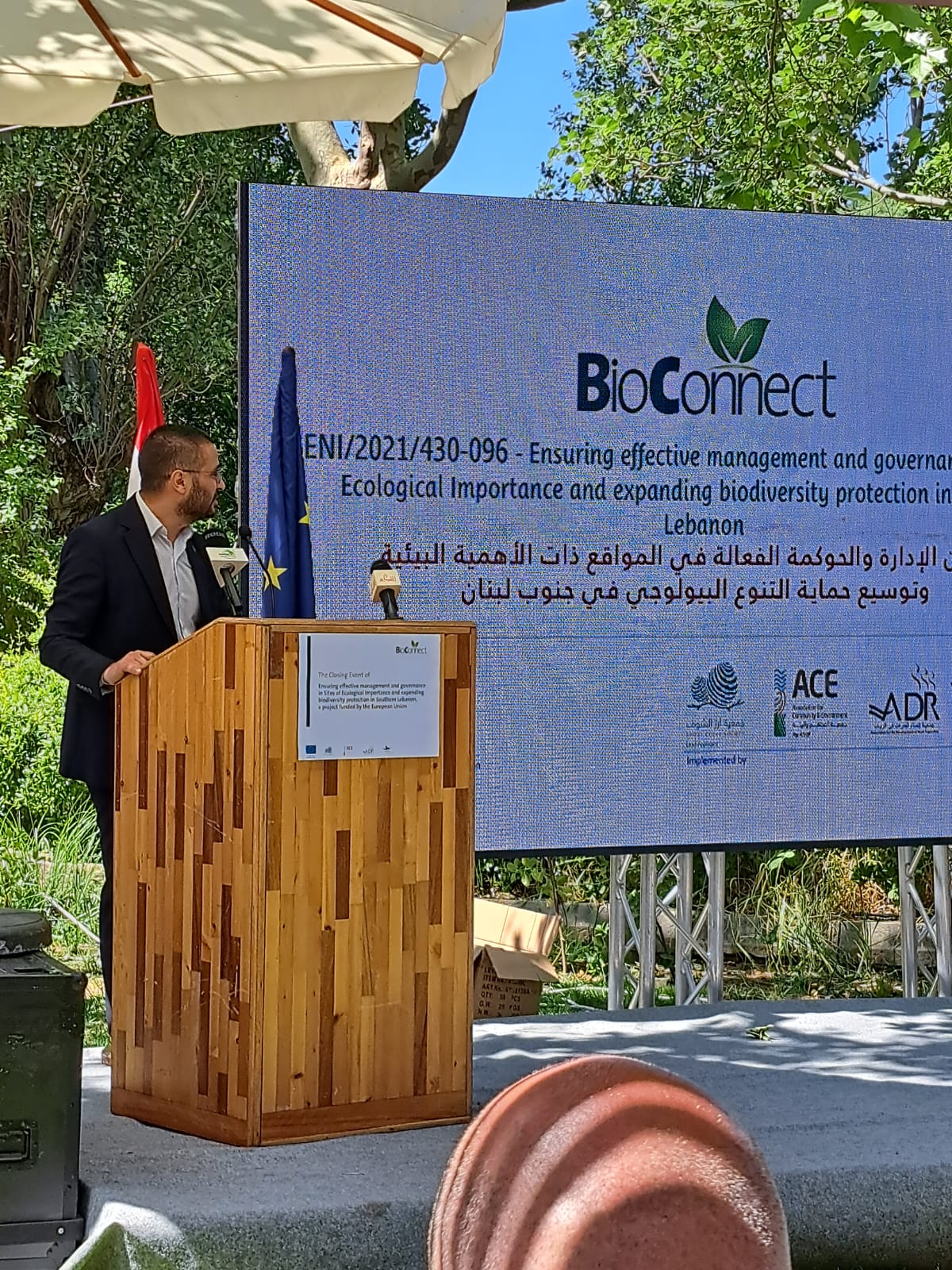
Minister Dr. Nizar Hani similarly commended SPNL’s efforts and highlighted the importance of community-led conservation initiatives that integrate environmental protection with sustainable local development.
European Union Commends Local Conservation Leadership
European Union Ambassador Sandra De Waele highlighted the importance of local conservation leadership and praised the achievements of the Hima movement supported through BioConnect.
Drawing on her personal experiences visiting and hiking in several Hima sites, particularly Hima Ras El Matn, the Ambassador emphasized the importance of conserving Lebanon’s natural landscapes and expressed her appreciation for the vision of establishing the proposed Beirut River Valley Natural Park and Biosphere Reserve, a project that represents a significant opportunity to connect conservation, recreation, and sustainable development in Mount Lebanon.
Her remarks reflected the European Union’s continued commitment to supporting locally driven environmental initiatives that create tangible benefits for both nature and people.
From the Shouf to a National Movement
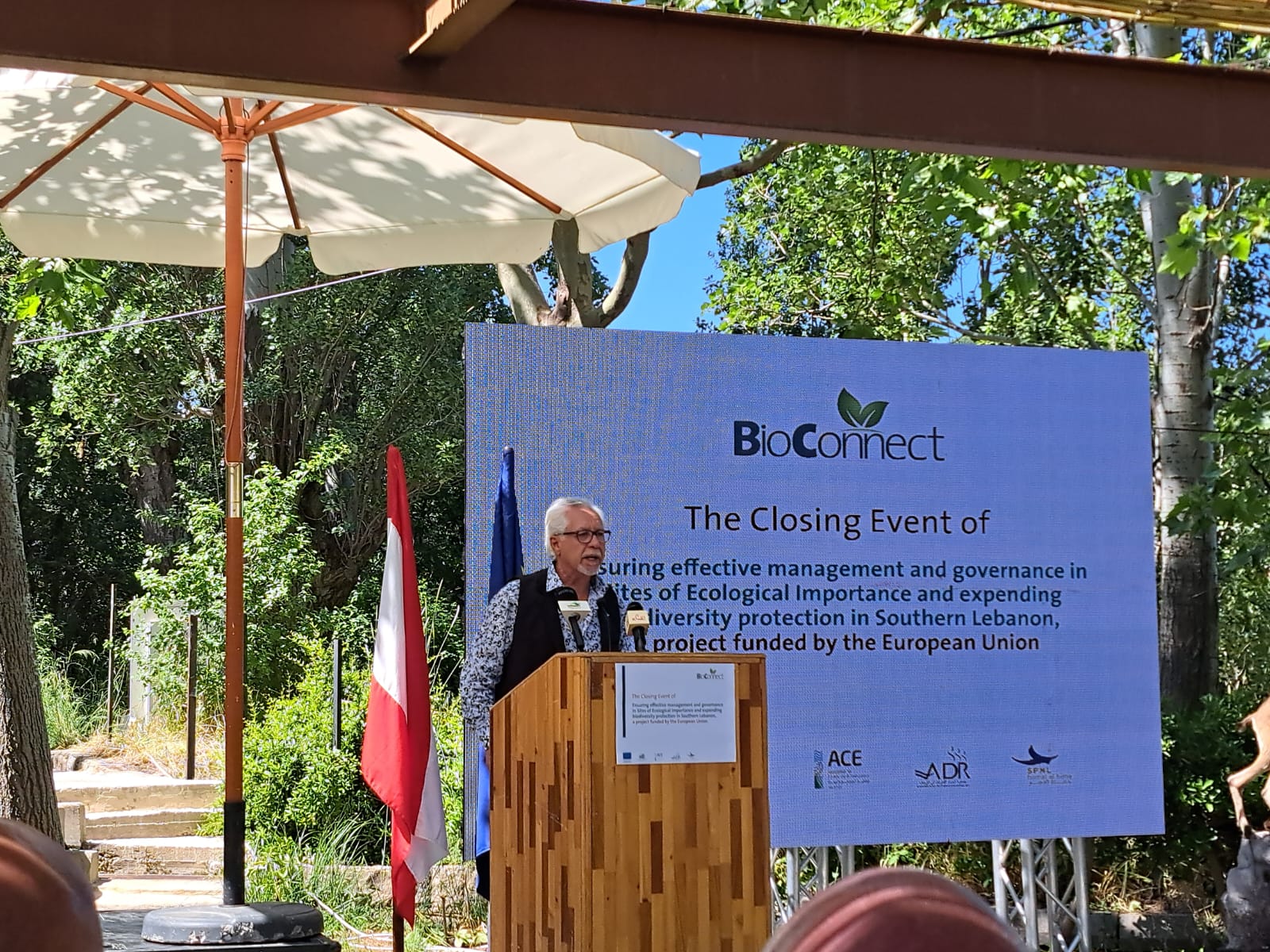
In his address, Assad Serhal reflected on a conservation journey spanning three decades, paying special tribute to Walid Jumblatt for his longstanding support of environmental conservation efforts in Lebanon and for his role in supporting the establishment of the Al Shouf Cedar Society, which SPNL helped co-found in 1996.
Serhal recalled being appointed on 15 February 1996 as the first manager of the Shouf Biosphere Reserve, where he led a pioneering team of rangers and guides and worked to establish one of the region’s most respected protected area models.
Built on a clear vision, a strong institutional foundation, and an ambitious five-year action plan, the reserve became a model of sustainability and community participation that would later inspire the expansion of the Hima approach across Lebanon.
He noted that the journey that began in the Shouf continued through SPNL’s work over the years and is now reaching communities throughout West Beqaa, Jezzine, Mount Lebanon, the Beirut River Valley, and many other regions.
“The Hima movement is about connecting people and nature for generations to come,” Serhal said. “The BioConnect programme has helped demonstrate that conservation succeeds when communities become its custodians.”
Recognizing Key Partners
SPNL and its partners expressed their gratitude to the European Union for its trust and support throughout the programme.
Special appreciation was extended to Jihad Jaradi and Cyril Dewaleyne for their continued support and engagement throughout the implementation of the BioConnect Programme and for their commitment to strengthening biodiversity conservation efforts in Lebanon.
The organizers also acknowledged the contributions of Fadi Ghanem, Malek Ghandour, the consortium partners ACS, ADR and ACE, the management teams of Lebanon’s protected areas, municipalities, researchers, volunteers, community leaders, and all individuals and institutions whose collaboration contributed to the programme’s success.
Particular recognition was given to the leadership and staff of the Al Shouf Cedar Society, including its newly appointed management team, for their enduring role in advancing conservation and protected area management in Lebanon.
Looking Ahead
Although BioConnect has formally concluded, participants agreed that its legacy is only beginning.
The programme leaves behind stronger institutions, empowered communities, improved biodiversity knowledge, expanded ecological networks, and a growing national movement for conservation based on the Hima philosophy.
As Lebanon faces mounting environmental challenges, climate pressures, and biodiversity loss, the partnerships forged through BioConnect provide a strong foundation for future action.
The vision remains clear: to continue expanding the Hima network, strengthen ecological connectivity across landscapes, support local communities, and ensure that Lebanon’s unique natural and cultural heritage is preserved for future generations.
The programme may have reached its conclusion, but the journey of connecting people and nature continues.
About BioConnect:
Launched in February 2022 and funded by the European Union, BioConnect was a 45-month conservation programme implemented by a consortium of four Lebanese organizations: the Society for the Protection of Nature in Lebanon (SPNL), Al Shouf Cedar Society (ACS), the Association for the Development of Rural Capacities (ADR), and the Association for Community and Environment (ACE). The programme aimed to strengthen the management and governance of ecologically important sites, establish new Protected Areas and Other Effective Area-Based Conservation Measures (OECMs), and enhance landscape connectivity across key biodiversity corridors in Lebanon.
Through BioConnect, partners worked to improve ecosystem health, support sustainable livelihoods, empower local communities, and reduce pressures on biodiversity. The programme combined scientific biodiversity monitoring, sustainable agriculture, environmental education, ecotourism development, climate change adaptation, and policy advocacy to ensure long-term conservation outcomes.
SPNL’s contribution focused on advancing the Hima approach to community-based conservation across several sites, including Hammana, Ras El Matn, Kherbet Qanafar, Ain Zebdeh, Qoleileh, Mansouri, and Ebel El Saqi. Through the programme, SPNL developed biodiversity monitoring protocols for birds, mammals, reptiles, amphibians, and plants; supported sustainable farming practices through the Hima Farm initiative; engaged youth through the School with No Walls (SNOW) and Homat Al Hima programmes; promoted citizen science; and worked with municipalities to strengthen local environmental governance and biodiversity protection measures.
Among its notable achievements, BioConnect strengthened biodiversity monitoring across multiple regions of Lebanon, documented endemic and threatened species, supported farmers in adopting nature-friendly agricultural practices, engaged hundreds of students and young conservation leaders, promoted ecological connectivity between protected areas, and fostered stronger cooperation between public institutions, municipalities, academia, environmental organizations, and local communities.
While the programme has officially concluded, its legacy continues through the partnerships it created, the scientific knowledge it generated, the local capacities it strengthened, and the community-led conservation initiatives that will continue to protect Lebanon’s natural heritage for generations to come.
This can be inserted after the introductory paragraph of the press release under a section titled “About BioConnect”.