


The IUCN World Conservation Congress: A Roadmap for Transformative Conservation
Natural resources and the Earth’s life-support systems are facing unprecedented rates of degradation. Pollution, biodiversity loss, and climate change have converged into a triple planetary crisis, compounded by geopolitical instability, armed conflicts, weakening international cooperation, and shrinking civic space.
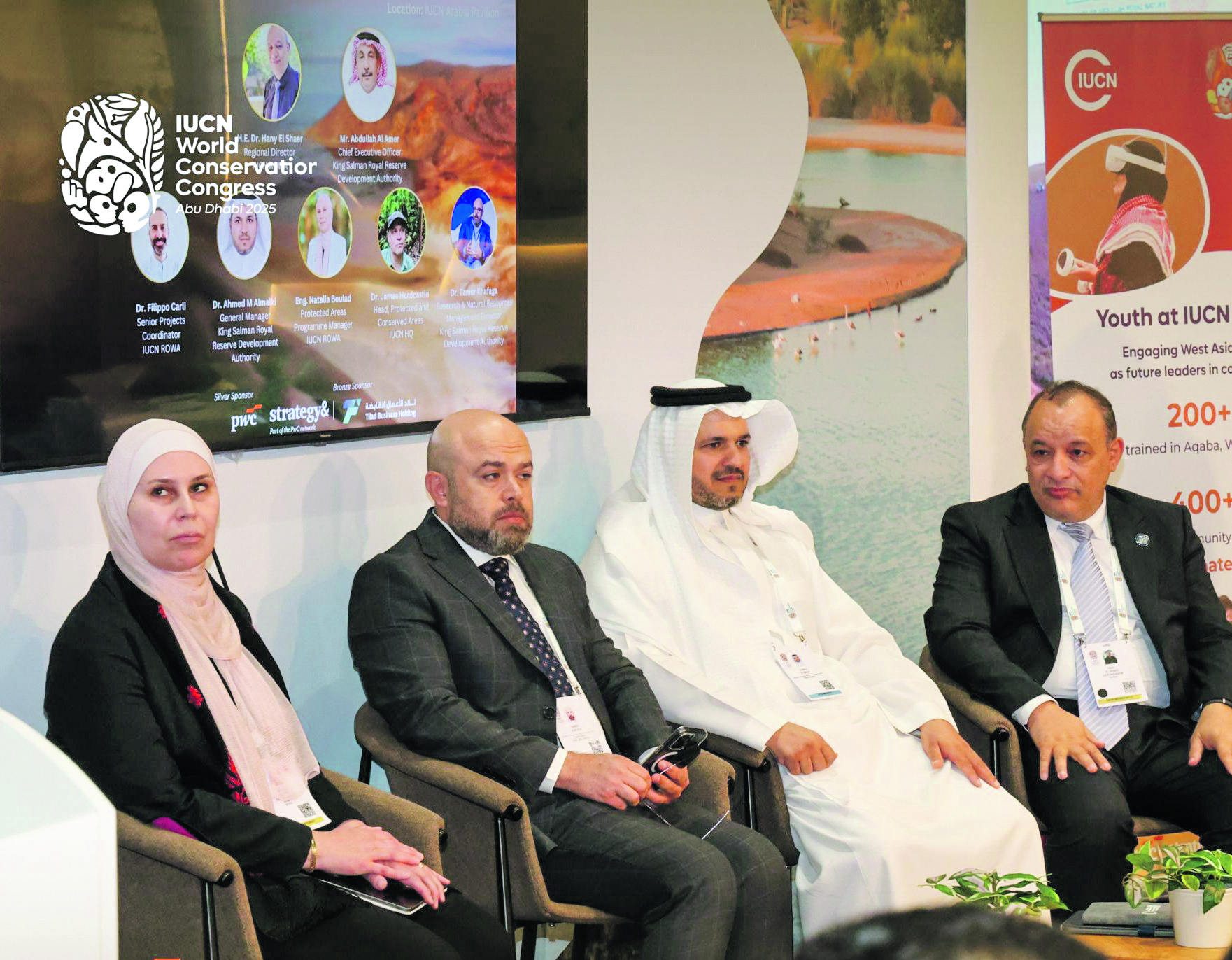
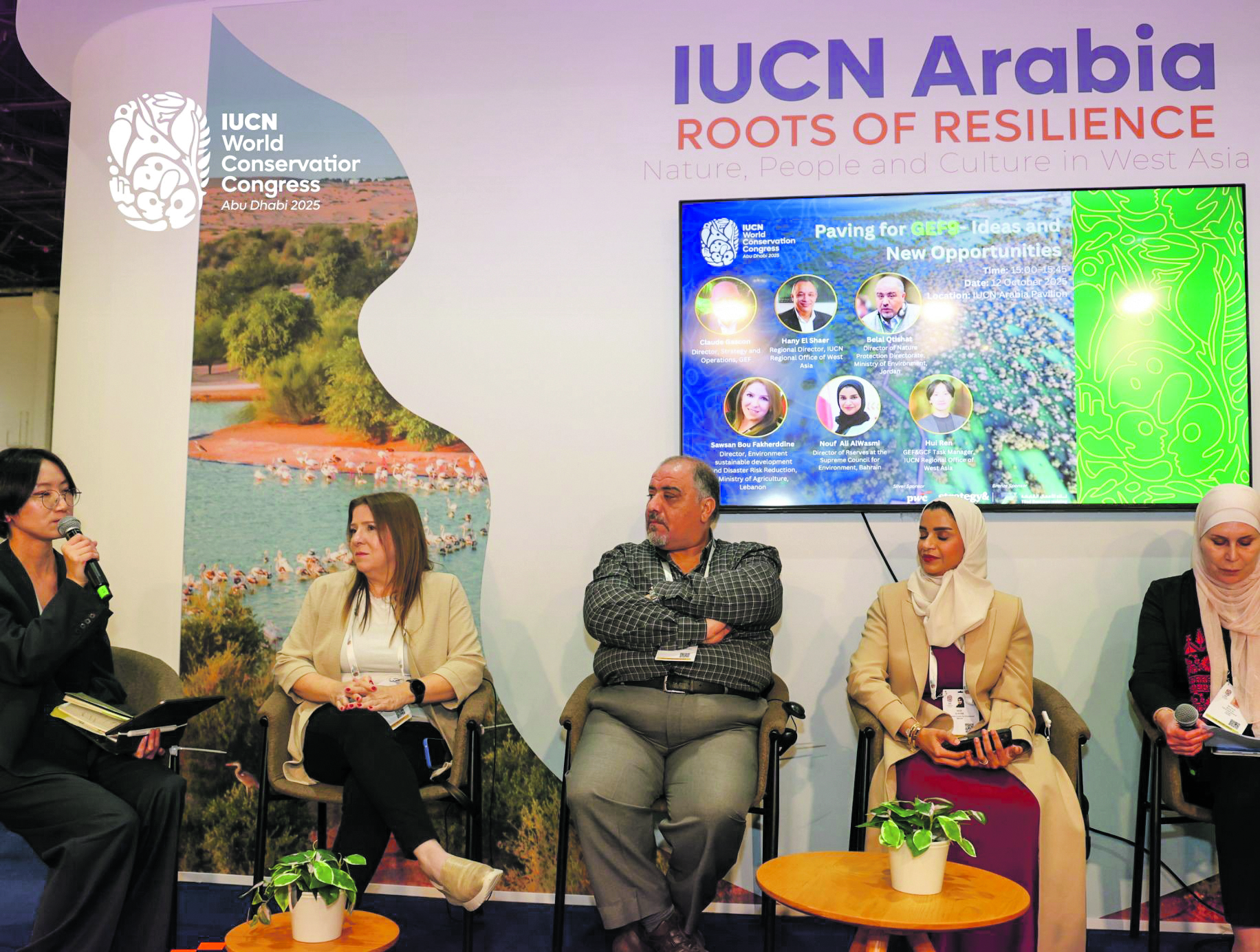
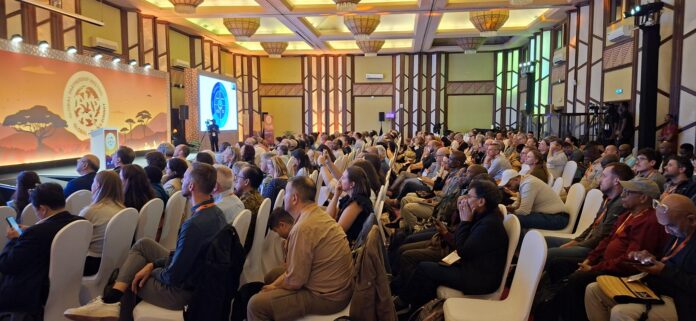
Against this backdrop, the IUCN World Conservation Congress convened under the theme “Powering Transformative Conservation.” Held at the Abu Dhabi National Exhibition Centre from 9–15 October 2025, the Congress brought together nearly 10,000 participants, both in person and online.
The Congress focused on five interconnected themes: strengthening resilient conservation; reducing climate risks; advancing equity and justice; transitioning to nature-positive economies and societies; and fostering innovation and leadership in conservation. It was accompanied by five high-level summits: the First Global Indigenous Peoples and Nature Summit, the Business Summit, the Youth Summit, the Philanthropy Summit, and the Third Middle East and North Africa Oceans Summit.
Historic Motions and Decisions
The IUCN Members’ Assembly, the Union’s highest decision-making body, adopted more than 150 motions, many of which established new precedents in global environmental policy.
Among the most significant was a landmark motion calling for the recognition of ecocide as a crime under national and international law, urging countries to consider amending the Rome Statute of the International Criminal Court to include ecocide among international crimes during both peacetime and armed conflict.
Several motions addressed the global energy transition. One focused on safeguarding biodiversity and human rights in mineral resource governance, calling for reduced energy and mineral consumption through circular economy approaches. It also urged strong protections for ecosystems, Indigenous Peoples, and local communities, the designation of no-mining zones in environmentally sensitive areas, and the application of the highest environmental and social standards throughout the mining lifecycle.
A complementary motion called for halting the expansion of fossil fuel development while strengthening ecosystem protection in extraction areas as part of a just energy transition.
The Assembly also adopted a motion on strengthening civic space, highlighting the growing threats faced by Indigenous Peoples’ organizations, non-governmental organizations, and other civil society actors whose participation is essential for effective biodiversity governance.
The Congress marked another global milestone by adopting the first international policy motion on synthetic biology, addressing its applications and environmental implications while emphasizing transparency, risk assessment, and stakeholder participation in the governance of transformative technologies such as gene-editing.
In addition, Members adopted a motion on geoengineering, recognizing its potential risks to biodiversity and the climate in the absence of conclusive scientific evidence, and calling for the development of clear global policy frameworks to govern such interventions.
The Assembly also approved a motion submitted by the Lebanese Ministry of Environment supporting the restoration and rehabilitation of ecosystems damaged by war.
Vision, Programme, and Call to Action
One of the Congress’s defining achievements was the adoption of a new 20-year strategic vision, “Unite for Nature on the Path to 2045,” alongside the 2026–2029 IUCN Programme, the first implementation plan for achieving that vision.
IUCN Director General Grethel Aguilar described the Union as “an unstoppable force for change,” emphasizing that science and traditional knowledge must remain at the heart of efforts to address climate change, biodiversity loss, and increasing geopolitical polarization.
She also highlighted several major achievements announced during the Congress, including the launch of the Fourth IUCN World Heritage Outlook, the introduction of the Rapid High Integrity Nature-Positive Outcomes (RHINO) framework to guide private-sector action, the release of the second edition of the Global Standard for Nature-based Solutions, the establishment of the IUCN Glacier Network, and encouraging evidence of the recovery of green sea turtle populations.
Aguilar identified three overarching priorities: scaling up science-based conservation, ensuring equity and inclusion, and aligning nature with economic development. She also announced that Panama will host the IUCN World Parks Congress in 2027.
The Members’ Assembly further adopted the Abu Dhabi Call to Action, developed through extensive consultations across the Union. The declaration affirms that achieving a just, sustainable, and nature-positive future requires governments, communities, and generations to unite around a common vision:
“One Nature. One Humanity. One Shared Future.”
The Call to Action urges immediate global action across five priority areas:
- Recognizing nature’s fundamental role by protecting and restoring biodiversity as the foundation of human health, well-being, and prosperity, while supporting local nature stewards and community-led conservation.
- Strengthening multilateralism through collective leadership, international cooperation, and coordinated policies that integrate nature across all sectors.
- Ensuring equity and inclusion for women, youth, Indigenous Peoples, local communities, and environmental defenders through rights-based and participatory approaches.
- Advancing knowledge and innovation by combining scientific research with Indigenous and traditional knowledge systems and investing in education, research, and technology to deliver evidence-based solutions.
- Expanding financial, human, and technological resources for environmental action while redirecting harmful subsidies, promoting regenerative and nature-positive economies, and strengthening community resilience.
Together, the 2026–2045 Strategic Vision, the 2026–2029 IUCN Programme, and the Abu Dhabi Call to Action provide a unified roadmap for accelerating transformative conservation over the next two decades.
In her closing address, IUCN President Razan Al Mubarak, who was re-elected for a second four-year term during the Congress, stressed that protecting nature is not merely an environmental objective but the foundation of human well-being and prosperity. She urged IUCN Members to move from dialogue to decisive action, working together for One Nature, One Humanity, and One Shared Future.
Lebanon’s Proposal on Restoring War-Damaged Ecosystems Adopted
The IUCN World Conservation Congress adopted Motion 148, submitted by the Lebanese Ministry of Environment, entitled “Supporting the Restoration and Rehabilitation of Ecosystems Damaged by War.” The motion was officially approved as part of the Congress’s international resolutions.
The adoption of this resolution marks a significant milestone, opening the way for broad national and international cooperation aimed at:
- Conducting post-war environmental assessments and documenting damage to natural ecosystems.
- Promoting technical cooperation and the exchange of expertise between Lebanon and IUCN Member States and partner organizations.
- Integrating environmental considerations into reconstruction and humanitarian response plans to support sustainable recovery after crises.
This achievement represents a major step toward Lebanon’s environmental recovery following the extensive damage caused by the Israeli war, which severely affected forests, natural resources, and biodiversity. The resolution affirms that ecosystem restoration and environmental rehabilitation are integral components of post-war recovery and reconstruction, helping to build a more resilient and sustainable future.