

In a modest field cabin overlooking the hills of Mount Lebanon, surrounded by sketchbooks, cameras, plant presses, and reference volumes, the work of documenting life unfolds quietly but relentlessly. This is the daily reality of Husein Ali Zorkot, a field biologist, naturalist, researcher, and scientific illustrator at the Society for the Protection of Nature in Lebanon (SPNL). Between November 24 and December 25, 2025, his work reached a critical point of convergence, bringing together years of field research, artistic production, and biomonitoring into tangible outputs that form part of one of Lebanon’s most ambitious biodiversity documentation efforts.
The reporting period marked a significant milestone with the near completion and printing preparation of a pictorial guide to the animals of Lebanon, covering 170 species of mammals, reptiles, and amphibians. This volume is not merely a catalogue, it is the result of meticulous field observation, scientific research, photography, and original illustration. Species accounts were carefully updated to reflect the latest ecological knowledge, photographs were verified and credited, and illustrations refined to ensure anatomical accuracy and educational clarity.
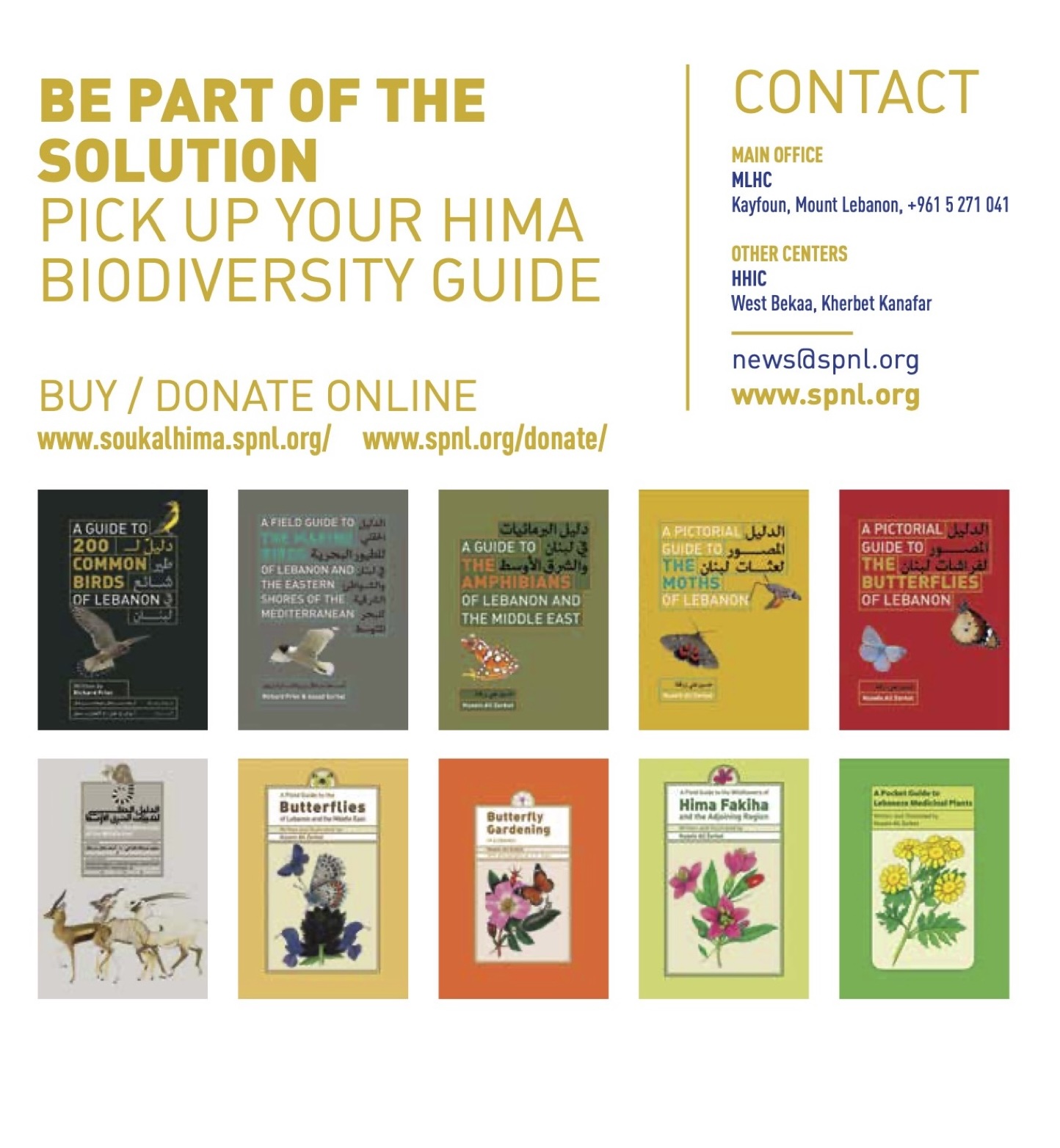
This publication forms part of a far-reaching 20-year vision led through SPNL, aiming to comprehensively illustrate and document Lebanon’s wildlife and plant diversity, while situating it within the wider Middle Eastern ecological context. To date, more than 2,900 species have already been illustrated. The long-term objective is the organization of this work into 24 pictorial volumes, of which four have already been published. New volumes focusing on animals and coastal plants are now well underway.
The month also represented a logistical and spatial transition. Preparations were completed for relocating research operations to Shemlan, where a dedicated cabin was prepared to function as a field base and working studio. Adjacent to this space, a butterfly garden and botanical plots were established, creating a living environment for observation, monitoring, and education. This complements ongoing management of Hima gardens in Mount Lebanon, while field responsibility for the West Bekaa butterfly garden continued through the end of 2025.
Alongside illustration work, biomonitoring of the Beirut Valley remained a central pillar of activity. Surveys were expanded to include additional locations in preparation for the 2026 biomonitoring cycle. These efforts directly support the development of the Beirut Valley Park, providing essential baseline data on plant and animal species that will inform conservation planning, habitat protection, and long-term management strategies.
In parallel, substantial progress was made on the first pictorial volume dedicated to Lebanese plants, with a special focus on coastal and aquatic ecosystems. Research, illustration, and compilation advanced on shore plants, algae, kelps, and other coastal flora, ecosystems that are often neglected despite their ecological importance and vulnerability. This work also feeds into the preparation of a dedicated volume on Beirut Valley plants, strengthening the scientific foundation of SPNL’s conservation initiatives.
Fieldwork during this period was intensive and physically demanding. Long hikes across varied terrain, transportation between distant sites, and extended hours in the field were followed by equally long nights of writing, illustration, and data management. The tools of the trade ranged from cameras and sketchpads to digital databases, Word documents, and Excel sheets, reflecting the hybrid nature of contemporary conservation work, where science, art, and data converge.
Beyond publications, the project has a strong outreach and educational dimension. The illustrated works generate wildlife prints, posters, and educational materials, including products developed through Souk el Hima, SPNL’s platform linking conservation, culture, and local livelihoods. These materials help bring biodiversity closer to the public, transforming scientific documentation into accessible visual storytelling.
Looking ahead to January 2026, priorities include finalizing and printing the animals volume, completing the move into the Chemlan cabin, expanding the management of Hima gardens, and advancing biomonitoring and botanical illustration projects. New concepts continue to emerge, from expanded Beirut Valley surveys to further development of butterfly and botanical gardens.
In a country facing mounting environmental pressures, this sustained effort reflects SPNL’s long-standing commitment to conservation rooted in knowledge. By documenting species, habitats, and ecosystems with scientific rigor and artistic precision, the work ensures that Lebanon’s natural heritage is not only protected on the ground, but preserved in knowledge and memory, one species at a time.