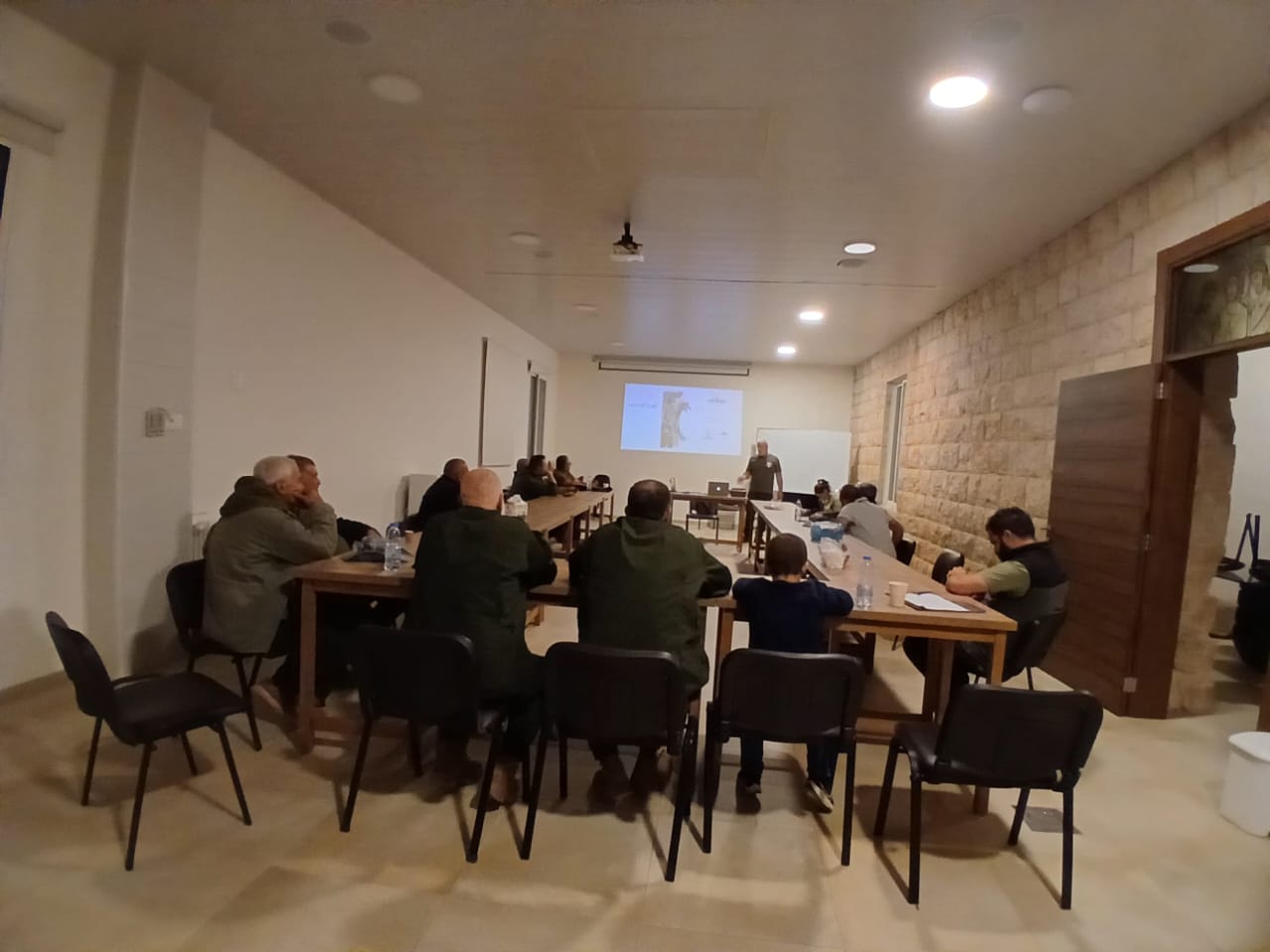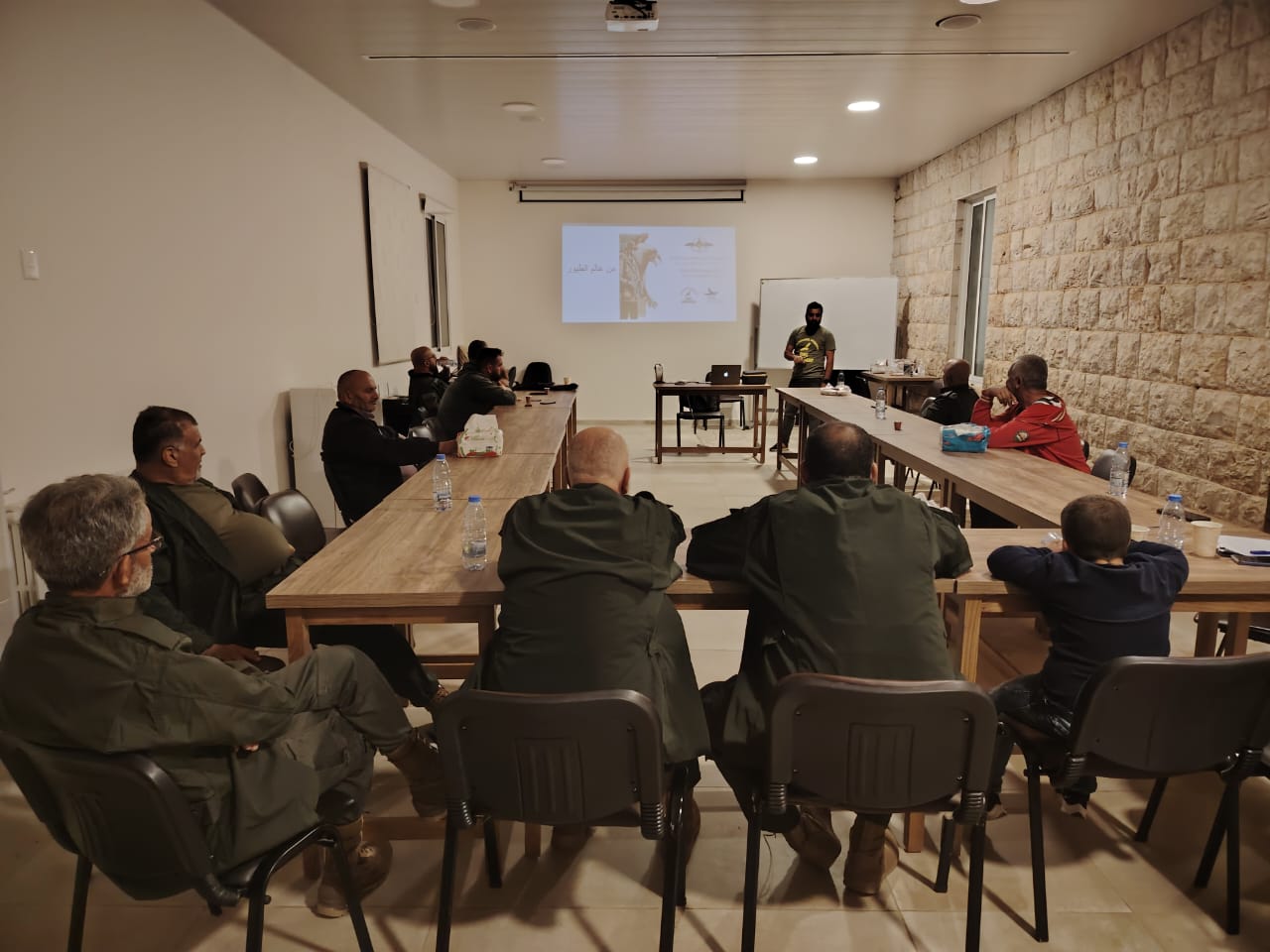



In the heart of Lebanon’s northern Bekaa, where natural landscapes are closely intertwined with local livelihoods, the Union of Deir El Ahmar Municipalities hosted an advanced awareness and experience-sharing session on combating illegal hunting. The session was organized by the Anti-Poaching Unit (APU) and marked another step toward reinforcing community-based protection of biodiversity through direct cooperation between hunters, municipal police, and environmental organizations.
Bringing together members of the municipal police and more than 15 local hunters, the session went beyond a traditional lecture format. It created an open space for dialogue on responsible hunting practices, legal frameworks, and the crucial role of municipal police in enforcing regulations while safeguarding both nature and the ethical practice of hunting.
Field Expertise Rooted in Local Reality
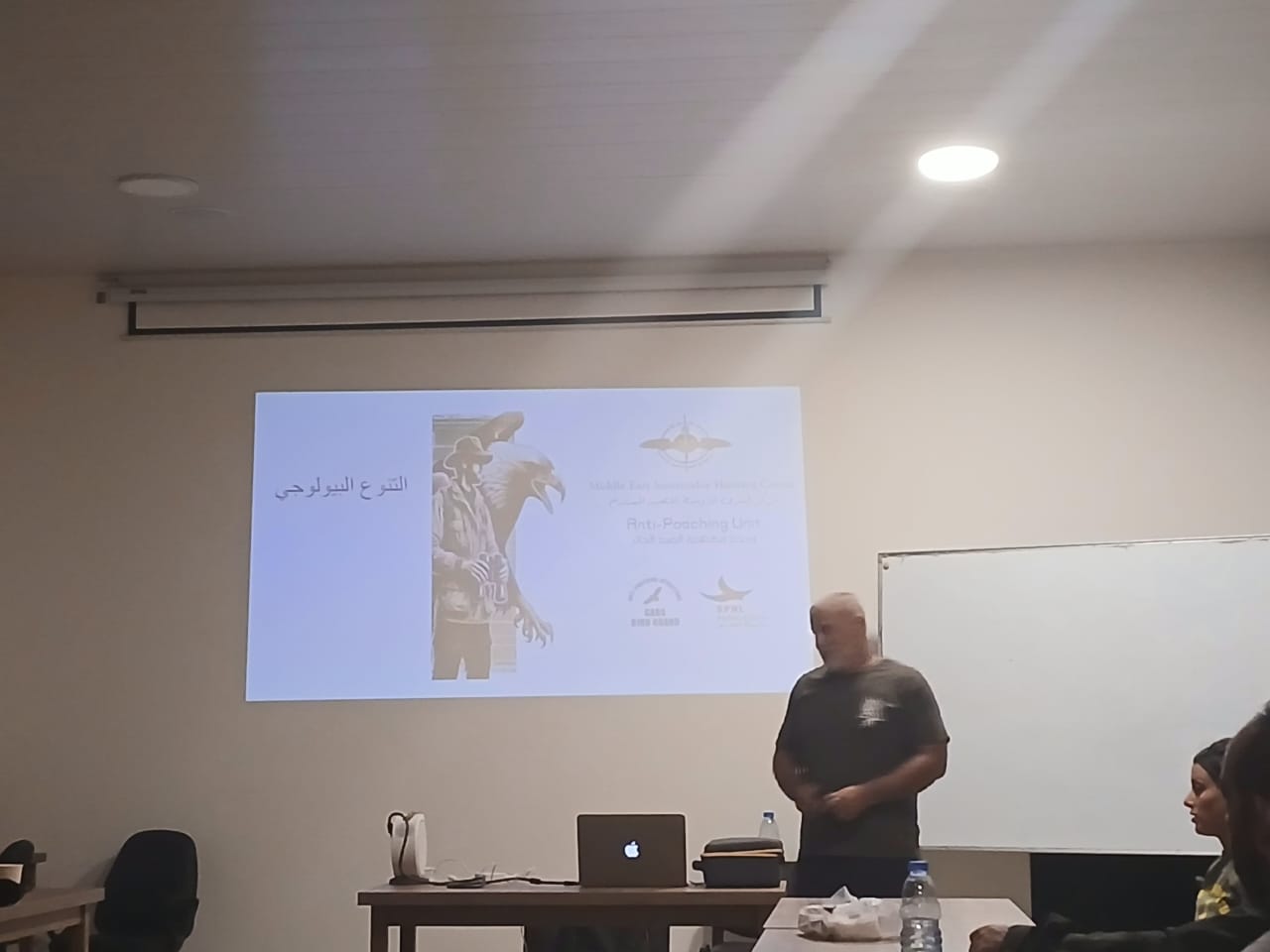
The session was led by Adonis Khatib, Head of the Middle East Sustainable Hunting Center (MESHC) and Field Coordinator for Responsible Hunting at the Society for the Protection of Nature in Lebanon. His presentation linked Lebanese hunting laws and international conservation commitments with on-the-ground realities in the Bekaa, emphasizing the shift from a purely punitive approach toward prevention, awareness, and trust-building with hunters.
Joining him was Shireen Bou Raffoul, Head of the Anti-Poaching Unit and Director of the Lebanon Office of CABS. She highlighted that combating illegal hunting can only succeed through genuine partnerships with local authorities, particularly municipal police forces who are closest to both the land and the community. She also outlined the APU’s work in monitoring, documentation, and legal follow-up in coordination with official institutions.
Field investigator Maroun Bou Raffoul, a member of the CABS Lebanon team and the APU, shared practical examples from field investigations, demonstrating how timely local reporting and rapid response can significantly reduce violations, especially during migration and breeding seasons.
APU, A Multi-Level Partnership Model
This session forms part of a broader project to combat illegal hunting implemented by the APU, operating under the Middle East Sustainable Hunting Center (MESHC) and the Society for the Protection of Nature in Lebanon. The project is supported by the Hans Wilsdorf Foundation, in cooperation with BirdLife International, and in partnership with CABS.
What distinguishes this initiative is its close coordination with Lebanon’s Internal Security Forces Operations Room, the Information and Investigation Branch, and Army Intelligence, ensuring an integrated approach that bridges environmental action with legal and security mechanisms.
Deir El Ahmar as a Replicable Model
The experience of the Union of Deir El Ahmar Municipalities reflects a gradual shift in how hunting is addressed in Lebanon, no longer viewed solely as a security or environmental issue, but as a community-based challenge requiring dialogue, capacity-building, and shared responsibility. The active participation of hunters themselves sent a clear message that responsible hunting is built on partnership, not confrontation.
At a time of increasing environmental pressures across the country, such initiatives represent a cornerstone for protecting migratory birds, wildlife, and natural ecosystems, while preserving the rights of future generations to a healthy environment. From Deir El Ahmar, the message is clear, nature protection begins locally, but its impact resonates nationwide.