


High in the mountains of Mount Lebanon, where forests meet waterfalls and migratory birds cross the sky above the Beirut River Valley, the village of Hammana has become one of the most inspiring examples of community-led conservation in Lebanon. At the heart of this movement stands Hima Hammana, a living model that connects nature, people, and local governance.
Its logo, designed by Maria Eid, tells this story in a powerful visual language.
For Maria, the project is more than a design assignment. Her connection to Hammana runs deep. Her mother is from the village and serves as a member of the municipal council, giving Maria a personal understanding of the landscape, the community, and the environmental aspirations that define the Hima initiative. Through her design, she transformed these ideas into a symbol that reflects both heritage and future vision.
The Philosophy of Hima
At its core, the Hima philosophy recognizes a simple but profound truth: nature and people cannot be separated. Forests, springs, agricultural terraces, and wildlife are not only ecological assets, they are part of the cultural identity and livelihoods of the communities that live among them.
This philosophy, revived in Lebanon by the Society for the Protection of Nature in Lebanon (SPNL), places communities at the center of conservation. Rather than separating humans from nature, the Hima approach promotes stewardship, responsibility, and shared management of natural resources.
Hima Hammana embodies this vision. The village has emerged as a leading example of how municipalities can integrate biodiversity protection, youth leadership, sustainable tourism, and environmental education within a framework of local governance.
The logo designed by Maria Eid captures this philosophy through a series of carefully chosen symbols.
The Circle: Unity and Protection
At first glance, the circular form of the logo immediately stands out.
The circle represents protection, continuity, and collective responsibility. It symbolizes the essence of the Hima concept: a shared space where nature and people coexist in harmony.
The circular boundary can also be interpreted as a protective embrace around the landscape, suggesting that safeguarding nature requires unity and cooperation within the community.
In the context of Hammana’s Smart Hima vision, the circle also reflects the idea of governance and collaboration, bringing together municipalities, youth, environmental organizations, and citizens under a shared mission.
The Landscape: The Valley of Life
Within the circle lies a stylized depiction of mountains and valleys. These shapes reflect the dramatic terrain surrounding Hammana, particularly the Beirut River Valley and the Lamartine Valley, landscapes that have inspired visitors and poets for centuries.
These valleys are more than scenic views. They sustain forests, agricultural terraces, and water sources that nourish both biodiversity and local communities.
The landscape in the logo represents the living geography of Hammana: a place where ecosystems and human livelihoods are deeply intertwined.
It also reminds viewers that the Hima is not an abstract concept, it is rooted in real land, real communities, and real ecological systems.
The Waterfall: The Source of Renewal
One of the most striking features in the logo is the flowing waterfall.
This element reflects the many springs and waterfalls that define Hammana’s natural environment, including the famous Shaghour waterfall and numerous mountain springs that sustain the region’s ecosystems.
Water in the logo symbolizes renewal, resilience, and the continuous flow of life. It reminds us that nature is dynamic, constantly renewing itself when protected and respected.
In a broader sense, the waterfall represents the regenerative spirit of the Hima movement, where environmental restoration and community engagement work together to revive landscapes.
The Birds: Freedom and Migration
Above the valley, birds fly across the sky.
These birds symbolize freedom, movement, and ecological connectivity. Hammana lies along one of the most important migratory bird flyways in the Eastern Mediterranean, making it a vital resting and feeding site for numerous species.
The presence of birds in the logo reflects Hammana’s ecological importance and the role of Hima sites as safe havens for wildlife.
Birds also represent the global connections of conservation. Migratory birds link landscapes across continents, reminding us that protecting nature in Hammana contributes to protecting biodiversity far beyond Lebanon’s borders.
The People: Guardians of Nature
Perhaps the most meaningful element in the logo is the presence of small human silhouettes.
These figures represent hikers, visitors, and most importantly Homat Al Hima, the guardians of the landscape.
Their presence conveys a powerful message: conservation is not only about protecting ecosystems, it is about empowering people to become stewards of their environment.
In Hammana, young people and community members are trained as Homat Al Hima to monitor biodiversity, guide eco-tourism activities, promote bird-watching initiatives, and lead environmental education programs.
The figures in the logo celebrate this human dimension of conservation.
A Message in Three Words
At the base of the logo are three words that summarize the mission of Hima Hammana:
Protect. Restore. Sustain.
Protect biodiversity and natural heritage.
Restore degraded ecosystems and traditional landscapes.
Sustain communities and livelihoods through responsible use of nature.
These words capture the balance that defines the Hima approach: safeguarding ecosystems while ensuring that communities thrive.
Hammana: A Smart Hima Model
The symbolism of the logo aligns closely with the village’s broader environmental vision.
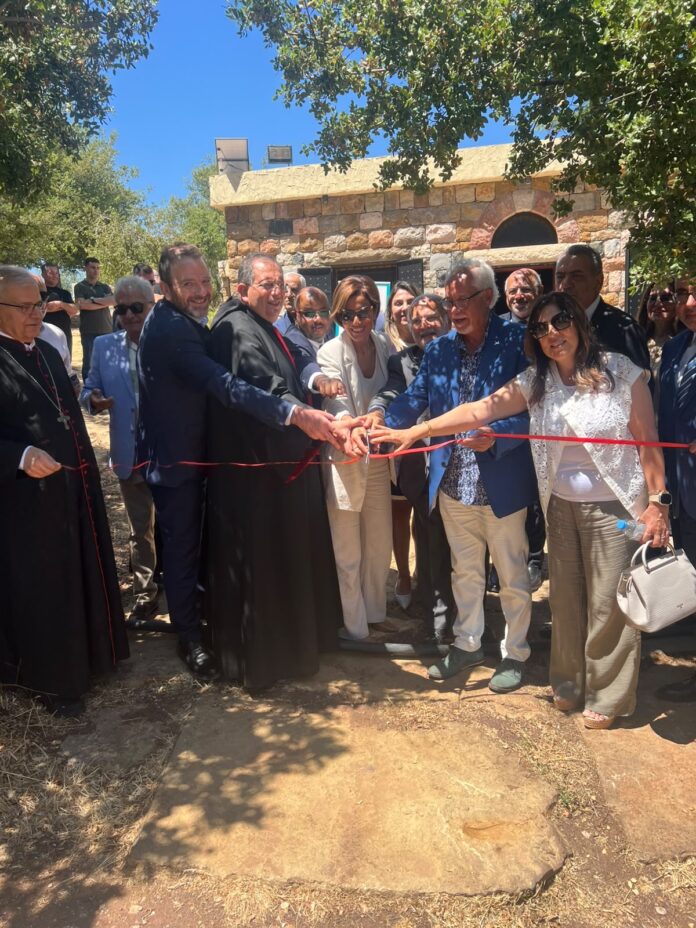
In recent years, the Municipality of Hammana has taken significant steps to institutionalize the Hima approach within local governance. Through a series of municipal decisions, the town has established a Hima Committee, a Homat Al Hima team, and a dedicated Hima Center that serves as a national hub for environmental education and community engagement.
This framework positions Hammana as a Smart Hima model, integrating biodiversity protection with sustainable development, youth leadership, eco-tourism, and civic participation.
Initiatives such as Droub El Hima ecological trails, bird-watching activities, and environmental education programs are helping transform conservation into an opportunity for community empowerment and local economic development.
A Living Landscape
Declared as a Hima in 2018, Hammana sits at approximately 1,200 meters above sea level, overlooking the upper Beirut River Valley. Its forests of pine, fir, and oak trees, its agricultural terraces producing cherries and apples, and its rich network of springs make it one of Lebanon’s most vibrant mountain ecosystems.
The area is also recognized as an Important Bird and Biodiversity Area (IBA), hosting rare species such as the crested honey buzzard and serving as a critical stopover for migratory birds.
Visitors are drawn not only by its natural beauty but also by its cultural heritage. The French poet Alphonse de Lamartine, who visited Hammana in the nineteenth century, famously described the surrounding valley as “one of the most beautiful prospects ever presented to the human eye.”
Today, the village continues to inspire new generations through its commitment to protecting nature.
A Symbol of Hope
In a region facing environmental degradation, economic challenges, and social pressures, the Hima Hammana logo carries a powerful message.
It reminds us that communities can lead the way toward a sustainable future.
Through the vision embodied in this small but meaningful symbol, Hammana demonstrates that protecting nature is not only possible, it is essential for preserving culture, strengthening communities, and building resilience.
The logo designed by Maria Eid captures this spirit perfectly. It is not just a graphic identity, it is a visual story of a village, a landscape, and a movement that believes in the power of people and nature working together.
And in the mountains of Lebanon, that story continues to unfold. 🌿