


In a time when environmental challenges are mounting, this work stands as a testament to the power of persistence and vision. By documenting biodiversity in such depth and detail, it not only preserves knowledge for future generations but also reinforces the urgent need to protect Lebanon’s fragile ecosystems. Through the intersection of science, art, and conservation, a new narrative is being written, one that celebrates life in all its forms and underscores the responsibility to safeguard it.
In a quiet but determined effort unfolding across Lebanon’s landscapes, a long-term mission is taking shape, one that blends science, art, and environmental stewardship. From the coastal plains to the mountains of Mount Lebanon and the valleys of Beirut, the work of documenting the country’s biodiversity is advancing steadily, driven by a vision that spans decades.
At the center of this effort is an ambitious project to catalogue and illustrate Lebanon’s rich flora and fauna, transforming scientific observation into accessible, visual knowledge. Over the past month, significant progress has been made in developing pictorial guides that aim to capture the diversity of life across the country.
A Living Archive of Nature
One of the most notable achievements this period has been the advancement of a comprehensive pictorial guide to Lebanon’s wildlife, featuring approximately 170 species of mammals, reptiles, and amphibians. The work involves meticulous updating of scientific content, alongside the integration of original illustrations and carefully curated photography.
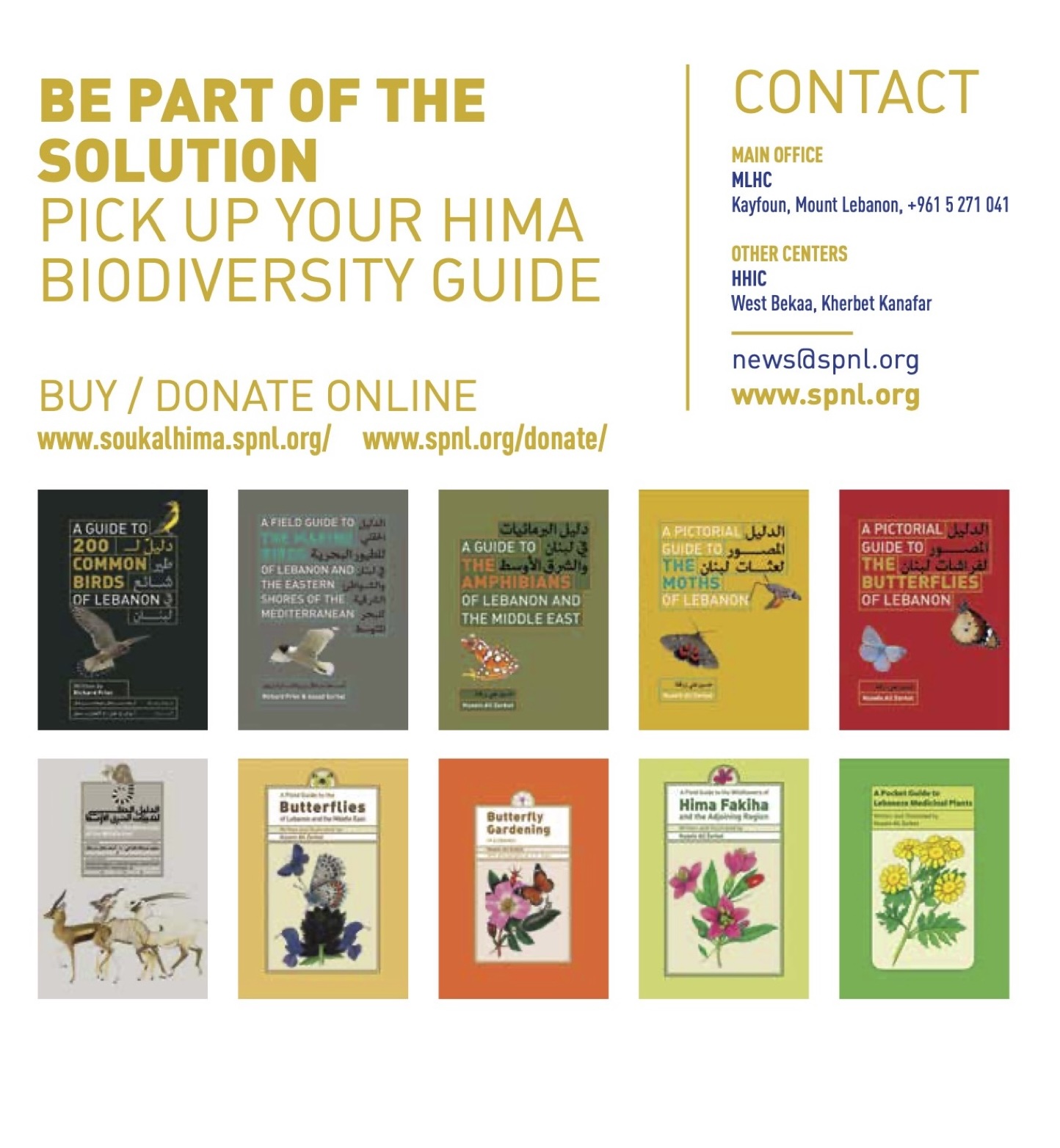
But this is only one part of a much larger vision. The broader project aims to produce 24 illustrated volumes covering Lebanon’s biodiversity, including plants, animals, and ecosystems, with a long-term goal of documenting nearly 2,900 species across the country and the wider Middle East .
Four volumes have already been published, while new editions focusing on animals and coastal plant species are currently in preparation.
From Field to Page: Science in Motion
Behind these publications lies extensive fieldwork and research. Biomonitoring activities are ongoing in the Beirut River Valley, with plans to expand to additional locations in the coming months. These efforts are essential for understanding ecological changes, identifying species distribution, and supporting conservation strategies.
Fieldwork remains physically demanding, involving hiking across diverse terrains, collecting data, photographing species, and documenting findings through writing and illustration. This hands-on approach ensures that each publication is grounded in direct observation and scientific accuracy.
Hima Gardens: Conservation in Practice
Parallel to research and documentation, conservation efforts are being implemented on the ground through the management of Hima gardens in Mount Lebanon and West Bekaa. These spaces serve as living laboratories where biodiversity is preserved and promoted.
Recent work has focused on preparing a new site in Chemlan, where a botanical and butterfly Hima garden is set to be launched in the spring. These gardens not only protect native species but also raise awareness and foster community engagement in environmental stewardship.
A Long-Term Vision for Lebanon’s Natural Heritage
This initiative is part of a 20-year vision aimed at creating a comprehensive inventory of Lebanon’s biodiversity, including detailed documentation of flora and fauna across at least 40 Hima sites nationwide .
Beyond books, the project extends into public outreach through educational materials, prints, and visual products that bring nature closer to people, including collections available through Souk el Hima.
Looking Ahead
The coming months will focus on continuing the development of pictorial volumes, expanding biomonitoring activities, and strengthening the management of Hima gardens. As research, illustration, and conservation efforts move forward in parallel, the project continues to build a lasting record of Lebanon’s natural wealth.