

Transhumance is losing its importance today. People do not find it feasible to move along the valley. Few farmers undertake short-distance movements with their herds. However, transhumance helps avoid overgrazing occurring in lowlands. Also, it helps keep mountain pastures open. Overgrazing leads to extinction of many species of plants, birds, and mammals. These species are dependent on open habitats and overgrazing makes them lose their food. Species like the Imperial Eagle, Lesser Kestrel, European Sousilk, and Saker Falcon are on the endangered as well as vulnerable species list. Therefore, there are many projects undertaken by various governments to help promote in reviving this pastoral tradition.
Transhumance is derived from the Latin terms ‘trans’ meaning across and ‘humus’ meaning ground. It is defined as ‘the seasonal migration of humans along with their sheep, goats, and other livestock to higher or lower pastures in the summer and winter season’. These people are basically herders who live in the valleys and tend to travel to higher pastures in summer and come down to the lower valleys in winter. Transhumance pastoralism is a traditional practice in the Alps. This tradition is practiced even today in Austria, Bavaria, Italy, Slovenia, and Switzerland. Apart from these regions, it is also practiced in Scandinavia, Scotland, Caucasus, Chad, Morocco, France, Lebanon, Bulgaria, Iran, Turkey, Republic of Macedonia, Lesotho, etc.
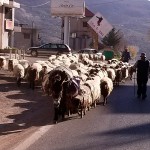
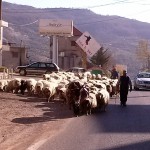
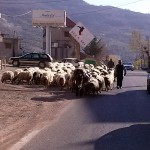
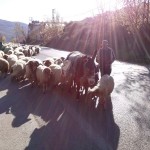
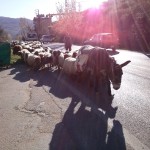
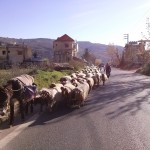
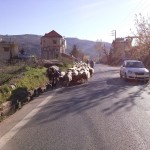
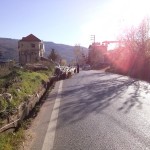
SPNL expert Andre Bechara track the seasonal movement of people with their livestock between fixed summer and winter pastures. In Hrajel in Mount Lebanon
he took these beautiful pictures.
On November 2013, the Society for the protection of nature in Lebanon (SPNL) signed a partnership agreement with Transhumancia y Naturaleza – Spain (TyN).Both parties agreed to pursue their shared objectives through means of a Partnership Agreement establishing the basis for mutual collaboration and development of projects aiming at linking nature and culture conservation through pastoralism and transhumance. TyN team that visited Lebanon consisted of Francesca Pasetti and Concha Salguero. SPNL General Director Assad Serhal praised the cooperation with TyN “Shepherds Without Borders”.