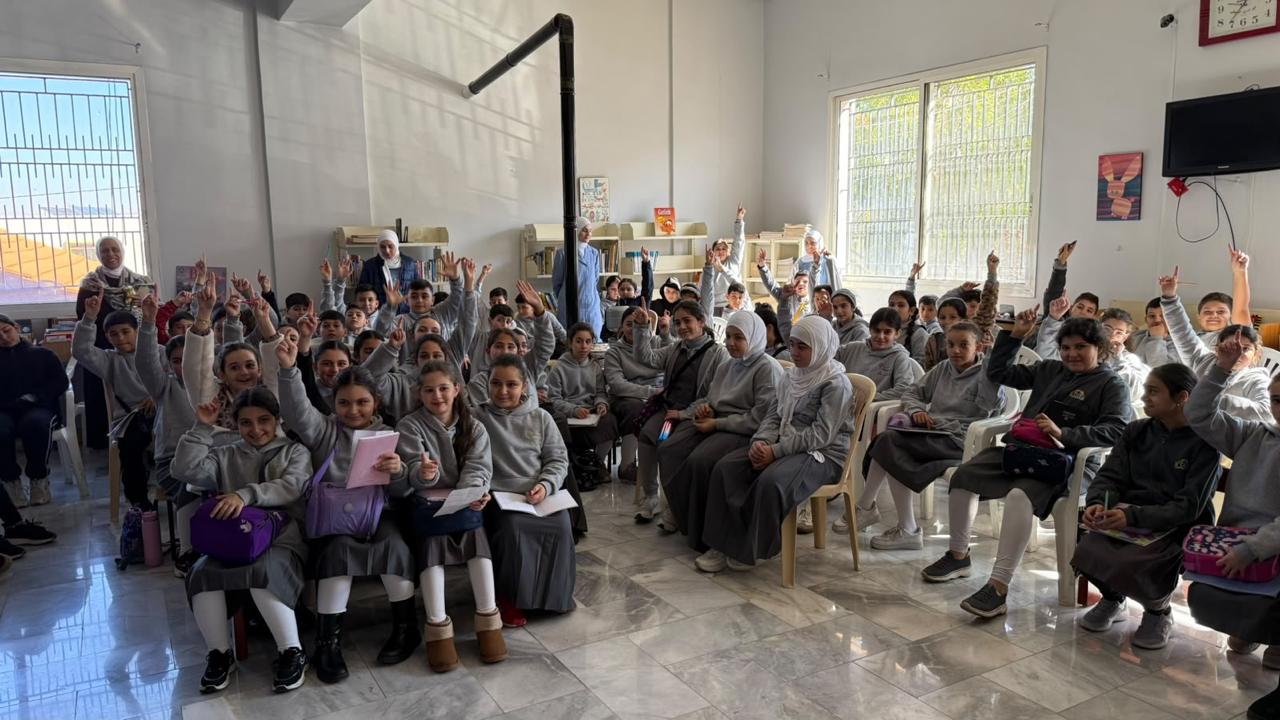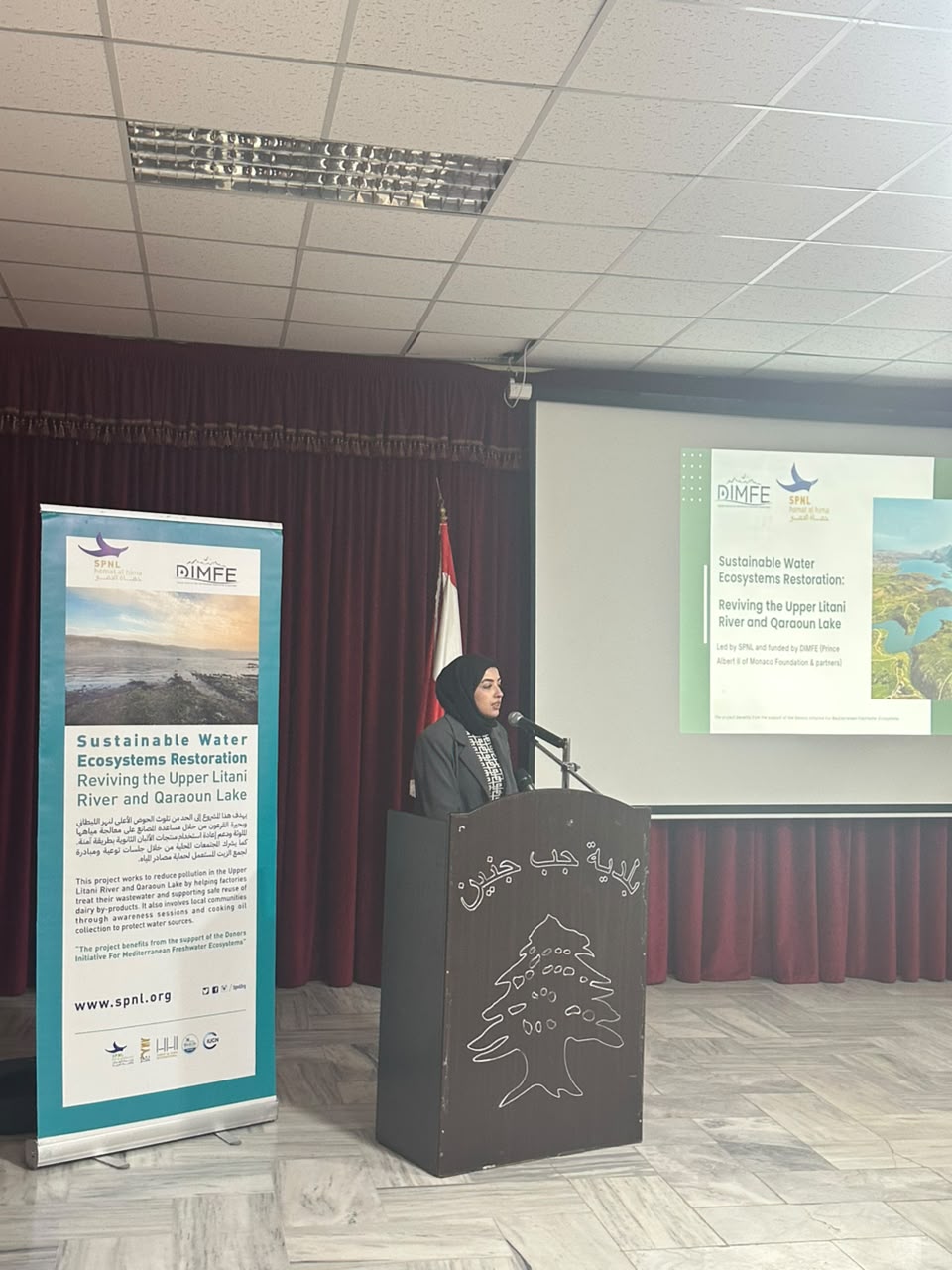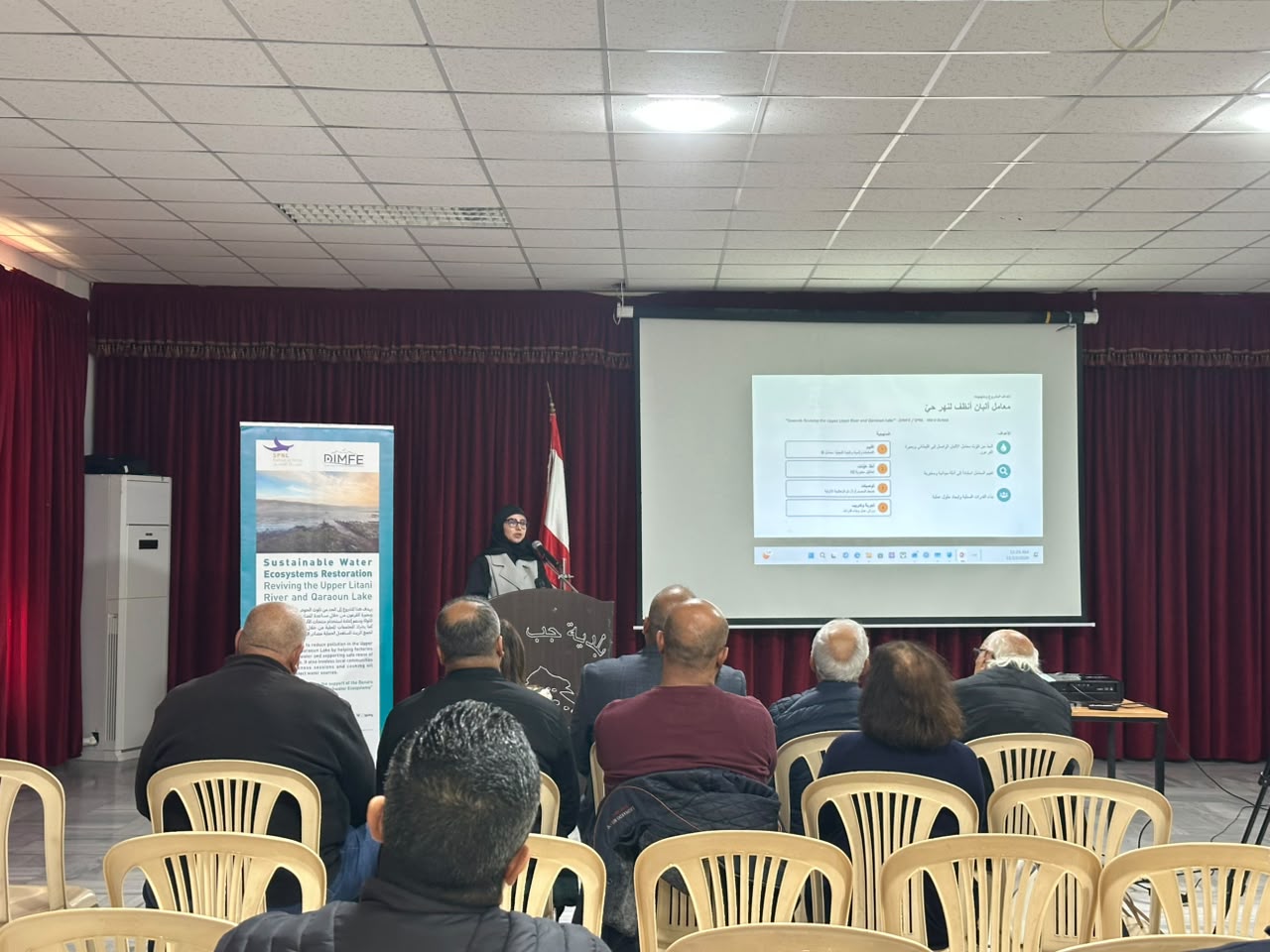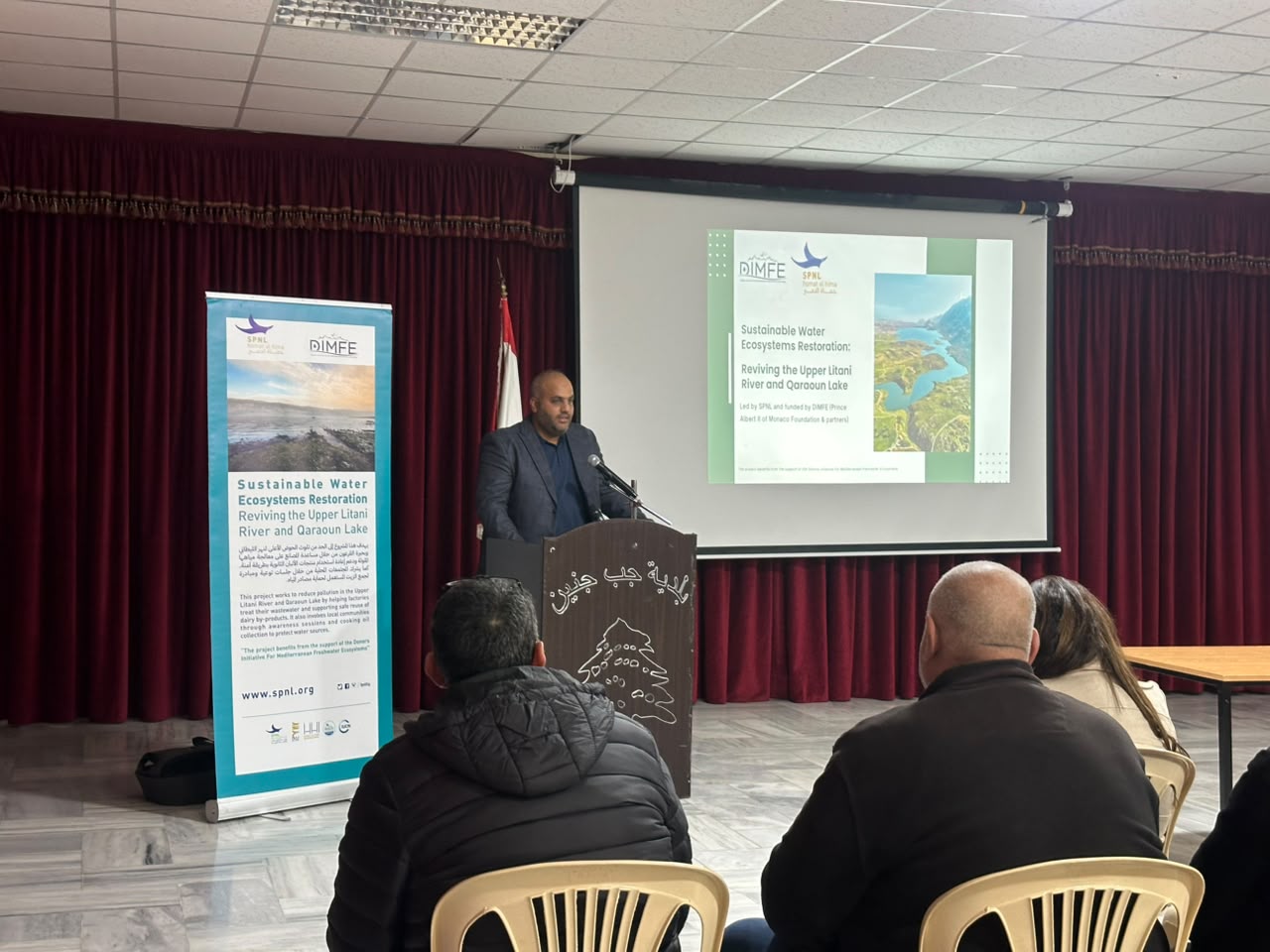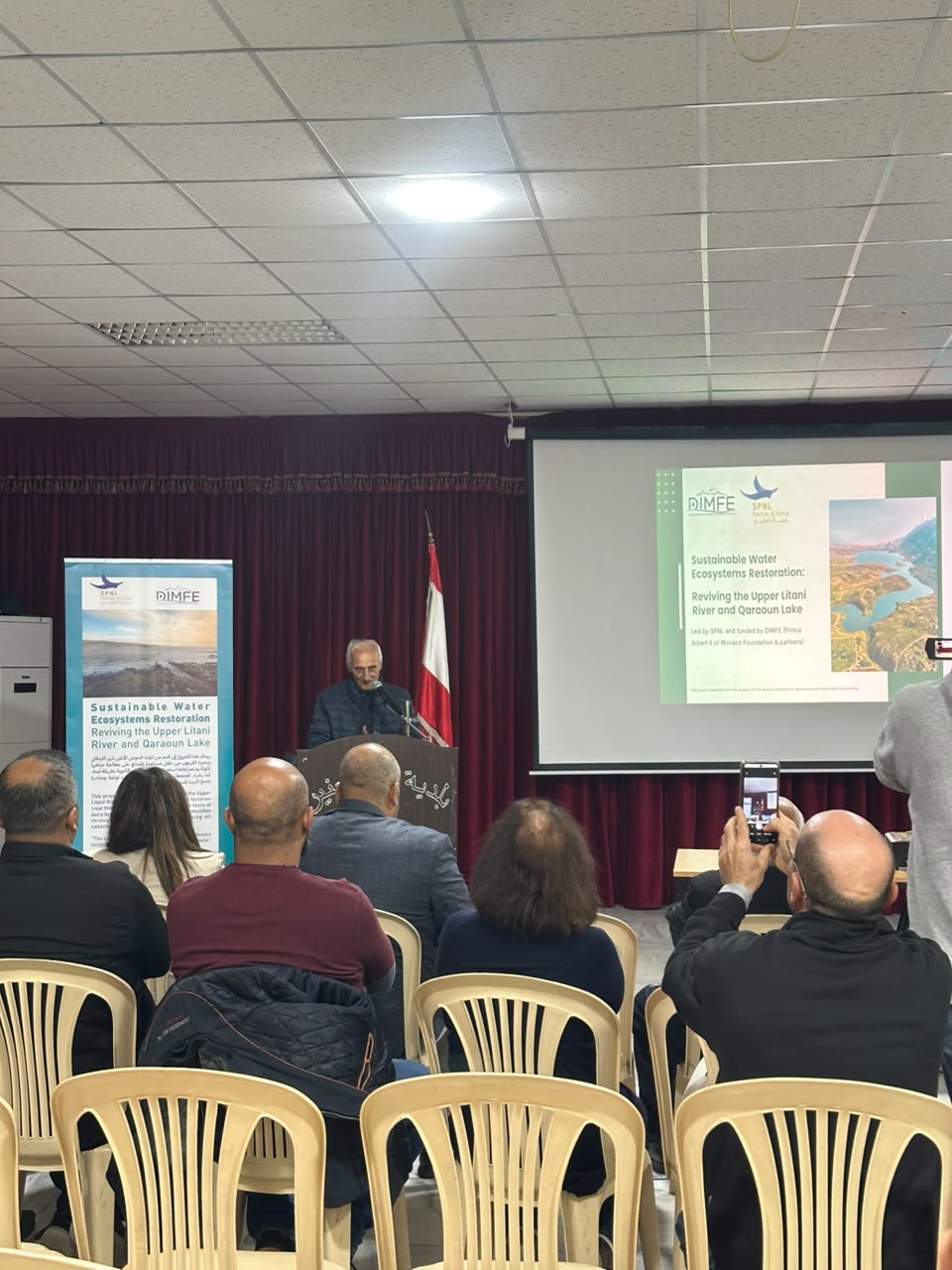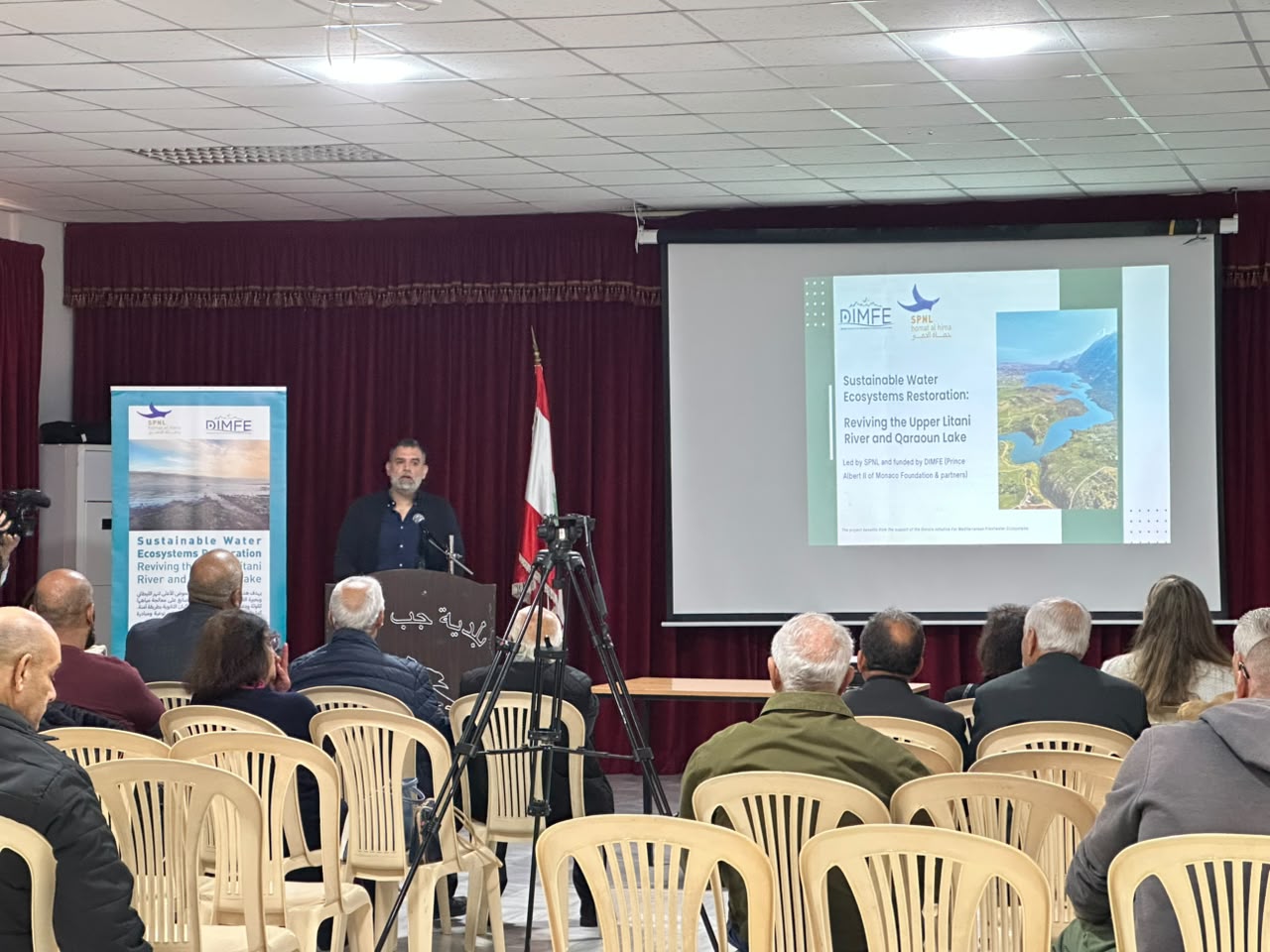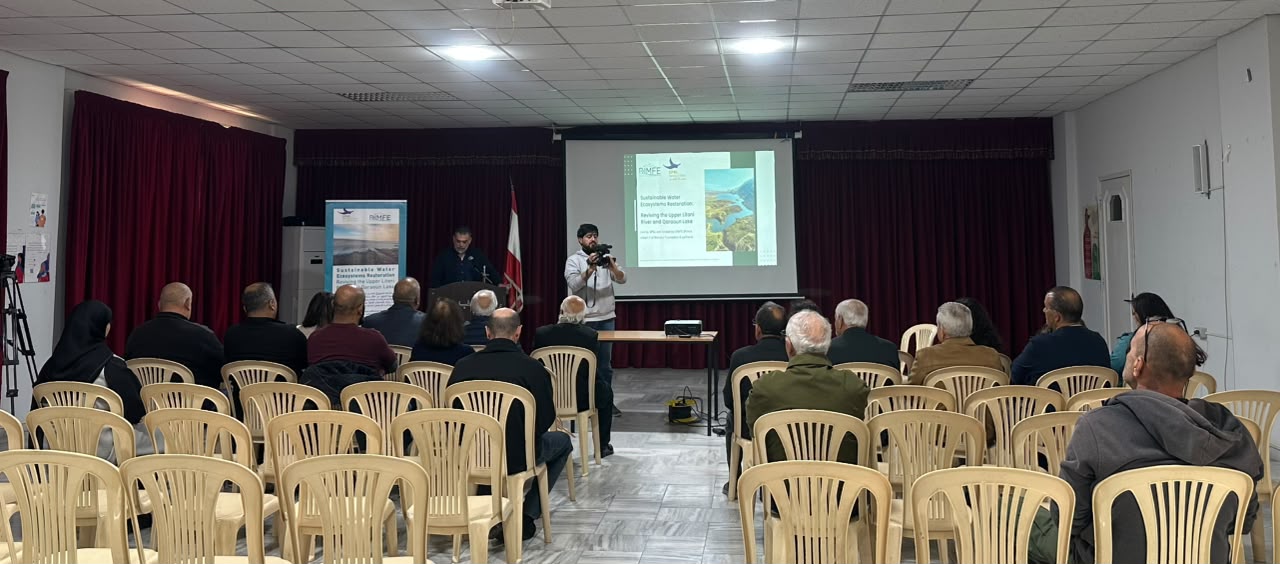

Municipal leaders, communities, dairy producers, and farmers gathered in Joub Jannine to celebrate progress, while 150 students joined a parallel environmental education session.
Protecting the Upper Litani River and Qaraoun Lake requires lasting cooperation among the communities, institutions, and businesses connected to these freshwater resources. That shared responsibility brought participants together on 10 November 2026 at Joub Jannine Municipality for the closing ceremony of SPNL’s DIMFE-funded project, “Sustainable Water Ecosystems Restoration: Reviving the Upper Litani River and Qaraoun Lake.”
The event took place under the patronage of Mayor Iskandar Barakeh, President of the Union of Lake Municipalities, represented by Mayor Abdullah Hadla, Vice President of the Union. Participants were welcomed by Joub Jannine Mayor Khaled el Hajj Ahmad.
In their remarks, Mayor Hadla and Mayor el Hajj Ahmad emphasized the importance of sustained efforts to reduce pollution affecting the Upper Litani River and Qaraoun Lake. They highlighted the close connection between the health of these freshwater ecosystems and the well-being of surrounding communities, stressing that pollution has consequences for biodiversity, human health, livelihoods, and everyday life across the region.
Their remarks placed the project’s activities within this wider need for collective action. Every step towards preventing pollution, improving environmental practices, and strengthening public awareness contributes to protecting these shared resources. The occasion also underscored the importance of cooperation among municipalities, public institutions, industries, farmers, and residents, whose continued involvement is essential to sustaining progress beyond the project’s lifetime.
Bringing Partners Together
The ceremony gathered mayors and municipal representatives, representatives of the Litani River Authority (LRA) and the Bekaa Water Establishment (BWE), members of local communities and civil society organizations, dairy industry representatives, and cattle farm owners. Their presence reflected the range of partnerships developed through the project, and the cooperation needed to carry its work forward.
Following the opening remarks, SPNL presented the project’s achievements, tracing the connections between pollution prevention, technical capacity, environmental awareness, and community stewardship.
Highlights included assessments of dairy factories, tailored recommendations for wastewater management and whey separation, and training that connected dairy producers with cattle farmers around opportunities for whey recovery and reuse. The presentation also covered used cooking oil collection arrangements established with the municipalities, technical training for LRA staff, and the expansion of the target area’s Hima network from five to ten sites.
Together, these activities demonstrated an approach that combines practical responses to pollution with stronger local participation in natural resource management.
Local Voices, a Common Message
Feedback collected during the event conveyed appreciation for SPNL’s efforts to address pollution while increasing environmental awareness and stewardship among the different parties involved.
Attendees’ testimonies highlighted the value of bringing municipalities, industries, farmers, and communities into a common effort. They also reflected appreciation for practical guidance and opportunities for cooperation that connect environmental protection with local needs.
These reflections reinforced a central message of the ceremony: the project’s achievements provide a foundation for continued action, sustained through local ownership and collaboration.
Parallel Activity: SNOW Session
Alongside the closing ceremony, 150 students participated in a School with No Walls (SNOW) session, extending the day’s focus on environmental stewardship to younger generations.
The parallel activity brought environmental education into the celebration of project achievements, recognizing children and young people as an essential part of the region’s conservation future. While municipal leaders and local partners discussed progress and cooperation, the students took part in SPNL’s broader effort to build stronger connections between people and nature.
Carrying the Commitment Forward
The closing event marked the completion of a project phase and an opportunity to recognize the shared efforts behind its achievements. Continuing this work will depend on maintaining the relationships, knowledge, and local arrangements developed along the way; from better wastewater practices and resource recovery to municipal engagement and active Hima stewardship.
With support from the Donors’ Initiative for Mediterranean Freshwater Ecosystems (DIMFE), SPNL has helped bring these efforts together around the future of the Upper Litani River and Qaraoun Lake.
The ceremony ended; the shared responsibility for the river and lake continues.