


An inspiring journey from guarding Australia’s forests to leading global efforts to strengthen protected areas, with an enduring emotional bond to the Cedars of Lebanon.
By David Sheppard
One of my fondest memories from a lifetime in conservation is walking among the majestic Cedar forests of Lebanon during the 1990s with Assad Serhal, an outstanding conservationist and founder of the Society for the Protection of Nature in Lebanon (SPNL).
Magnificent forests have always drawn me toward a career in conservation. I grew up in Tasmania, Australia, where approximately 40 percent of the island is protected as national parks and reserves. Being raised in such close contact with nature made choosing both my profession and my way of life almost inevitable.
After training and working as a forest ranger in Tasmania, I joined the New South Wales National Parks and Wildlife Service, where I held a range of positions—from frontline field ranger to senior executive responsible for research programs, wildlife conservation, and environmental protection.
In 1993, I was fortunate to secure what I considered my dream job with the International Union for Conservation of Nature (IUCN) in Gland, Switzerland. There, I led the Union’s global programme on protected areas and World Heritage and supported the work of the World Commission on Protected Areas (WCPA), the world’s leading network of experts in this field.
My role also involved contributing to the UNESCO World Heritage Convention, as IUCN serves as the advisory body for natural World Heritage sites. This required travelling extensively to evaluate both nominated and existing sites around the globe, including the Galápagos Islands in the Pacific Ocean, Serengeti National Park in Tanzania, Everglades National Park in the United States, and many others. These missions gave me the privilege of working alongside dedicated men and women from every corner of the world who devote themselves to protecting nature for present and future generations, often under extremely challenging circumstances.
In 2009, I moved to the Pacific as Director General of the Secretariat of the Pacific Regional Environment Programme (SPREP), based in the beautiful island nation of Samoa. SPREP delivers programmes across the Pacific in biodiversity conservation, climate change, waste management, and environmental governance. Since leaving the organisation in 2016, I have continued working internationally as a consultant on conservation and organisational governance.
What Has Changed?
One of my first assignments after joining IUCN was co-authoring a 1994 report entitled Protected Areas for the 21st Century: The Major Challenges. Looking back more than three decades later provides an opportunity to assess how far we have come in addressing the “future challenges” identified in that report.
The first challenge was expanding the protected area system from isolated reserves into representative networks capable of conserving biodiversity and associated cultural values. In 1994, protected areas covered only about seven percent of the Earth’s land surface. Today they encompass approximately 18 percent of terrestrial and inland water areas and around 8 percent of marine and coastal areas. This represents a remarkable global transformation in land and sea management, reflecting both national and international commitments to biodiversity conservation.
The second major challenge was improving the effectiveness of protected area management. By 1994, many protected areas had been designated but lacked trained staff, adequate financial resources, and the institutional support needed for effective management. In many cases they existed only as “paper parks.” Since then, management standards have improved substantially through initiatives such as IUCN’s Management Effectiveness programme and the IUCN Green List, both of which have strengthened governance, capacity building, and management performance.
The third challenge involved integrating protected areas within broader terrestrial and marine landscapes. Until the mid-1990s, many reserves functioned as isolated islands within larger landscapes, with planning focused almost exclusively inside their boundaries. Addressing this required a fundamental shift toward engaging neighbouring communities and stakeholders, planning at regional scales, and responding more effectively to external threats. By 2026, protected area planning has become significantly more integrated, with management plans increasingly developed through close consultation with surrounding communities and other affected stakeholders.
The fourth challenge concerned financing. In 1994, inadequate financial and human resources posed one of the greatest obstacles to effective conservation. Encouraging progress has since been achieved through major international funding mechanisms such as the Global Environment Facility (GEF) and the Green Climate Fund, alongside innovative financing approaches including debt-for-nature swaps, green bonds, and blue bonds that contribute to the long-term financial sustainability of protected areas.
The fifth challenge was strengthening the participation of local communities in protected area management and moving away from exclusionary conservation approaches that often generated conflict. Since then, the role of local communities and Indigenous peoples has expanded dramatically, supported by landmark events such as the 2003 World Parks Congress. Increasingly, protected areas are being established, managed, and governed by Indigenous peoples and local communities through initiatives such as Indigenous and Community Conserved Areas (ICCAs) and Locally Managed Marine Areas (LMMAs). These governance models complement traditional national parks and protected area systems while often delivering stronger conservation outcomes.
Protected areas managed by other stakeholders have also become increasingly important, including privately managed conservation areas such as South Africa’s private game reserves, and conservation initiatives led by non-governmental organisations, including the Hima model established by the Society for the Protection of Nature in Lebanon (SPNL) in partnership with municipalities and local communities.
It is encouraging to see that many of the challenges facing protected areas in 1994 have been successfully addressed, even though significant work remains.
Lebanon Is Never Far from My Mind
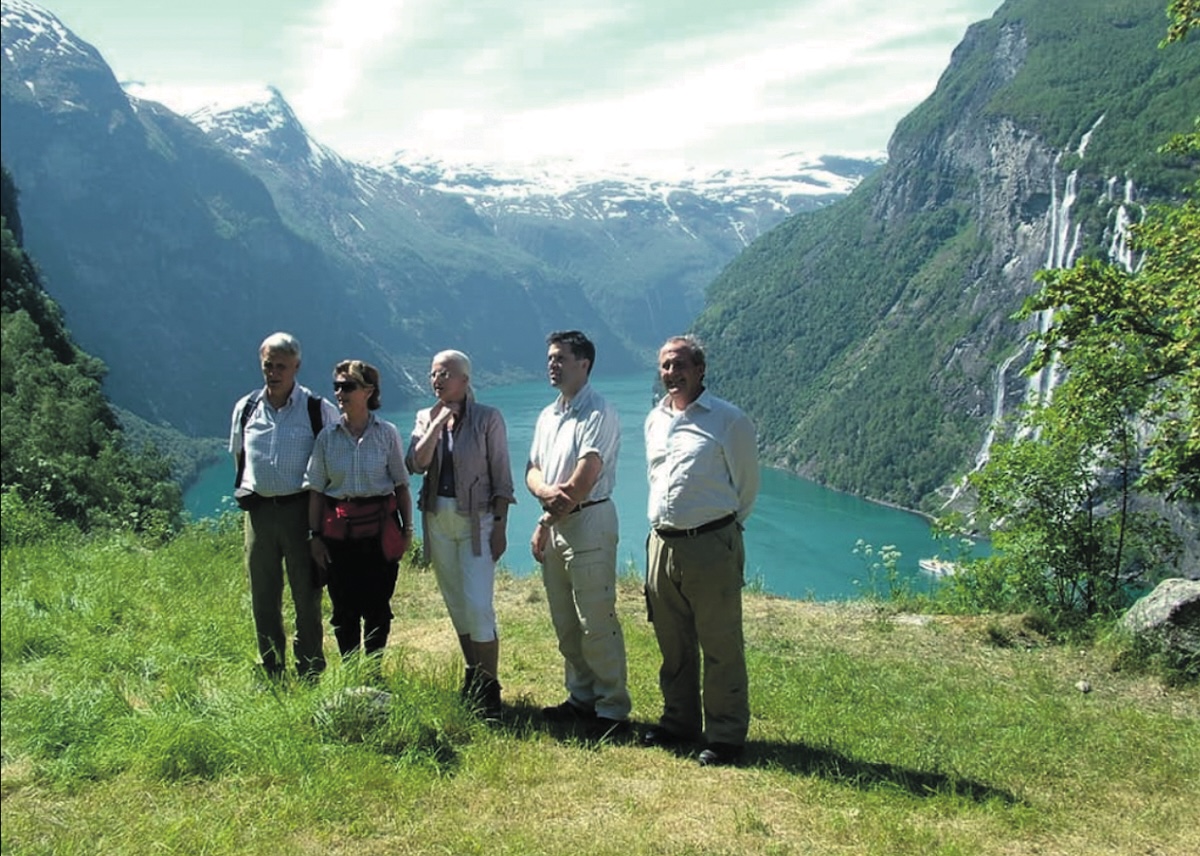
Throughout my career, I have been privileged to visit many of the world’s most beautiful natural landscapes and biodiversity hotspots. Yet I must admit that Lebanon’s Cedar forests hold a special place in my heart, particularly Horsh Ehden Nature Reserve and the Shouf Biosphere Reserve.
I first visited Lebanon in 1994 as part of an exciting new initiative involving three protected areas: Horsh Ehden Nature Reserve, Al Shouf Cedar Nature Reserve, and Palm Islands Nature Reserve. The project linked nature conservation with peacebuilding efforts following Lebanon’s civil war.
At that time, conservationists around the world were discussing the concept of “Parks for Peace,” yet there were very few practical examples. Lebanon was already implementing this approach and, in doing so, became a global pioneer. Another innovative feature of the initiative was the direct involvement of non-governmental organisations in managing each of the three protected areas in partnership with the relevant government authorities.
Horsh Ehden Nature Reserve and Al Shouf Cedar Nature Reserve are extraordinary places, home to magnificent stands of the iconic Cedar of Lebanon—trees that once covered much of the region and have been celebrated in ancient texts for millennia. Together, they represent an invaluable part of Lebanon’s natural and cultural heritage while protecting a rich diversity of distinctive plant and animal species.
I had the privilege of working alongside many outstanding Lebanese conservationists on this initiative, including Assad Serhal, Faisal Abu Izzeddine, Ghassan Jaradi, and many other dedicated individuals committed to safeguarding Lebanon’s natural heritage.
I would like to express my deepest appreciation to everyone at the Society for the Protection of Nature in Lebanon (SPNL). Through their tireless dedication and unwavering commitment, these invaluable landscapes continue to be effectively managed and protected for the benefit of present and future generations.
David Sheppard is the former Head of the Global Programme on Protected Areas and World Heritage at the International Union for Conservation of Nature (IUCN) and an international consultant on conservation, environmental policy, and organisational governance.