


Biosphere reserves are UNESCO-recognized model regions for sustainable development that balance nature conservation, economic activity, and human well-being. The UNESCO Biosphere Entlebuch (UBE) has been part of the global Man and the Biosphere network since 2001 and was Switzerland’s first biosphere reserve to meet the Seville criteria. Located in the canton of Lucerne, it spans seven municipalities, covers about one percent of Switzerland’s land area, and is home to roughly 17,000 people. Agriculture and tourism are key economic sectors, while more than half of the region is protected land rich in pre-alpine moorland and karst landscapes. The UBE promotes biodiversity, regional products under the “Echt Entlebuch” label, sustainable tourism, education, and research. It is uniquely governed through a direct democratic process and divided into core, buffer, and transition zones. A recent restoration project at the Gruenholz raised bog highlights its commitment to habitat conservation and climate protection through rewetting degraded peatlands.
By Tanja Koch, Project manager in the field of biodiversity and landscape at the UNESCO Biosphere Entlebuch
Switzerland’s First Biosphere Reserve
UNESCO Biosphere Entlebuch: Where Nature and People Thrive Together
A living model of sustainable development, the UNESCO Biosphere Entlebuch integrates biodiversity conservation, cultural heritage, local economic development, research, education, habitat restoration, and community empowerment to create a prosperous and resilient future.
By Tanja Koch
Biosphere reserves are internationally recognized model regions for sustainable development under UNESCO’s Man and the Biosphere (MAB) Programme, which places people and their relationship with nature at the heart of conservation. Today, the World Network of Biosphere Reserves includes 785 sites in 142 countries.
The UNESCO Biosphere Entlebuch joined this distinguished network in 2001 as Switzerland’s first biosphere reserve to meet the internationally recognized Seville Criteria. Developed in close partnership with local communities, the reserve combines nature conservation, cultural heritage, local economic development, scientific research, and environmental education. In 2008, the Swiss Federal Government also recognized Entlebuch as the country’s first Regional Nature Park of National Importance. Today, Switzerland is home to 18 regional nature parks, two nature discovery parks, and one national park.
The Biosphere Reserve encompasses seven municipalities in the Canton of Lucerne, where approximately 17,000 people live across an area covering about one percent of Switzerland’s total land area. Situated on the slopes of the Alps, Entlebuch is a quintessential rural region where agriculture employs around 21 percent of the workforce, while tourism provides another major source of income. More than half of the reserve is protected land, characterized by spectacular natural landscapes, while a vibrant cultural life flourishes through more than 400 local associations, including over 100 music societies.
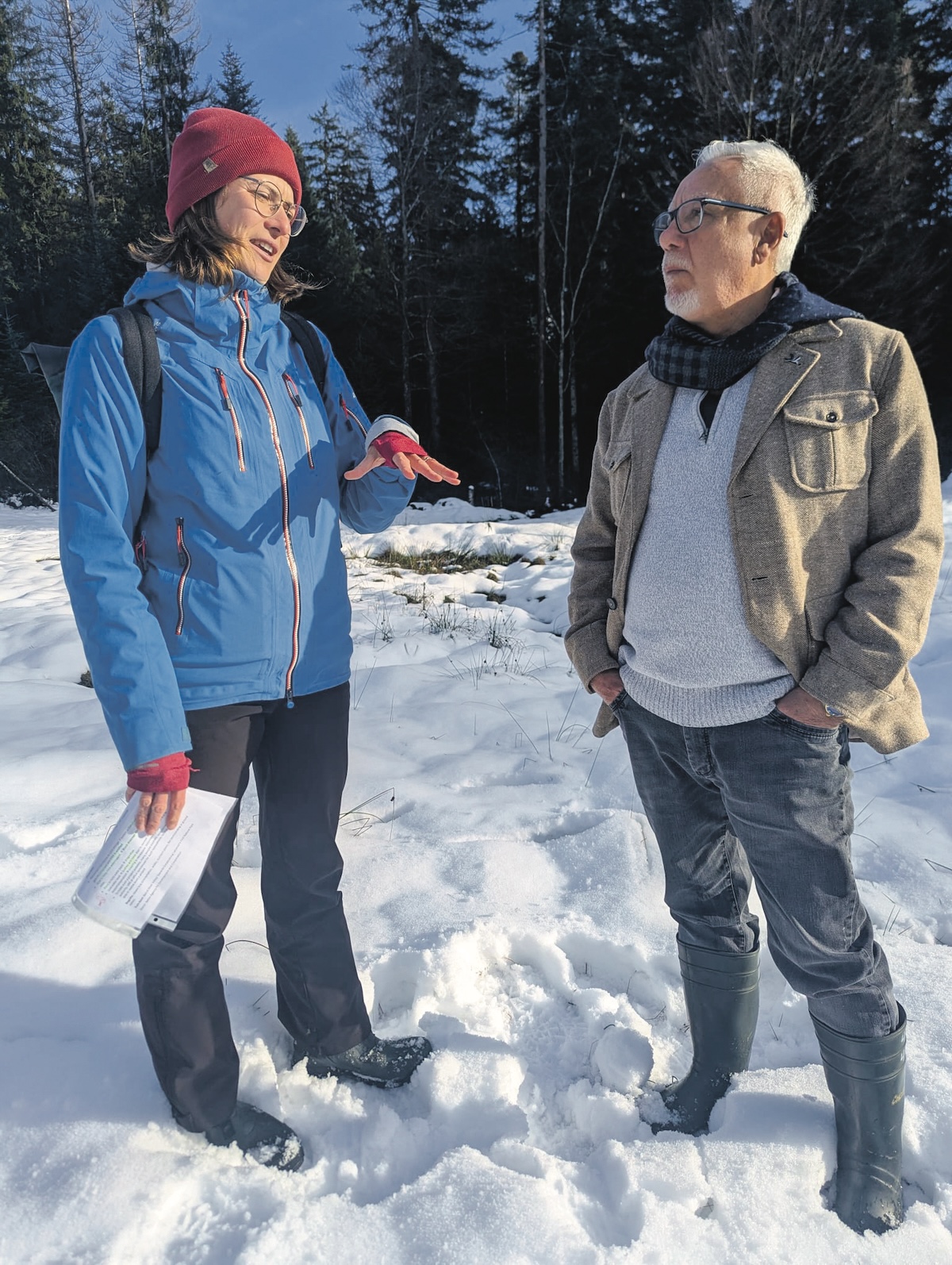
What Makes Entlebuch Unique?
Biodiversity and Cultural Heritage
Within UNESCO’s global network of biosphere reserves, Entlebuch represents the unique ecosystems of pre-alpine moorlands and karst landscapes. Continuous conservation efforts focus on protecting endangered habitats and restoring degraded ecosystems whenever necessary.
Sustainable Local Economy
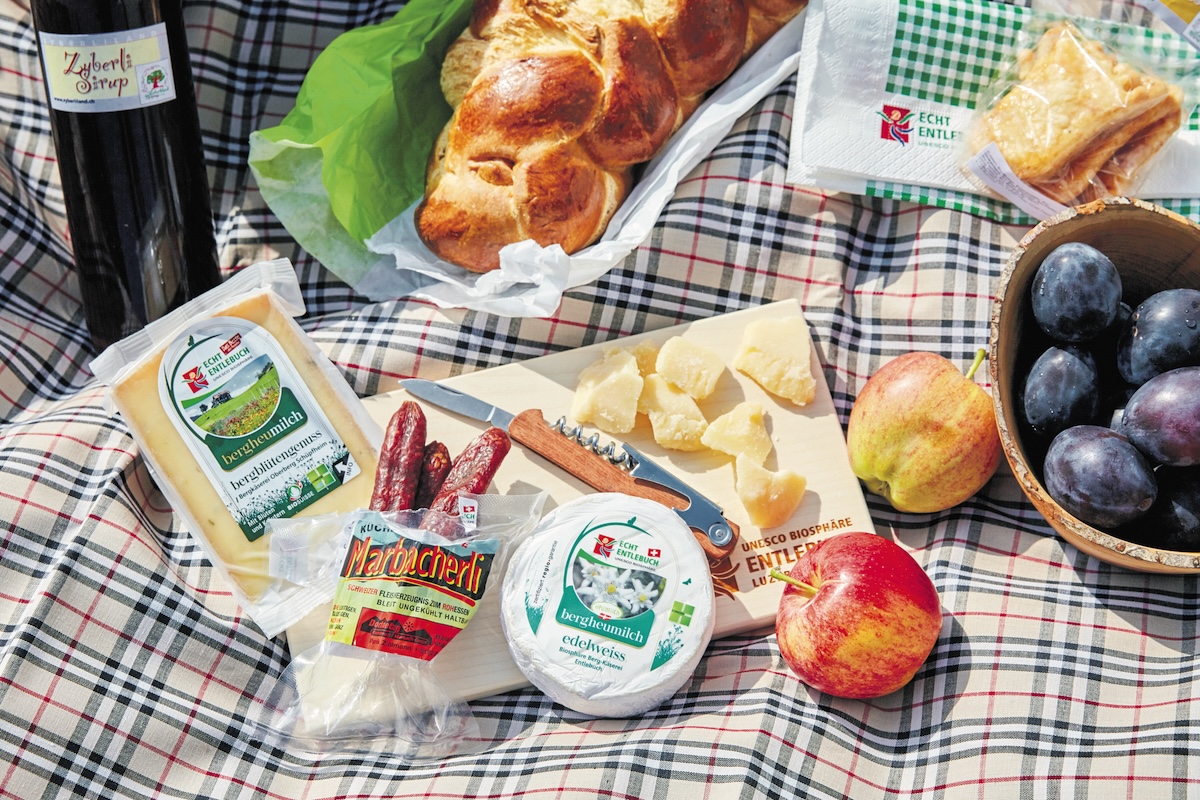
Around 500 locally produced goods now carry the Echt Entlebuch (“Genuine Entlebuch”) regional brand. Their coordination, marketing, and distribution are managed by Biosphäre Markt AG, helping strengthen local businesses while promoting sustainable production.
Tourism
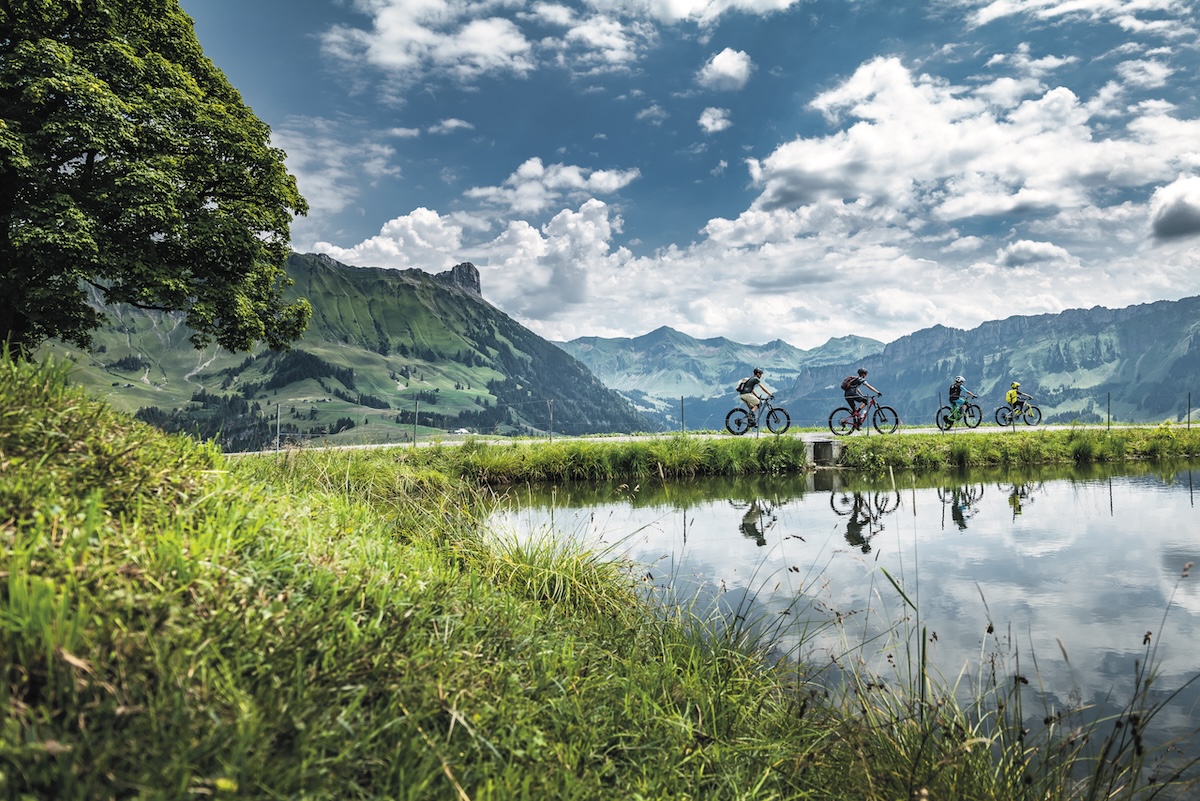
Each municipality within the biosphere reserve has developed its own distinctive identity and visitor experiences. The reserve’s marketing team promotes the destination in collaboration with five major regional tourism partners, creating a unified yet diverse tourism offering.
Education and Research
Education and scientific research play a central role in supporting sustainable regional development. Every year, approximately 10,000 participants benefit from the wide range of educational programmes, training opportunities, and research initiatives offered throughout the biosphere reserve.
Governance and Community Participation
Entlebuch is the world’s first biosphere reserve established through a direct democratic process. It is managed as an association of municipalities working together with residents to shape the region’s future through active public participation and local innovation.
Like all UNESCO biosphere reserves, Entlebuch is divided into three management zones based on levels of human activity:
- The Core Zone forms the ecological heart of the biosphere reserve, where nature conservation takes priority. Covering 8 percent of the reserve, it includes the Schrattenfluh karst landscape, raised bogs, and protected wildlife sanctuaries.
- The Buffer Zone covers 42 percent of the reserve and is dedicated to conserving and enhancing traditional cultural landscapes shaped by human activity. It includes open alpine pastures and nationally significant natural monuments.
- The Transition Zone, representing 50 percent of the reserve, serves as the living, working, and recreational landscape where communities pursue sustainable economic and social development.
This zoning system forms an integral part of the region’s official development plan and is legally binding.
Restoring the Gruenholz Raised Bog
With an average annual rainfall of approximately 2,000 millimetres, the UNESCO Biosphere Entlebuch contains one of Switzerland’s highest concentrations of peat bogs. These acidic raised bogs, formed over thousands of years, provide habitat for numerous rare and highly specialized species.
Among them is the remarkable round-leaved sundew (Drosera rotundifolia), a carnivorous plant measuring only 5 to 12 centimetres in height. Because bog soils are extremely poor in nutrients, the plant supplements its nitrogen intake by trapping insects on its sticky leaves and digesting them.
Unfortunately, nearly 90 percent of Switzerland’s peatlands have disappeared over the past two centuries, primarily due to drainage for agriculture, forestry, and human settlement.
To reverse this loss, the UNESCO Biosphere Entlebuch actively restores these unique habitats through carefully planned ecological restoration projects carried out in cooperation with local companies. The Cantonal Government fully finances these initiatives as part of its responsibility for wetland conservation.
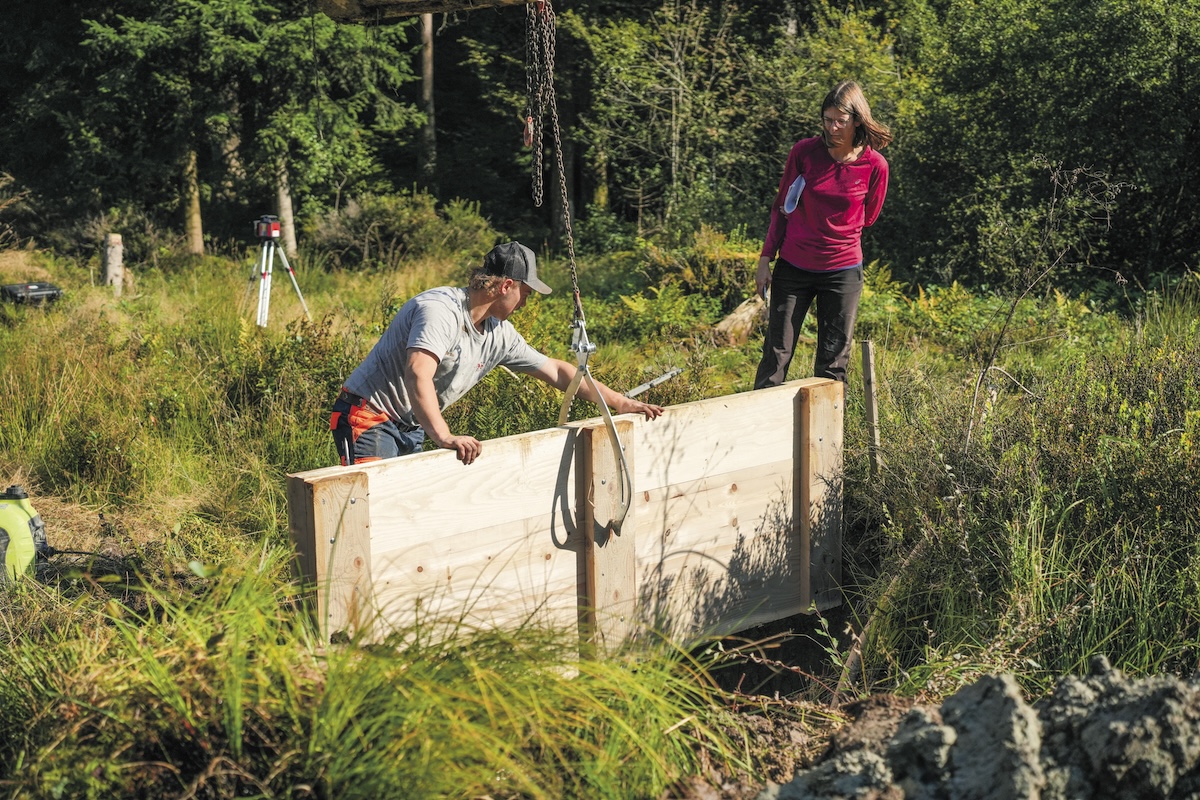
Following years of planning, the Gruenholz Raised Bog was successfully restored in 2024. Historic drainage ditches were blocked using wooden dams to retain water within the peatland before being filled in completely. Existing ponds were also restored.
Volunteers spent weeks removing trees and shrubs that had been absorbing excessive amounts of water from the bog. Selective thinning of forest edges allowed more sunlight to reach the ponds, creating ideal breeding conditions once again for dragonflies and other aquatic insects.
Ecological recovery will naturally take time before the bog fully regains its former vitality. However, restoring peatlands delivers benefits far beyond biodiversity conservation.
Healthy peatlands are among the world’s most effective carbon stores. When drained, peat decomposes and releases large quantities of stored carbon dioxide into the atmosphere. By rewetting degraded peatlands—as demonstrated at Gruenholz—these emissions are prevented, making peatland restoration an important contribution to climate change mitigation.