


Homat al Hima (Hima guardians, in Arabic) are the core of the Hima system, transforming it from a concept into a living model of community stewardship. They protect natural and cultural resources, ensuring sustainable use through traditional knowledge and modern tools. Beyond enforcement, they uphold ethical values like responsibility and intergenerational equity. Acting as a bridge between conservation and daily life, they engage communities and promote shared ownership. They also serve as ambassadors, raising awareness and supporting local development. Most importantly, they foster belonging, especially among youth, linking people to their land and heritage, and ensuring the Hima’s continuity and resilience.
By Andre Bechara, Hima Guardians, Ecotourism and Rural Development Programme Manager, Society for the Protection of Nature in Lebanon (SPNL)
The Hima Guardians are not a peripheral element of the Hima system—they are its living heart. Without them, Hima would remain little more than a legal concept or a historical tradition. With them, it becomes a dynamic, resilient, and enduring model of community-based natural resource management.
Their primary role is to safeguard the Hima’s natural and cultural resources. Yet their work extends far beyond monitoring and enforcement. They serve as custodians of the land, water, biodiversity, and traditional practices, ensuring that these shared resources are used fairly, responsibly, and sustainably. They monitor grazing, harvesting, seasonal activities, and ecosystem health by combining generations of local knowledge with modern conservation approaches.
More importantly, Hima Guardians protect not only ecosystems but also the ethical foundation of the Hima itself: responsibility, self-restraint, fairness, and stewardship across generations. Their presence ensures that community rules are respected because they are locally understood, socially accepted, and collectively owned—not imposed from outside.
Conserving Nature Through Community
Hima Guardians form the essential bridge between environmental conservation and village life. They embed environmental governance within the social fabric of the community, transforming the Hima from a set of restrictions into a shared resource that benefits everyone.
By engaging farmers, shepherds, women, youth, and even hunters, they translate broad conservation goals into everyday practices. They help communities understand, for example, how protecting a spring secures water for families, how sustainable grazing safeguards livelihoods, and how conserving landscapes preserves the identity and reputation of the village.
In doing so, they transform local communities from passive beneficiaries into active custodians of their own natural heritage, strengthening local pride, ownership, and social cohesion.
Strengthening Identity and Belonging
Hima Guardians also serve as ambassadors for their communities. Through environmental awareness campaigns, cultural events, guided walks, educational programmes, and community outreach, they showcase their villages as places of heritage, responsibility, and innovation rooted in tradition.
This visibility attracts visitors, researchers, and development partners, contributing to sustainable local development while safeguarding cultural and environmental values.
As a result, villages are increasingly recognised not as remote rural settlements but as centres of environmental leadership and cultural continuity. Their identity becomes defined not only by geography but by their commitment to protecting nature.
Perhaps the Guardians’ greatest contribution lies in cultivating a deep sense of belonging. They reconnect people—especially young people—with their land, history, and shared responsibility. By involving younger generations in biodiversity monitoring, storytelling, environmental education, and community decision-making, they transform conservation from an abstract concept into a lived experience.
This process nurtures a profound emotional and ethical connection to place. People protect what they feel they belong to. Hima Guardians make the Hima a source of identity, dignity, and continuity, linking ancestors, present-day communities, and future generations.
Keeping the Hima Alive
Hima Guardians are the driving force behind the Hima system. They bring ancient principles to life through modern community action, ensuring the legitimacy, resilience, and long-term sustainability of the Hima. Wherever strong Hima Guardians exist, the Hima flourishes—not only as a conservation model but also as a way of life.
Protecting the Hima begins by empowering its Guardians. When they are deeply rooted in their communities and landscapes, conservation becomes natural, sustainable, and lasting.
School with No Walls (SNOW)
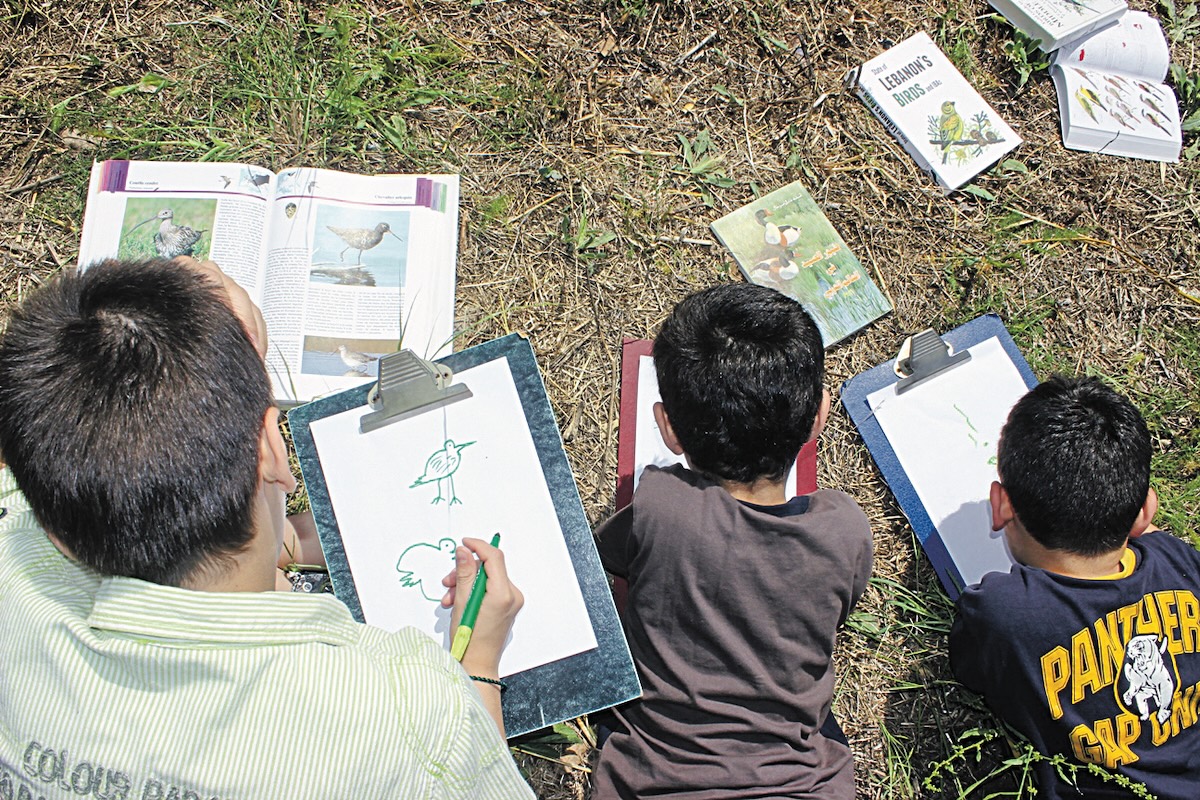
To strengthen the next generation of environmental stewards, the Society for the Protection of Nature in Lebanon (SPNL) launched School with No Walls (SNOW), an innovative environmental education movement that returns learning to its most powerful classroom: nature itself.
Through SNOW, forests, rivers, farms, and natural landscapes become open-air classrooms where children and young people rediscover their connection with the land and grow into future Hima Guardians.
The programme is far more than an educational curriculum. It is a national call for schools, municipalities, ministries, and local communities to move beyond classroom walls and join a shared mission: raising a generation that protects biodiversity, values natural heritage, and leads the conservation of Lebanon’s landscapes.
By empowering young people with knowledge, responsibility, and hands-on experiences in nature, SNOW plants the seeds of resilient communities where both people and ecosystems can thrive together.