


By Assad Serhal
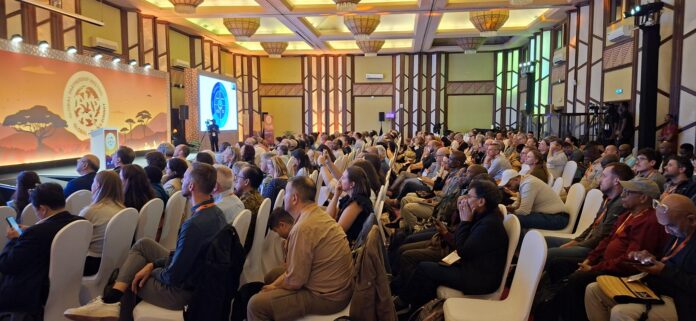
In the ancient city of Samarkand, where traders, scholars, and civilizations once converged along the Silk Road, representatives of governments, international organizations, Indigenous Peoples, civil society groups, financial institutions, and youth movements gathered once again to confront a challenge that transcends all borders: the future of the planet. The Eighth Assembly of the Global Environment Facility (GEF), held from 31 May to 5 June 2026 in Uzbekistan, was more than a diplomatic conference. It was a global reflection on whether the international community can still mobilize the political will, financial resources, and collective imagination necessary to address climate change, biodiversity loss, pollution, land degradation, and environmental injustice.
Opening the Assembly, GEF Interim CEO Claude Gascon captured the symbolism of the moment. Standing in a city historically known as the “jewel of the Silk Road,” he reminded delegates that Samarkand had long served as a crossroads where people exchanged ideas and forged solutions to the challenges of their times. The world, he argued, now faces another defining moment. The environmental crises confronting humanity require the same spirit of cooperation and innovation that once connected continents through trade and knowledge. He called upon participants to act with solidarity, courage, and determination to leave a better world for future generations.
A Planet Under Pressure
The Assembly convened against a backdrop of escalating environmental emergencies. Climate-related disasters are increasing in frequency and severity. Biodiversity continues to decline at alarming rates. Pollution threatens ecosystems, public health, and economic stability. At the same time, geopolitical tensions, declining development assistance, rising debt burdens, and growing economic uncertainty are complicating efforts to finance environmental action.
Throughout the week, speakers repeatedly referred to what has become known as the “triple planetary crisis”: climate change, biodiversity loss, and pollution. These crises are deeply interconnected. Environmental degradation undermines livelihoods, exacerbates poverty, fuels displacement, and weakens resilience to future shocks. Delegates agreed that addressing these challenges requires moving beyond fragmented responses toward integrated solutions capable of delivering environmental, social, and economic benefits simultaneously.
The Assembly’s discussions reflected a growing recognition that environmental protection can no longer be treated as a separate sector. Instead, it must become a central component of economic planning, financial systems, governance frameworks, and development strategies.
Uzbekistan Steps Forward
The choice of Uzbekistan as host carried particular significance. Once associated with some of the most dramatic environmental challenges in Central Asia, including the Aral Sea disaster, the country used the Assembly to present itself as a regional leader in environmental transformation.
Chairing the Assembly was Aziz Abdukhakimov, Advisor to the President of Uzbekistan on Environment and Chairman of the National Committee on Ecology and Climate Change. He emphasized that environmental sustainability and the transition toward a green economy have become national priorities. Uzbekistan showcased ambitious efforts to reduce emissions, expand reforestation, strengthen biodiversity conservation, improve air quality, and invest in environmental innovation.
In one of the most notable announcements of the Assembly, Uzbekistan declared its intention to become a donor to the GEF, marking a symbolic shift from recipient to contributor. Saida Mirziyoyeva, speaking on behalf of President Shavkat Mirziyoyev, described the country’s environmental reforms as a new development model and proposed that Samarkand become the “Green Investment and Innovation Capital” of Central Asia.
The announcement reflected a broader message emerging throughout the Assembly: environmental leadership is no longer limited to traditional donor countries. Increasingly, developing nations are seeking to shape global environmental governance and contribute actively to collective solutions.
Measuring Success and Learning from Experience
The Assembly also provided an opportunity to assess the performance of the GEF itself. Geeta Batra, Director of the Independent Evaluation Office, presented the Eighth Overall Performance Study (OPS8), describing it as evidence of the institution’s capacity to learn, adapt, and improve. The findings showed that more than 80 percent of GEF-supported projects had achieved their objectives, demonstrating significant effectiveness across a diverse portfolio of environmental initiatives.
Countries such as Germany welcomed the findings, noting that the evaluation confirmed the GEF’s strong scientific foundation and results-oriented approach. The report’s recommendations—including simplifying access to funding, encouraging innovation, strengthening risk-taking, and enhancing social inclusion—have already influenced the design of the next replenishment cycle.
The Scientific and Technical Advisory Panel (STAP) reinforced these messages. Its Chair, Rosina Bierbaum, argued that the coming years represent a pivotal moment for global environmental progress. Scientific evidence increasingly demonstrates that incremental change will not be enough. Transformational approaches capable of producing durable and equitable outcomes are now required.
The Birth of GEF-9
Perhaps the most consequential outcome of the Assembly was the formal endorsement of the Ninth Replenishment of the GEF Trust Fund, commonly known as GEF-9. The replenishment process determines the financial resources available to the institution over the coming years and serves as a barometer of international commitment to environmental action.
Gascon described the successful completion of GEF-9 negotiations as a renewed vote of confidence in multilateral cooperation. At a time when many international institutions face skepticism and financial constraints, the replenishment signals continued support for collective action on global environmental challenges.
GEF-9 introduces several strategic priorities. These include promoting whole-of-government and whole-of-society approaches, increasing support for Indigenous Peoples and local communities, scaling up blended finance mechanisms, maintaining strong support for least developed countries and small island developing states, and simplifying access to GEF resources.
However, many delegates cautioned that financial commitments alone would not be sufficient. Countries such as Egypt emphasized the need for predictable financing, coherence across institutions, and a stronger focus on measurable results. Côte d’Ivoire called for expanding the contributor base, arguing that broader participation would strengthen both financing and governance.
Indigenous Peoples, Civil Society, Women and Youth Demand a Greater Voice
One of the Assembly’s most powerful themes was the growing recognition that environmental solutions must be built from the ground up.
Representatives of civil society organizations called for greater direct access to GEF funding, stronger involvement in project design, and expanded support for education and capacity-building initiatives. Faizal Parish, Chair of the Civil Society Organization Network, argued that environmental action can only succeed when local communities are empowered to participate meaningfully in decision-making processes.
Indigenous leaders delivered equally compelling messages. Vivian Silole of the Indigenous Peoples Advisory Group emphasized that a healthy planet is impossible without respecting Indigenous rights and recognizing Indigenous Peoples as equal partners. She welcomed the GEF-9 commitment to direct at least 20 percent of financing toward Indigenous Peoples and local communities, describing it as the result of years of advocacy and dialogue.
Women’s organizations also pushed for greater recognition. Amelia Arreguín Prado of the Women and Gender Caucus reminded delegates that women and girls are not merely beneficiaries of environmental programs. They are environmental defenders, rights holders, and leaders whose knowledge and experience are essential to successful environmental governance.
Youth representatives echoed these demands. Heitor Dellastas highlighted the creation of a GEF-wide youth engagement strategy and called for meaningful youth participation across all GEF processes. Young people, he argued, are not future stakeholders but present-day partners capable of designing and implementing innovative environmental solutions.
Financing the Future
Perhaps no topic generated more discussion than finance. The scale of environmental challenges far exceeds the resources currently available through public funding alone. As a result, much attention focused on how blended finance and private sector investment can help close the gap.
Rachel Kyte, the United Kingdom’s Special Representative for Climate, stressed that attracting private capital requires reducing investment risks. Nature-based solutions, in particular, often struggle to attract commercial financing despite their potential to deliver substantial environmental and social benefits.
Examples from Ecuador demonstrated how innovative mechanisms such as debt-for-nature swaps can unlock significant resources while advancing both environmental protection and fiscal responsibility. Financial institutions, development banks, and private investors discussed the need for stronger partnerships, standardized financing models, and better pipelines of investable environmental projects.
A recurring message emerged: blended finance is no longer optional. It is increasingly viewed as essential if the world hopes to mobilize the trillions of dollars required to meet environmental goals. Yet participants also warned that financing systems must remain accessible to local communities, microenterprises, and vulnerable countries rather than becoming dominated by large-scale investors.
Leaving No Country Behind
The Assembly devoted considerable attention to countries facing unique vulnerabilities, including small island developing states (SIDS), least developed countries (LDCs), and nations affected by conflict and fragility.
Participants highlighted the disproportionate impacts these countries experience despite contributing relatively little to global environmental degradation. Rising sea levels threaten the existence of some island states. Climate shocks undermine food security and livelihoods. Conflict often destroys environmental governance systems precisely when they are most needed.
Delegates proposed several reforms, including increasing contributions to the Least Developed Countries Fund, simplifying access to financing, harmonizing compliance requirements, reducing reporting burdens, and ensuring stronger representation of vulnerable countries within GEF governance structures.
Importantly, speakers emphasized that these countries should be viewed not merely as beneficiaries but as partners and co-designers of environmental solutions. Sustainable progress, they argued, requires local ownership and context-specific approaches that reflect national priorities and realities.
A New Model for Regional Cooperation
The Assembly also celebrated the launch of the Central Asia Water Land Nexus Program (CAWLN), one of the flagship initiatives under GEF-8. The program seeks to address interconnected challenges involving water management, land degradation, biodiversity, climate resilience, and food security across Central Asia.
Officials from Kazakhstan, Tajikistan, Uzbekistan, Switzerland, FAO, and UNECE highlighted the importance of transboundary cooperation. Environmental challenges do not respect political boundaries, particularly in regions where rivers, ecosystems, and climate impacts are shared across multiple countries.
The initiative reflects a broader shift in environmental governance away from isolated sectoral interventions toward integrated, landscape-scale approaches capable of addressing multiple challenges simultaneously. As Gascon noted, such programs embody the transition from narrow solutions to holistic, whole-of-society action.
The Road Ahead
As the Assembly drew to a close, delegates were reminded that agreements and declarations alone will not solve the world’s environmental crises. Success will ultimately depend on implementation, financing, accountability, and political leadership.
Yet the atmosphere in Samarkand suggested cautious optimism. Despite growing geopolitical tensions and economic uncertainty, countries reaffirmed their commitment to multilateral cooperation. Indigenous Peoples, civil society organizations, women, and youth secured stronger recognition within global environmental governance. New financing approaches gained momentum. Vulnerable countries received renewed attention. And the foundations of GEF-9 were laid with a clear focus on integration, inclusion, and impact.
The symbolism of Samarkand proved fitting. Just as the Silk Road once connected distant societies through exchange and collaboration, the environmental challenges of the twenty-first century demand new forms of global partnership. The conversations held in Uzbekistan underscored a simple but powerful reality: no nation can confront climate change, biodiversity loss, and pollution alone.
Whether the commitments made in Samarkand translate into meaningful change remains to be seen. But for one week in June 2026, leaders from around the world gathered in an ancient crossroads city and attempted to chart a common path toward a more sustainable future. In a period marked by division and uncertainty, that effort alone carried significance. And as delegates departed, they carried with them a shared responsibility, not merely to protect nature, but to redefine humanity’s relationship with the planet on which its future depends.