
The Horned lark (Eremophila alpestris)

By Fouad Itani 

The Horned lark (Eremophila alpestris) is a distinctive-looking lark from the Alaudidae family. It measures 16cm in length, with a wingspan of 32cm, and an average weight of 45g.

The Horned lark  is by far the most beautiful lark to occur in the region. It has a crescent-shaped patch on its breast, a black stripe on its face, and beautiful horns on its head made out of tufts of feathers. Both sexes look alike, but the female colors are a little duller.

The Horned lark is a ground-dwelling bird usually found in open rocky areas and areas with short grass where it feeds mainly on seeds, but during the breeding season it will also consume insects and sometimes berries.
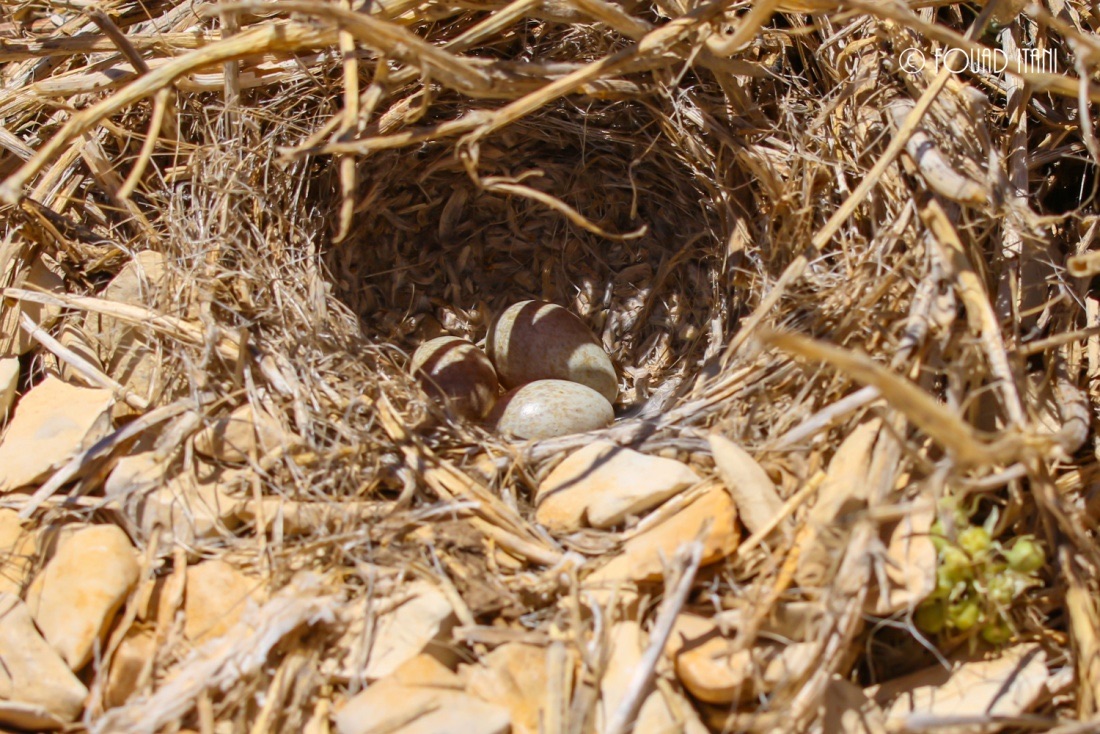
A Horned lark nest with 3 eggs. July 2016, Al Arz, Lebanon

In Lebanon the Horned lark is a resident bird that usually breeds at or above the tree line. The nest is found on the ground, it is made out of plant materials and feathers. The female lays an average of 3 eggs that she incubates for two weeks. Both parents feed and care for their chicks who will fledge in 10 to 12 days. The parents will continue to take care of their chicks for another week.
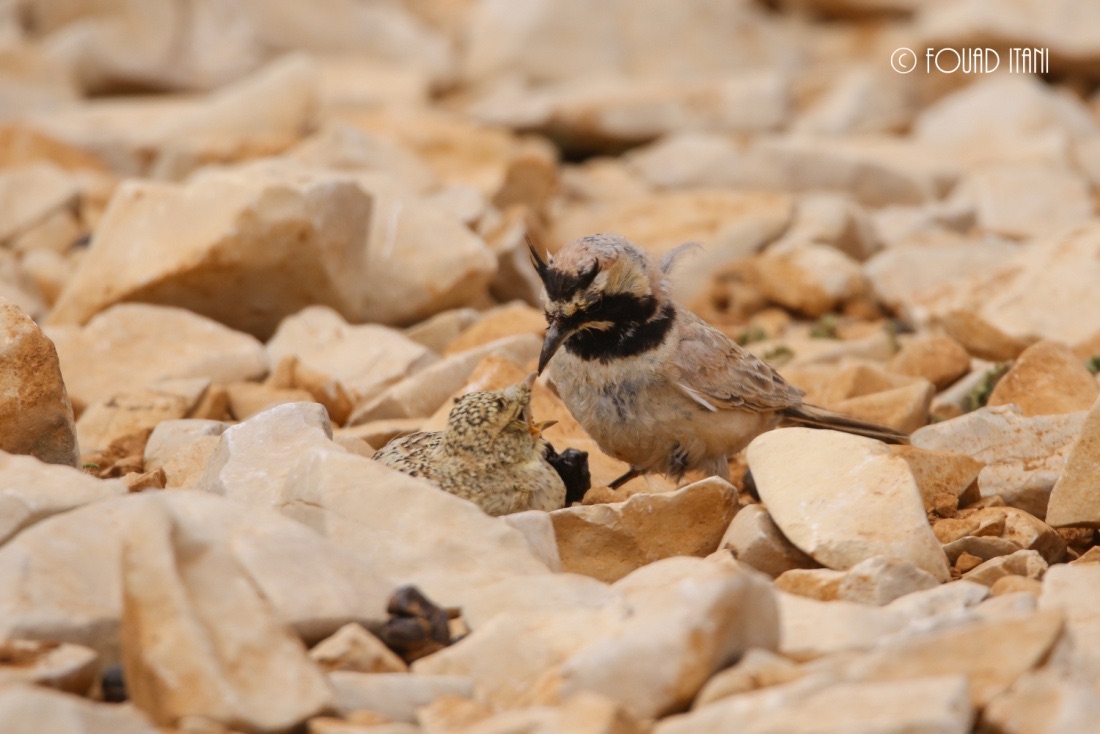
An adult Horned lark feeding its chick. July 2016, Al Arz, Lebanon

Unfortunately Horned larks in Lebanon are still being targeted by irresponsible hunters during and off hunting season at their breeding grounds.
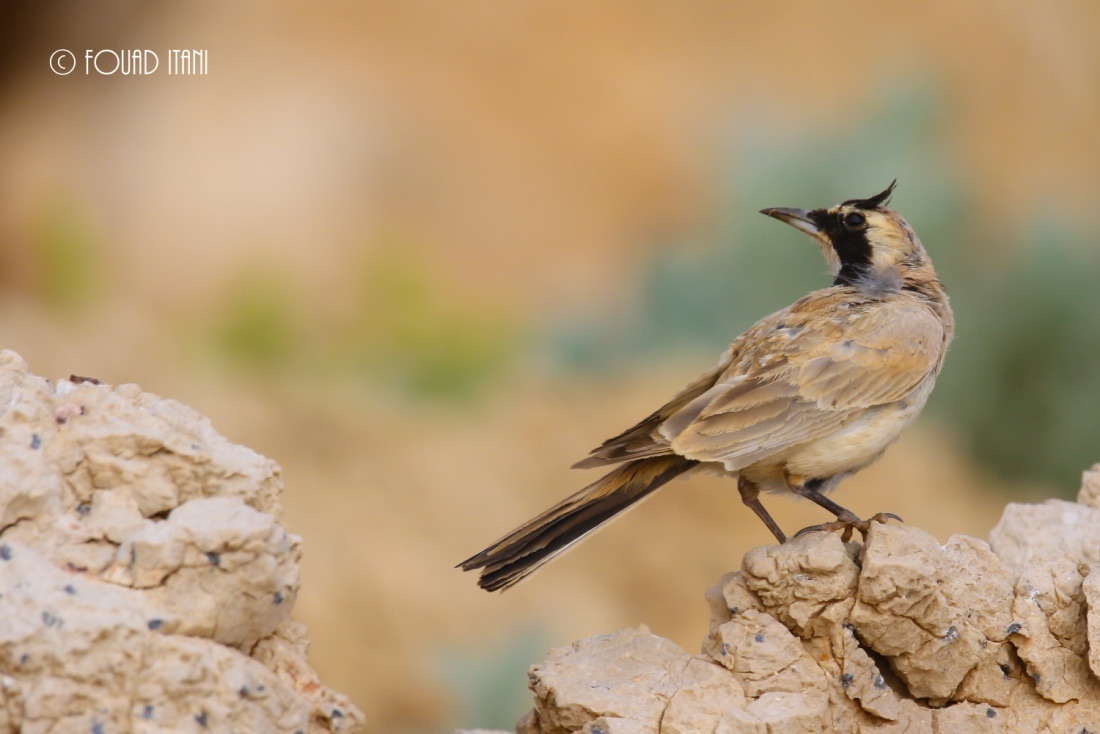

A Horned lark resting on a rock that has clear markings of hunters shots.
July 2016, Al Arz, Lebanon
Al Hima Magazine 7h Issue

The Society for the Protection of Nature in Lebanon, SPNL, has officially released the seventh issue of Al Hima magazine, reaffirming its commitment to advancing community-led conservation and positioning Lebanon as a regional leader in nature-based solutions.
This latest edition comes at a critical moment for environmental action in Lebanon and the wider region, bringing together scientific insight, traditional knowledge, and global perspectives under the unifying theme: “From Ridge to Coast, One Hima at a Time.”

Read Previous issues

spot_img
spot_img

More like this

New, simplified guidance for protecting birds

Today, the European Commission published guidelines for a pragmatic and proportionate implementation of the Birds Directive on the ground, while...
Buff-breasted Sandpiper - Credit © Luke Seitz | Cornell Lab of Ornithology.jpg

New UN-backed Atlas Maps Migratory Lifelines of Highly Vulnerable...

A powerful new online tool mapping the full annual journeys of an initial 89 highly vulnerable migratory...

At CMS COP15 in Brazil, the World Confronts a...

As global attention turns once again to biodiversity loss, world leaders, scientists, and conservation actors have convened...