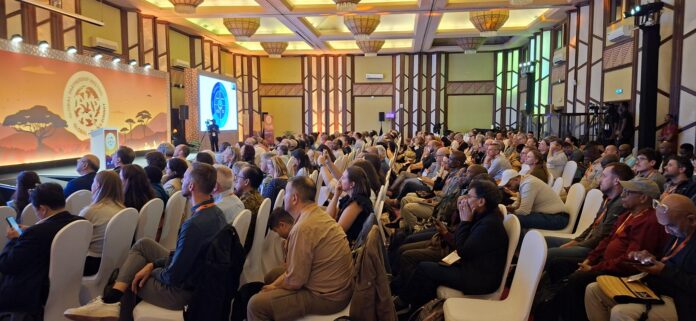



UNESCO Regional Office in Beirut, in partnership with the Society for the Protection of Nature in Lebanon (SPNL), convened a high-level regional meeting to explore the integration of the Hima approach into Biosphere Reserves, World Heritage Sites, and UNESCO Global Geoparks across the Arab region. The meeting served as a preparatory step toward a regional conference to be held in Beirut in July 2026.
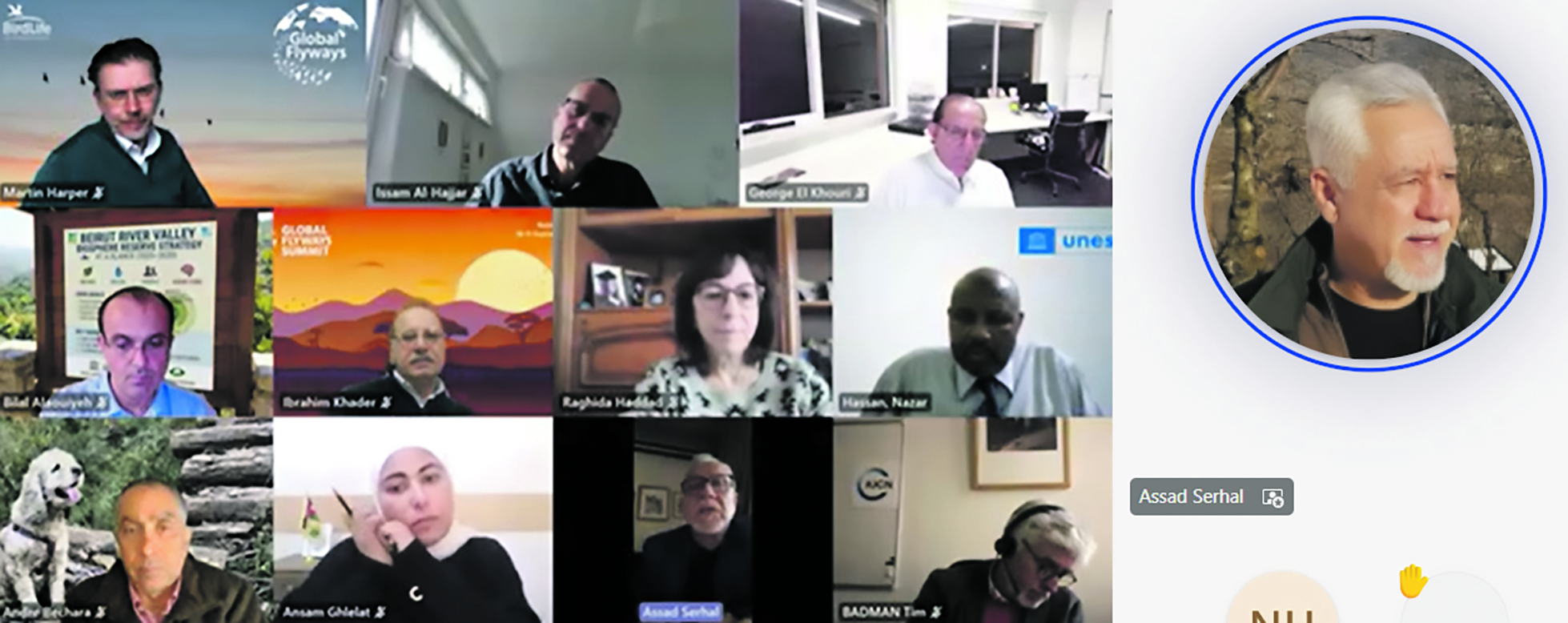
Held online, the meeting brought together representatives of international organizations, national authorities, and regional experts to launch a collaborative platform for exchanging knowledge on applying the Hima approach to strengthen Biosphere Reserves and advance sustainable development. Participants also discussed the challenges facing initiatives aimed at addressing biodiversity loss across the Levant.
Dr. Nizar Hani, Head of the Natural Sciences Unit at UNESCO Beirut, introduced the Levant Accelerator 2026 as a platform designed to accelerate regional cooperation on biodiversity conservation and sustainable development. He explained that the initiative seeks to move beyond dialogue toward implementation by supporting innovative, scalable models that connect policy, finance, and community action. With a strong focus on resilience and measurable impact, the Accelerator aims to link local initiatives such as Hima with regional and international financing mechanisms, technical expertise, and policy frameworks, while promoting cross-border cooperation, knowledge exchange, and replicable pilot projects across the Levant.
Michelle Jelkh, National Programme Officer at the Swiss Agency for Development and Cooperation (SDC), emphasized the importance of linking community-based conservation models such as Hima with long-term development programmes and donor-supported frameworks. She reaffirmed SDC’s longstanding commitment to supporting SPNL and the Hima initiative over the past two decades, particularly through its water programme, which has strengthened community resilience and the sustainable management of natural resources. She also stressed the need for stronger alignment between national priorities, regional cooperation mechanisms, and international financing in order to scale up and replicate innovative approaches such as Hima throughout the region.
Tim Badman, Director of the World Heritage Programme at the International Union for Conservation of Nature (IUCN), highlighted that bringing together nature, culture, and people is essential for achieving long-term sustainability. He noted that more than 4,000 internationally designated sites exist worldwide, including Biosphere Reserves, World Heritage Sites, Ramsar Sites, and UNESCO Global Geoparks. Among these, approximately 395 sites hold multiple international designations (MIDAs), creating challenges such as overlapping legal and administrative frameworks, competition for funding and recognition, and confusion among local communities. Participants agreed that the Hima approach offers a community-centered governance model capable of providing coherence across these complex conservation frameworks.
Adriana Moreira, Head of Partnerships at the Global Environment Facility (GEF), stated that community-based approaches such as Hima provide effective pathways toward lasting conservation outcomes, particularly when integrated into multi-partner financing frameworks and supported by close collaboration among governments, international organizations, and civil society. She also underscored the importance of increasing investment in nature-based solutions and improving access to finance for locally led initiatives.
Martin Harper, Chief Executive of BirdLife International, emphasized that the Hima approach aligns closely with global biodiversity strategies and contributes directly to achieving international targets, including the 30×30 goal. He stressed that community-led conservation models are essential for translating global commitments into tangible results on the ground.
Assad Serhal, BirdLife International’s Regional Representative for the Middle East and Director General of SPNL, described Hima as a governance model rooted in community stewardship, cultural heritage, and the sustainable use of natural resources. He explained that it provides a practical and scalable response to today’s environmental challenges by empowering local communities as primary custodians of ecosystems, strengthening sustainable livelihoods, and fostering social cohesion.
Government and civil society representatives from Jordan, Syria, and Palestine also shared experiences demonstrating growing commitment to expanding conservation efforts despite institutional and political challenges. Participants identified key obstacles, including limited resources, weak policy coordination, environmental pressures, and regional instability, while expressing broad consensus on the need for coordinated regional responses. They reaffirmed their commitment to continued cooperation and engagement in upcoming international platforms, including initiatives linked to the GEF Assembly in Samarkand.
The meeting reflected an important shift in environmental thinking by placing people and culture at the heart of conservation policy. By combining traditional governance systems such as Hima with modern international conservation frameworks, participants outlined a new vision for conservation that is inclusive, community-driven, scientifically informed, globally connected, and adaptable to the complex realities of the region.