


Dr. Munir Virani links his own life of migration—from India to Kenya, the United States, and Abu Dhabi—with the journeys of the saker falcon. He recounts the death of X26, a female falcon electrocuted on a Mongolian power pole, and the extraordinary survival of her chicks, saved by her devoted mate. This story mirrors a global crisis: millions of birds, including raptors, die each year from unsafe power infrastructure. Falcons hold deep cultural meaning across history and are the, yet thousands are lost annually. Inspired by UAE commitment to falconry, with the falcon as the national bird, conservationists worked with herders in Mongolia to insulate power poles, install artificial nests, and train local leaders. These efforts cut electrocution by 95 percent, restored grasslands, supported climate resilience, and spread benefits across borders. The message is clear: conservation succeeds when science, community, and willpower unite to act now and give life a second chance.
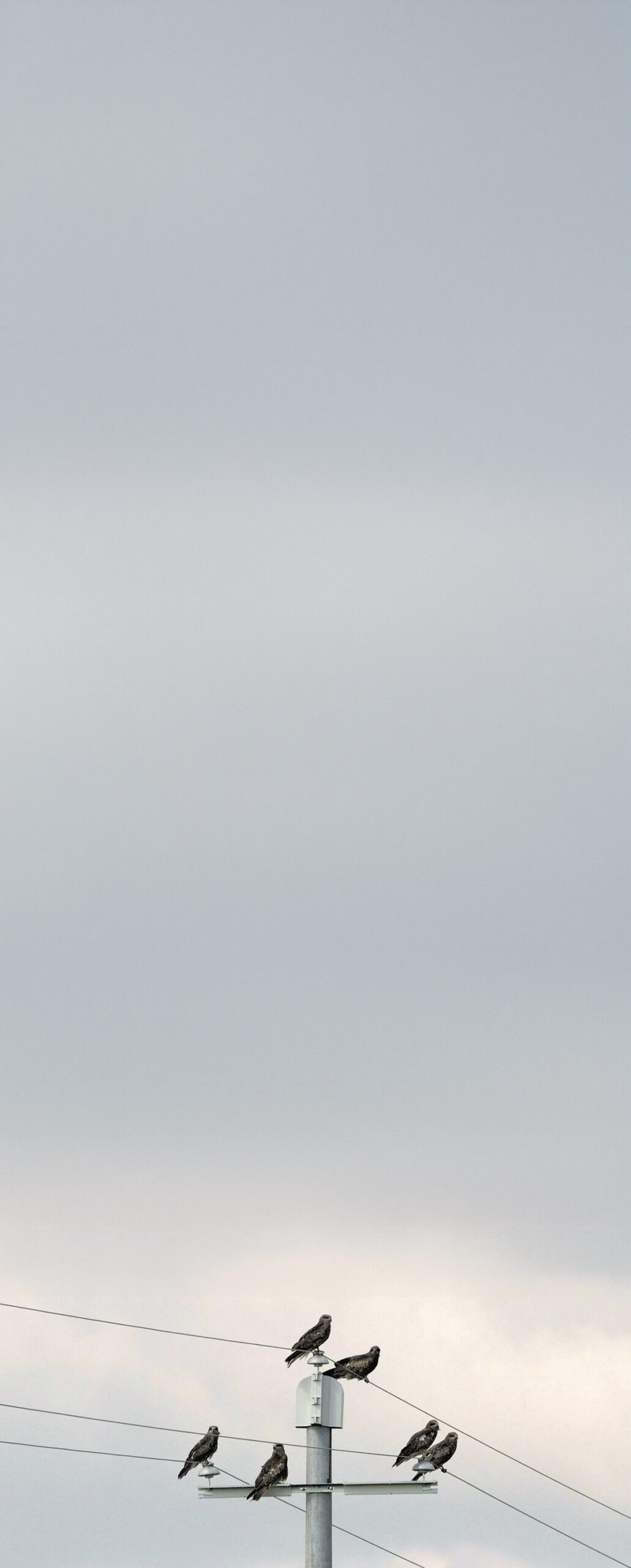
Four small chicks waited in their nest, hungry and unaware that their mother had been electrocuted on a power pole and would never return. Then their father stepped in, defying every instinct. Alone, the male falcon hunted day after day to feed four hungry mouths. Today, all four chicks are alive and migrating towards the Tibetan Plateau because one falcon refused to give up.
By Munir Virani
Migration runs in my blood. My grandfather was born in India. I was born and raised in Nairobi, Kenya, before migrating to the United States. Today, I call Abu Dhabi home. Four journeys, four landscapes, and four places have shaped who I am.
Like me, the falcon is also a migrant. It travels from the steppes of Mongolia to the Tibetan Plateau in China along ancient routes etched into the sky.
Now imagine the Mongolian steppe: empty, endless, a flat ocean of grass. Sometimes, standing there, you feel as though the sky itself is testing you. In a place so vast, eternal, and still, a single power pole can bring down one of the fastest and fiercest hunters on Earth.
In June 2025, our team was surveying this landscape when its members stopped in shock. Beneath a power pole lay one of nature’s most magnificent creatures, its wings spread wide and motionless forever.
It was a female Saker Falcon named X26.
But her story did not end there.
In an artificial nest we had built 15 kilometres away, four young chicks were waiting. They were hungry and calling out, unaware that their mother would never return.
Then their father stepped in, defying every instinct and every evolutionary pattern. Day after day, hunt after hunt, the male falcon hunted alone and fed four hungry mouths.
Today, all four chicks are making their first migration towards the Tibetan Plateau. They are alive because one falcon refused to surrender.
That single act of defiance reflects the choices we now face in conservation.
Here is what is happening today: every three seconds, a bird dies from electrocution. That is ten million birds every year. Take a moment to imagine that number.
In Africa, where I was born, we have lost three-quarters of our raptor populations over the past three generations. In one study of 1,000 tracked birds that migrated to Africa, half were found to have died because of power lines.
This is not a distant problem. It is a global emergency.
Like X26’s mate, we also have a choice. We can stand by and surrender to the tragedy, or we can intervene when life is at stake.
In 2018, I received the prestigious Whitley Award for my work on African falcons. That moment changed everything.
Suddenly, I was no longer simply a field biologist working in the wilderness. The Whitley Fund recognised me while I was still sleeping in tents, chasing falcons across the savannah with my hands covered in their droppings, at a time when no one knew my name.
That recognition gave me the courage to dream bigger. It helped me move from fieldwork into the global conservation arena, where my voice could make a difference.
It led me to Mongolia, to the Mohamed bin Zayed Raptor Conservation Fund in Abu Dhabi, and ultimately to the story of X26. Sometimes, a single act of recognition can create a ripple effect that changes the world.
But X26 was no ordinary bird.
For more than 3,000 years, falcons have carried humanity’s dreams and symbolised its power. In ancient Egypt, people worshipped Horus, the falcon-headed god. Centuries later, Genghis Khan rode into battle with his falcons, which became symbols of empire.
Today, the falcon is the national bird of the United Arab Emirates. In Mongolia, it is a symbol of the nation—timeless as the horse and enduring as the steppe.
The Saker Falcon is not simply a bird of prey. It is the bird of kings, nations, and empires.
And yet we kill thousands of them every year.
In Mongolia alone, approximately 18,000 birds of prey die annually from electrocution, including around 4,000 Saker Falcons.
But what if I told you that we have found a solution?
When we began working in Mongolia in the mid-1990s to protect Saker Falcons, every power pole was a potential death trap.
In 2005, inspired by the deep Emirati appreciation for falconry, we launched one of the most ambitious conservation programmes in history.
Working with herding communities, we installed 5,000 artificial nests, which have produced 30,000 wild Saker Falcons.
We insulated 27,000 power poles across 80 percent of Mongolia, covering more than 3,000 kilometres. As a result, electrocution deaths fell by 95 percent.
We also invested in people, giving them the confidence and skills to become the conservation leaders they are today.
This is what it means to change the course of events: science, community, and courage working together.
As falcon numbers increased, our study site became a kind of natural scarecrow. Rodents that had been damaging the grasslands appeared less frequently above ground, giving the pastures an opportunity to recover.
These grasslands are not merely habitats. They are also vital carbon stores that play a critical role in combating climate change.
We tracked our falcons from Mongolia to the Tibetan Plateau in China, demonstrating that every safe breeding season in Mongolia creates a ripple effect thousands of kilometres away.
Every power pole made safe, every nest built, and every student trained contributes to that hope in flight.
So what does success look like?
Success is a falcon landing safely on a power pole instead of dying beneath it.
It is chicks fledging from nests built by human hands and then flying on wild wings.
It is herders, scientists, communities, and governments working side by side.
And it is the four chicks of X26 still alive today because one falcon—and one global community—refused to watch them die.
The solution is remarkably simple.
It is not expensive. It does not take decades. It requires only the will to act.
So I ask you to remember X26.
Remember her mate, who refused to surrender.
Remember their four chicks, now making their way across the skies of Asia.
Because this is the essence of conservation: stepping in when the world is at its most vulnerable and giving life a second chance.
If Mongolia can do it, then so can Kazakhstan, where we are now expanding our work. So can Kyrgyzstan, India, Africa, and every other place where birds are threatened by unsafe power infrastructure.
We can end bird electrocution—not tomorrow or the day after, but now.
The technology is ready. The cost is modest. And hope, like the Saker Falcon, is destined always to fly.
Dr. Munir Virani is Chief Executive of the Abu Dhabi-based Mohamed bin Zayed Raptor Conservation Fund dedicated to the protection of threatened birds of prey around the world. This is his keynote speech at the Whitley Fund for Nature’s People for Planet Summit in London. Virani is 2018 Whitley Award winner. For more information about the MBZRCF’s work, visit www.mbzraptorfund.org