


An Interview with Tim Badman at the IUCN Congress
During the International Union for Conservation of Nature (IUCN) Congress in Abu Dhabi, the delegation of the Society for the Protection of Nature in Lebanon (SPNL) met with Tim Badman, Director of the World Heritage Programme at IUCN, who explained in detail the requirements and procedures for inscribing natural and cultural sites on UNESCO’s World Heritage List. He outlined the nomination criteria, evaluation process, and the collaboration between IUCN, UNESCO, and national authorities to ensure the protection and sustainable management of sites of Outstanding Universal Value.
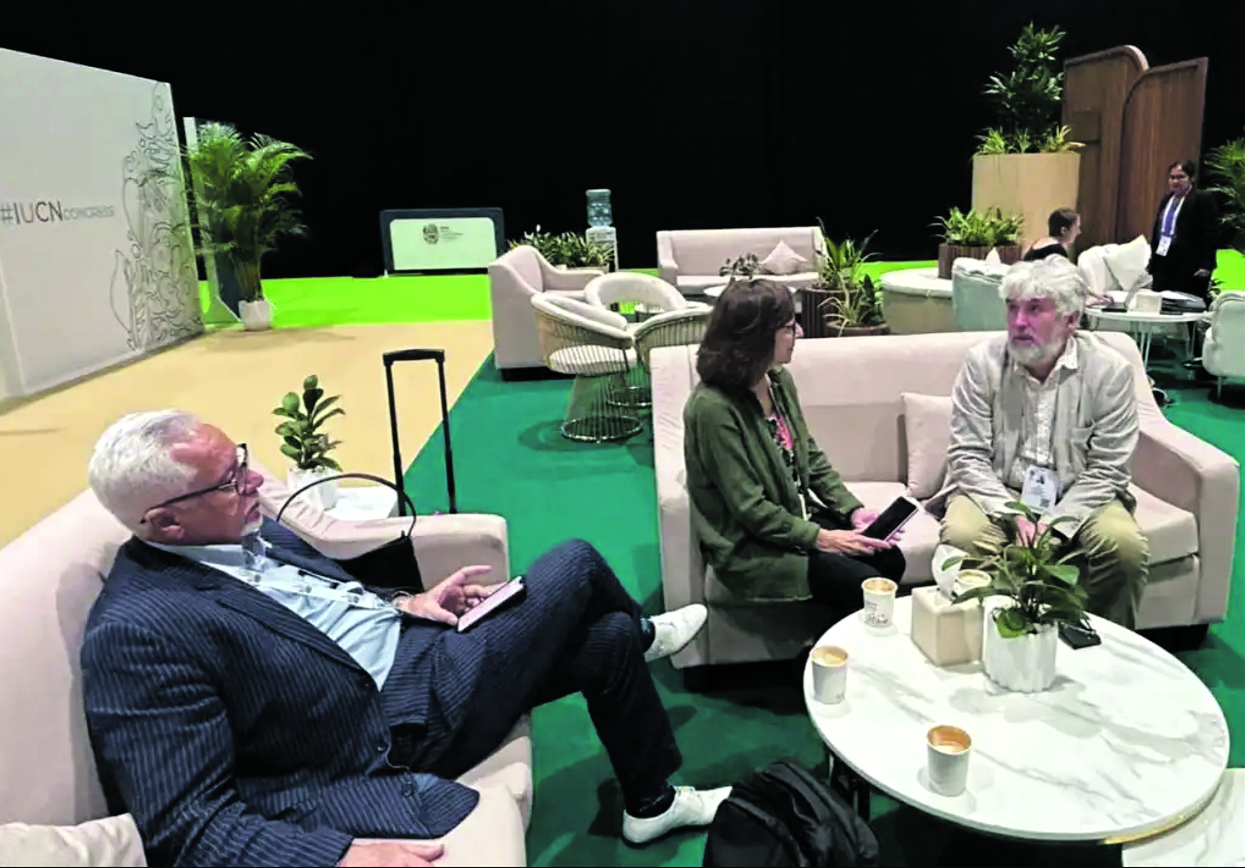
The following are excerpts from the conversation.
What is IUCN’s role under the World Heritage Convention?
The International Union for Conservation of Nature (IUCN) plays a unique role within the World Heritage Convention, a legally binding international treaty that establishes the framework for identifying and protecting cultural and natural sites of Outstanding Universal Value. IUCN helped draft the Convention, which entered into force in 1972, and today serves as the official advisory body on all matters relating to natural heritage.
In practice, IUCN evaluates nominated sites based on their natural values and provides technical advice to UNESCO. While the World Heritage Committee makes the final decisions on inscription, IUCN’s evaluations play a central role in informing those decisions.
Two other advisory bodies work alongside IUCN in supporting UNESCO’s implementation of the Convention and safeguarding the world’s most important heritage sites. The International Council on Monuments and Sites (ICOMOS) focuses on cultural heritage, while the International Centre for the Study of the Preservation and Restoration of Cultural Property (ICCROM) specializes in capacity building, training, research, and the conservation of cultural heritage.
Was the Convention always intended to connect nature and culture?
Yes. One of the most distinctive features of the World Heritage Convention is that it was designed from the outset to protect both cultural and natural heritage within a single international framework. Over time, however, these two dimensions were often approached separately. Natural heritage was typically assessed by natural scientists, while cultural heritage was evaluated by archaeologists and historians.
Over the past decade, renewed efforts have been made to reconnect these perspectives and promote a more integrated understanding of heritage that reflects the links between landscapes, ecosystems, and human societies.
What makes the World Heritage Convention unique?
Unlike many international agreements that primarily operate at the policy level, the World Heritage Convention focuses on specific sites. States nominate places they believe possess Outstanding Universal Value, these sites are evaluated, and the World Heritage Committee then decides whether they should be inscribed.
World Heritage sites fall into several categories. Some are recognized primarily for their natural significance, such as biodiversity or geological features. Others are listed mainly for their cultural importance. There are also mixed sites that combine both natural and cultural values, as well as cultural landscapes, where the interaction between people and nature over time forms the basis of the site’s significance. These landscapes often demonstrate how communities have shaped their environments through traditional knowledge and sustainable practices.
Why has reconnecting nature and culture become so important?
A major turning point came when Indigenous Peoples sought recognition of their lands within the World Heritage system. This raised important questions about how heritage sites should be evaluated. When natural values were considered separately from cultural values, assessments often failed to capture the true character of many landscapes.
In many cultures, people do not see themselves as separate from nature. Their livelihoods, traditions, and identities are deeply connected to the ecosystems in which they live. Treating nature and culture as separate domains can therefore overlook the relationships that define these places.
As a result, conservation thinking has increasingly shifted toward approaches that recognize the connections between ecosystems, cultural traditions, and community stewardship.
How does the Hima concept relate to this approach?
The Hima concept provides an important example of how communities understand the relationship between people, nature, and stewardship.
Hima is a traditional community-based conservation system that has long existed across parts of the Arab region. It reflects an ancient practice in which communities collectively manage land and natural resources through agreed rules and shared responsibility.
The significance of Hima today lies in the fact that it does not separate environmental management from cultural and social values. Instead, it recognizes that healthy ecosystems depend on community governance, cultural traditions, and responsible resource use. In this sense, it represents a holistic conservation model in which people, culture, and nature are inseparable.
How is the World Heritage system adapting to these ideas?
Several important developments have taken place in recent years. One of the most significant has been the introduction of an upstream process for new nominations, allowing natural and cultural heritage experts to review potential sites together at an early stage. Previously, as noted, nature and culture were often assessed separately.
Engagement with Indigenous Peoples has also increased. The International Indigenous Peoples’ Forum on World Heritage, established in 2018, provides a platform for Indigenous voices within the Convention.
At the same time, there is growing emphasis on working directly with site managers and local stakeholders. Rather than relying exclusively on international experts, the system increasingly seeks to respond to the realities and needs of those responsible for managing heritage sites.
Collaboration among the advisory bodies has also improved significantly. Organizations working on nature and those focusing on culture now cooperate far more closely than they did 15 years ago.
Are there other international initiatives promoting similar ideas?
Yes. Many international initiatives now recognize the close relationship between nature conservation and cultural heritage.
UNESCO’s Biosphere Reserves promote natural areas where conservation is integrated with sustainable development. UNESCO Global Geoparks also connect geological heritage with culture and community participation. The Ramsar Convention highlights both the ecological and cultural importance of wetlands.
Meanwhile, the IUCN Green List of Protected and Conserved Areas promotes high standards in conservation while recognizing the importance of cultural values and community engagement.
Similarly, the Globally Important Agricultural Heritage Systems (GIAHS) programme of the Food and Agriculture Organization (FAO) recognizes traditional farming systems that conserve biodiversity while safeguarding cultural knowledge.
Together, these initiatives reflect a growing understanding that conservation must embrace both environmental and cultural dimensions.
How long does it take to nominate a World Heritage site?
Nominating a site for the World Heritage List typically takes several years and requires careful preparation.
The first step occurs at the national level, when a country places a site on its Tentative List, indicating its intention to nominate it in the future. Once included, the site undergoes a preliminary assessment that usually takes about one year. This stage allows the advisory bodies to provide early feedback on whether the site appears to meet the World Heritage criteria.
If the prospects are positive, the State Party prepares a full nomination dossier supported by scientific research, consultations, and management plans.
After the dossier is submitted to UNESCO, the evaluation and decision-making process takes approximately 18 months.
In theory, the entire process can take between three and four years, but in practice many nominations require considerably longer. Preparing a strong nomination demands time to build scientific evidence, secure community support, and establish effective management systems.
What opportunities exist for World Heritage nominations in the Arab region?
The Arab region is rich in cultural landscapes, historic sites, and natural ecosystems. Yet relatively few natural heritage sites from the region have been nominated for World Heritage status. This represents both a challenge and an opportunity.
Through its Regional Office in Amman, IUCN is strengthening cooperation with the World Heritage Convention across Arab countries, particularly through work on protected areas. Close collaboration with local institutions and experts is essential because conservation efforts are most effective when they reflect local knowledge, cultural traditions, and communities’ relationships with the land.
This is why having professionals working directly within the region is so important—people who understand the local culture and speak the language. Such expertise helps connect international conservation initiatives with local realities.
What message does this hold for the future of conservation?
The central lesson is that heritage should not be viewed as a choice between nature and culture. Every landscape reflects a combination of ecosystems, history, cultural traditions, and community values. People experience these elements as parts of a single living system.
Concepts such as Hima remind us that this integrated perspective has existed for centuries in many cultures. By recognizing these connections more clearly, the World Heritage Convention can promote more comprehensive and sustainable approaches to protecting the world’s most valuable landscapes.
Placing people, nature, and culture at the heart of conservation is one of the most important steps we can take to safeguard our shared heritage and the future of our planet.