


In the heart of Switzerland, the UNESCO Biosphere Reserve Entlebuch stands out for its unique approach to conservation and community involvement. Established three decades ago, it arose from a popular referendum aimed at turning the region’s protected peatlands into an asset rather than a burden. With a structured zoning system, the reserve balances strict ecological protection in its core zone with sustainable agriculture and tourism in the buffer and transition zones.
Community buy-in was fostered through participatory forums and active engagement of local stakeholders, ensuring everyone had a voice. The “Echt Entlebuch” label supports local farmers by promoting regional, sustainably produced products, boosting the local economy and halting youth exodus. This transformation has united residents around a shared vision, enhancing pride in their heritage. The Entlebuch experience highlights the importance of community participation as an essential foundation for building successful biosphere reserves, a lesson poised for adoption in Lebanon’s aspirations to establish its own reserve.
Interview with Wolfgang Schatz, Director of the Entlebuch Biosphere Reserve
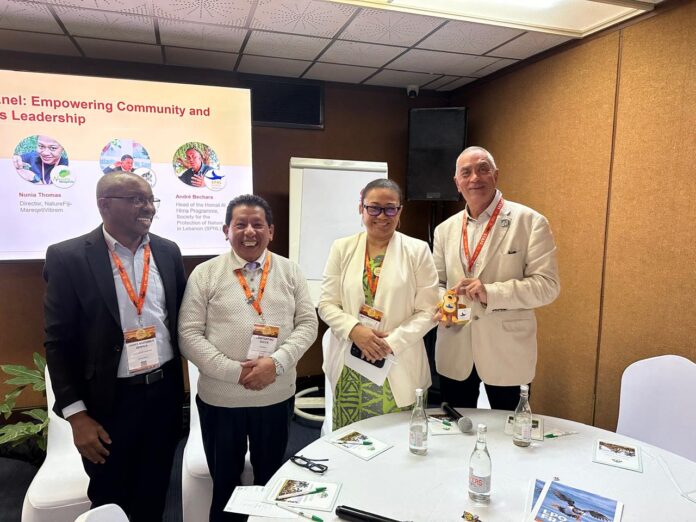
In the winter of 2025, SPNL Director General Assad Serhal visited the Entlebuch Biosphere Reserve and met with its director, Wolfgang Schatz, who shared 25 years of experience in establishing and managing Switzerland’s first biosphere reserve. Below are excerpts from their conversation.
What distinguishes Entlebuch from other biosphere reserves around the world?
Several unique aspects characterised the establishment of the Entlebuch Biosphere Reserve. Thirty years ago, the region had a growing tourism industry and a strong agricultural sector.
Following a popular initiative, peatlands—particularly bogs where decomposed plant matter had accumulated densely—were placed under national protection. As Entlebuch contains the largest concentration of peatlands in Switzerland, concerns arose that the protection measures would impose severe restrictions on tourism and agriculture, potentially depriving this economically disadvantaged region of further development.
Fortunately, the idea emerged of turning these restrictions into advantages by establishing a biosphere reserve. The proposal was approved by more than 96% of citizens in a popular referendum. To the best of my knowledge, it was the first biosphere reserve in the world to be established through a public vote.
What specific rules and activities apply within a biosphere reserve?
A UNESCO biosphere reserve is divided into three zones, each with a specific function.
The core zone receives the highest level of protection. Its principal purpose is to preserve ecosystems, species and biodiversity over the long term. Human activities are highly restricted and are generally limited to scientific research, monitoring and conservation work. Activities such as resource extraction, construction, agriculture and mass tourism are prohibited. These areas are protected by law.
The buffer zone surrounds or adjoins the core zone and protects it from external pressures. Activities compatible with conservation objectives are permitted, including environmental education, ecotourism, applied research and sustainable land-use practices such as traditional agriculture and forestry. All activities are carefully managed to minimise environmental impact. In our region, particular emphasis is placed on sustainable agriculture and tourism.
The transition zone is the outermost and most flexible area, where local communities live and work. Its primary purpose is to promote sustainable economic and social development. Activities such as agriculture, tourism, housing and local industries are allowed, provided that they comply with sustainability principles and contribute to environmental protection.
Together, these three zones demonstrate how environmental protection and human development can coexist, making biosphere reserves living laboratories for sustainable development.
You must have faced challenges in securing the support of the local community. How did you overcome them, and how did you involve farmers, businesses, municipalities and tourism stakeholders in planning and management?
We established several structures to involve local residents.
First, the Entlebuch Biosphere Reserve is owned by the association of municipalities located within its boundaries. Through this organisational structure and its two governing bodies—the Assembly of Delegates, which serves as the legislative body, and the Council, which serves as the strategic body—local residents and political representatives participate in decision-making, particularly at the strategic level.
Second, we adopted a participatory approach through forums addressing topics such as agriculture, forestry, education, culture, tourism and energy. These forums are self-organised, provided that the biosphere reserve is represented, and their proposals are incorporated into the reserve’s plans.
Finally, and most importantly, we maintain open communication and dialogue with local residents. We provide regular updates on the reserve’s activities and explain the reasons behind them and the objectives they are intended to achieve.
The Echt Entlebuch brand supports more than 300 products. How does it help local farmers and producers compete in the market?
Launching this brand proved to be a recipe for success. It guarantees consumers that they are purchasing a regional product from the biosphere reserve that meets sustainability standards and mandatory organic production requirements.
Producers may only use the label if they enter into an agreement with the biosphere reserve to comply with its sustainability objectives. For a large segment of Swiss consumers, regional origin is a major factor in purchasing decisions. They prefer a product from a local farm over one coming from another region of Switzerland, Spain or the United States.
At the same time, we established a distribution network that sells these products throughout the country and makes them available to major supermarket chains. Individual producers would not have had access to such opportunities without the biosphere reserve.
How has the establishment of the reserve changed the identity and economy of the region over time?
The region was once regarded as the “poorhouse” of the canton because of its limited infrastructure and scarce economic opportunities, apart from agriculture, forestry and a modest winter tourism sector. This led to continuous outward migration, particularly among young people with higher education.
However, the region experienced considerable economic growth as a result of becoming a biosphere reserve. Outward migration came to an end, and we are now witnessing an influx of new residents.
A recent study showed that more tourists are visiting the region because the biosphere reserve offers added value that appeals to a particular segment of travellers.
In addition to the economic benefits, nature has also benefited significantly since the reserve was established. We do not merely preserve biodiversity; we actively work to enhance it and improve landscapes and habitats.
Another remarkable impact has been the change in local attitudes towards the project. The biosphere reserve has strengthened relationships among the region’s residents, fostered a shared vision and become a source of pride for the local community.
Entlebuch is described as a “living laboratory”. How can local schools and universities be integrated to ensure that the next generation remains committed to its objectives?
In my view, education and scientific research are essential to the long-term success of a biosphere reserve.
Education enables us to explain the reserve’s responsibilities and measures and present them in an accessible and understandable way. The involvement of local schools is extremely important, as education relating to the biosphere reserve and sustainability can be integrated into school curricula.
Scientific research, meanwhile, can document changes systematically and develop effective approaches to solving problems. This requires the scientific expertise of universities, together with the involvement of local stakeholders through interdisciplinary approaches and citizen science.
Lebanon has often been described as the “Switzerland of the East”. What are the most important lessons from the Entlebuch experience that could be applied when establishing a biosphere reserve in Lebanon?
Participation.
Involving local residents is crucial. They must support the idea and regard the biosphere reserve as their own responsibility and as part of their future.
The wording can also be adapted into a more journalistic magazine style or a more formal UNESCO-oriented style.