


BirdLife International is a global conservation partnership dedicated to saving birds and their habitats, bringing together environmental organizations in more than 120 countries, including the Society for the Protection of Nature in Lebanon (SPNL). It is the world’s leading authority on the conservation status of bird species. Its international science team compiles data from thousands of experts, partner organizations, and millions of birdwatchers worldwide.
We met Dr. Stuart Butchart, Chief Scientist and Director of the Science Division at BirdLife International, to learn how the organization assesses the status of the world’s birds, identifies priority conservation sites, and supports its national partners.
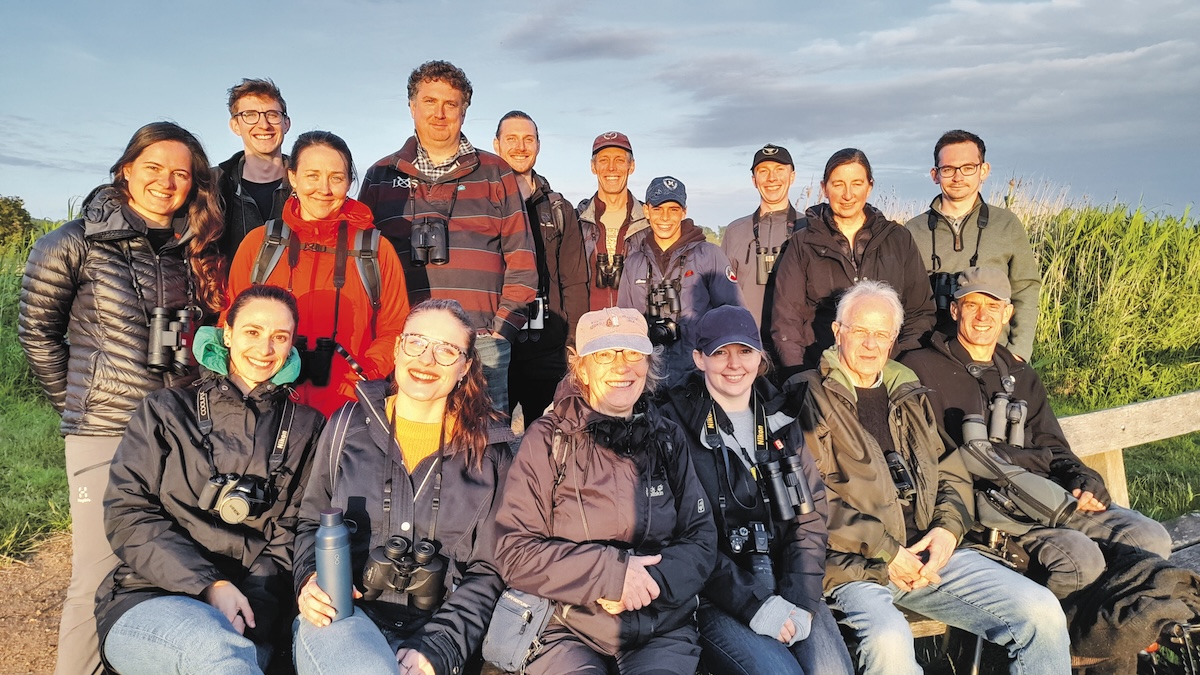
Assessing Every Bird Species on Earth
Every one of the world’s more than 11,000 bird species is supported by a small but highly dedicated global team based at BirdLife International’s headquarters in Cambridge, United Kingdom. The team provides scientific support to BirdLife Partners around the world and leads bird assessments for the IUCN Red List of Threatened Species, the world’s most comprehensive evaluation of extinction risk.
“Our role is to provide support, coordination, and fundraising for BirdLife Partners worldwide,” explains Dr. Butchart. “We also conduct scientific research to underpin BirdLife’s conservation programmes, support policy initiatives, and lead conservation efforts at the international level.”
BirdLife’s Science Division consists of around 35 staff members. A major part of its work involves assessing the conservation status of every known bird species using criteria such as population size, geographic range, and rates of decline. Species are then classified into categories ranging from Least Concern to Critically Endangered or Extinct.
The assessments draw upon published scientific literature, unpublished reports, a worldwide network of experts, BirdLife Partners, and citizen-science platforms such as eBird, which now contains more than two billion bird observations. Remarkably, approximately 80 percent of all biodiversity records in the Global Biodiversity Information Facility (GBIF) now originate from eBird.
Once the evidence has been compiled, proposed changes to a species’ Red List status are published on an open online forum for public review. Anyone—not only ornithologists—can contribute comments and additional information. The final assessments are then entered into the IUCN Species Information Service database, reviewed by the IUCN, and published on both the IUCN Red List website and BirdLife’s Data Zone platform.
BirdLife’s bird assessments have a long history. In October 2025, the organization completed its eighth comprehensive global assessment covering approximately 11,100 bird species—a level of taxonomic coverage unmatched by any other group of organisms.
“The popularity of birds helps enormously,” says Dr. Butchart. “There are around 45 million birdwatchers in the United States alone, and about 40,000 in Brazil, to name just two examples. By comparison, many mammals such as small rodents and bats remain difficult to study, while most insects and plants have yet to be formally described. In contrast, the vast majority of the world’s bird species have already been discovered and are reasonably well understood in terms of their distribution, ecology, and conservation status.”
Key Biodiversity Areas
Protecting important sites is often the most effective strategy for conserving threatened species listed on the IUCN Red List.
BirdLife pioneered the concept of Important Bird and Biodiversity Areas (IBAs), identifying sites that are essential for maintaining bird populations. This success inspired similar initiatives for butterflies, plants, freshwater ecosystems, and other taxonomic groups, creating an increasingly complex landscape of conservation priorities.
To establish a single global standard, BirdLife partnered with the IUCN to develop the Key Biodiversity Area (KBA) Standard, a scientifically robust framework for identifying the world’s most important places for biodiversity across all species and ecosystems. BirdLife now co-hosts the KBA Secretariat and helped establish the KBA Partnership, bringing together leading conservation organizations to identify and safeguard these irreplaceable sites.
KBAs are increasingly influencing financial and policy decisions worldwide. International financial institutions and development banks use the Integrated Biodiversity Assessment Tool (IBAT)—developed jointly by BirdLife and three other major conservation organizations—to screen infrastructure and investment projects located within or near KBAs. This helps ensure that developments such as dams, roads, and other large-scale projects avoid causing irreversible damage to critical biodiversity.
As a result, biodiversity data now influence investment decisions worth billions of dollars, creating strong incentives to identify and protect the world’s most important conservation sites.
Science at Sea
BirdLife’s science team also leads major research on seabirds, many of which spend most of their lives far from land and are therefore difficult to monitor.
The organization manages the Global Seabird Tracking Database, which contains more than 75 million tracking records covering 280 seabird species, collected through satellite tracking by researchers worldwide.
By comparing seabird movements with fishing vessel data provided through Global Fishing Watch, scientists identify areas where accidental bycatch poses the greatest threat. BirdLife then works with fisheries to introduce practical mitigation measures, including bird-scaring lines and setting fishing nets at night, reducing seabird mortality.
The team also studies the impacts of climate change, invasive species, and conservation priorities across islands and ecosystems. The findings are published through BirdLife’s Data Zone and synthesized in the organization’s flagship publication, State of the World’s Birds.
“Birds tell us about the health of nature across the planet,” says Dr. Butchart. “They reveal the pressures facing our world and help identify the solutions we need.”
How BirdLife’s Global Partnership Works
The strength of BirdLife lies in its worldwide network of national partners.
Partners provide information on declining bird populations, habitat loss, and threats such as unsustainable hunting. BirdLife combines these local observations with global datasets to assess extinction risk and establish conservation priorities.
In return, BirdLife supports its partners in updating site inventories, monitoring Key Biodiversity Areas, and securing funding. For example, the Bezos Earth Fund recently awarded a multi-million-dollar grant enabling BirdLife Partners to update KBA data across the Andes and the Congo Basin.
Partners also implement practical conservation projects, collect data on species and habitats, and conduct public awareness and advocacy campaigns. Together, the partnership has developed a shared conservation strategy and common programme framework.
BirdLife also supports governments in meeting their commitments under the Global Biodiversity Framework by providing indicators and scientific data for national reporting.
“BirdLife helps partners make informed decisions,” Dr. Butchart explains. “Effective conservation depends on sound science and strong partnerships.”
Hima and Sustainable Hunting
As BirdLife International’s national partner in Lebanon, the Society for the Protection of Nature in Lebanon (SPNL) works closely with BirdLife’s global science team to implement conservation projects, update Important Bird and Biodiversity Areas and Key Biodiversity Areas, and contribute to international policy discussions.
SPNL’s flagship initiative is the revival of the traditional Hima system, under which local communities manage protected areas while ensuring the sustainable use of natural resources by combining traditional knowledge with modern conservation science. Lebanese law formally recognizes Hima as one of the country’s four categories of protected areas.
Dr. Butchart believes the Hima model offers a powerful framework for conserving Key Biodiversity Areas.
“Hima sites provide an excellent model for conserving KBAs, whether as formally recognized protected areas or as Other Effective Area-Based Conservation Measures (OECMs). They demonstrate how biodiversity can be protected while respecting traditional systems of community governance.”
BirdLife integrates scientific evidence with local knowledge and promotes policies that safeguard birds and biodiversity worldwide.
Unsustainable exploitation—including hunting—remains one of the greatest threats facing bird populations. At the same time, many communities depend on hunting and forest resources for their livelihoods.
“Unsustainable hunting is a major conservation threat,” Dr. Butchart says. “But hunting also has deep cultural importance in many societies, so harvest levels need to be sustainable. Decisions about which species may be hunted and in what numbers are far more effective when local communities participate in making them rather than having them imposed from above. Conservation is difficult unless people believe in it.”
In Lebanon alone, there are approximately 300,000 hunters, making collaboration between authorities and local communities essential for establishing sustainable hunting quotas that protect bird populations while respecting cultural traditions.
Dr. Butchart concludes:
“Determining sustainable harvest levels requires sound science, but implementing them requires effective relationships with local communities. That is not easy—it is a major challenge—but one we must address.”