

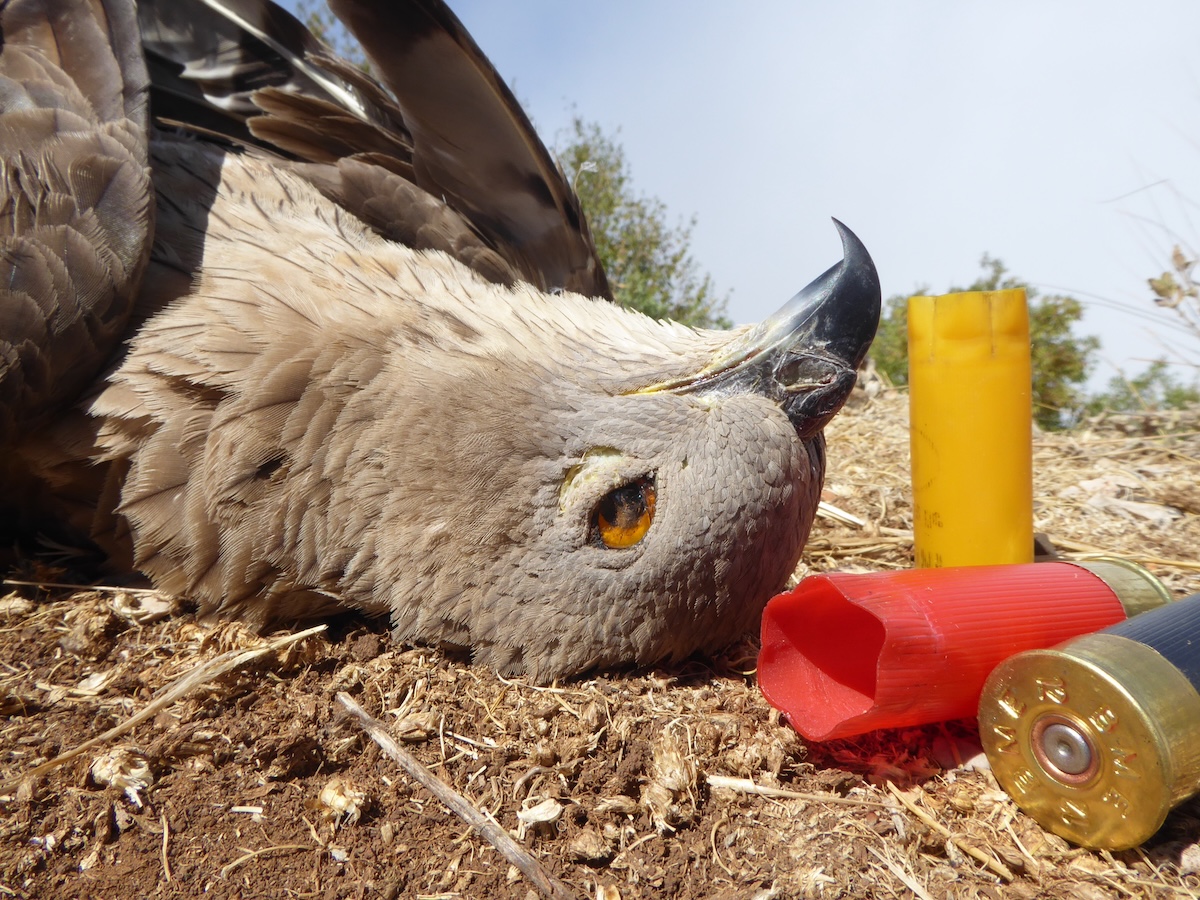
The Cambridge University Press has published a ground-breaking new peer-reviewed paper regarding the scale and impact of illegal bird poaching in Lebanon. The study appears in the X-edition of Oryx – The International Journal of Conservation – and focuses on the detailed analysis of 1,844 trophy-pictures published by Lebanese hunters on social media platforms such as Facebook and Instagram. In a months-long process, wildlife crime experts have analysed and identified a total of 29,542 individual shot birds belonging to 212 bird species, ranging from eagles and vultures to swallows and blackcaps.
The research team consisted of André F. Raine, the Corresponding author, and Jason Gregg, both from Archipelago Research and Conservation, based in Hanapēpē, Kauaʻi, Hawaii, USA. The team also included Lloyd Scott, Axel Hirschfeld, and Filippo Bamberghi from the Committee Against Bird Slaughter (CABS), Bonn, Germany, as well as Ghassan Ramadan-Jaradi, an expert at the Society for the Protection of Nature in Lebanon (SPNL) and a professor at the Lebanese University, Beirut, Lebanon.
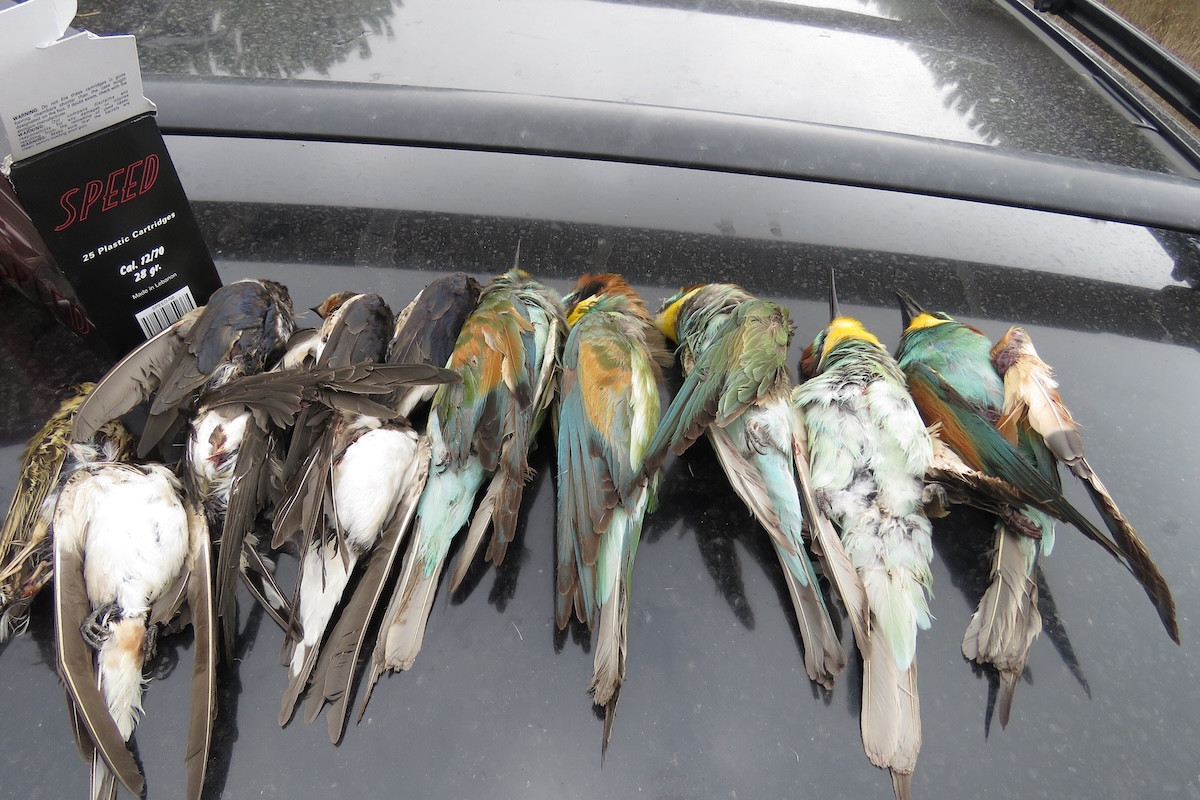
The vast majority of trophies posted by the hunters were migratory species that are protected under Lebanese law, and 19 of the species are listed as threatened or near threatened on the IUCN Red List. Thirty-three per cent have a decreasing population trend in Europe, highlighting the impact that illegal hunting is having on these migratory species. Although a broad range of bird species are targeted, the authors found that raptors are disproportionately affected. We identified 35 raptor species in the images, including significant numbers of the European honey-buzzard and Eurasian sparrowhawk. Hunters also proudly displayed other large species such as storks, pelicans and cranes, and sometimes hundreds of dead birds were piled up in a single photograph.
“Many of these images are truly shocking and we were appalled by what we observed and often found the photos difficult to look at, as they often included elements of extreme cruelty and torture remorselessly on display”, said lead author Dr. Andre Raine. He added that many of the photos and posts reviewed by his team were also reported to the Lebanese authorities responsible to enforce the hunting law. “Unfortunately we have not seen much specific action taken against the culprits”, Raine continued.
Assad Serhal, Director General of the Society for the Protection of Nature in Lebanon (SPNL), commented on the study’s findings, stating:
“These shocking figures and results reflect a painful reality that threatens Lebanon’s biodiversity. Migratory birds do not belong to a single country; they are a global natural heritage that must be protected. We are working diligently with our local and international partners to ensure the enforcement of laws and to put an end to these illegal practices that damage Lebanon’s environmental reputation.”
Serhal added:
“There must be genuine political will to combat illegal hunting by raising environmental awareness among hunters, strictly enforcing the law against violators, and supporting sustainable efforts to protect wildlife. Lebanon has the potential to be a model for migratory bird conservation, but this requires a collective commitment from all stakeholders.”
To help Lebanese authorities and conservationists to tackle the problem CABS is working together with the Society for the Protection of Nature in Lebanon (SPNL) and the Middle Eastern Sustainable Hunting Centre (MESHC). One of the core elements of this cooperation was the establishment of a professional and dedicated Anti-Poaching Unit (APU) which documents and reports cases of illegal hunting in close cooperation with the Lebanese Internal Security Forces (ISF) and other relevant authorities. CABS announced that a group of international experts will travel to Lebanon in April and September this year to assist the APU in documenting, reporting and exposing cases of wildlife crime in bird migration hotspots and bottleneck areas such as the mountains of the Akkar and North-Lebanon governorates.
Contact for more information: CABS Press Officer Axel Hirschfeld (co-author of the paper), phone +49 179 4803805 or Email to CA**@*****ee.de
The article ‘Digital trophies: using social media to assess wildlife crime in Lebanon’ is available open access in Oryx—The International Journal of Conservation – https://www.cambridge.org/core/journals/oryx/article/digital-trophies-using-social-media-to-assess-wildlife-crime-in-lebanon/3047B66610697F72C6FD170F7796E9AF
A blog article about the study has been published here: https://www.oryxthejournal.org/blog/social-media-posts-reveal-the-alarming-extent-of-illegal-wildlife-hunting-in-lebanon/
The cooperation of CABS, SPNL and MESHC is highlighted in the latest issue of SPNL´s Al-Hima magazine: https://www.spnl.org/wp-content/uploads/2024/10/Al-Hima-Magazine-Issue-No.-4.pdf